Written by: Doug Camplejohn, CEO & Co-Founder, Coffee | Last updated: September 22, 2026
Key Takeaways for Running BANT and MEDDIC Together
- BANT acts as a fast, binary filter for low-ACV, single-stakeholder deals under $25K, while MEDDIC maps the full buying committee and decision process for complex, high-value opportunities.
- Running both frameworks in sequence, with BANT at first touch and MEDDIC once budget authority and multiple stakeholders are confirmed, removes double qualification work and keeps CRM data current.
- Most qualification failures come from stale or incomplete CRM fields. Agent-based capture removes the manual data-entry burden that causes reps to abandon frameworks.
- MEDDPICC extends MEDDIC with Paper Process and Competition, which fits enterprise deals above $100K ACV that face formal procurement and security reviews.
- Coffee structures qualification data from email, calendar, and calls so both BANT and MEDDIC fields stay populated with real evidence instead of placeholder values.
See How Coffee Supports BANT and MEDDIC
Where BANT Still Fits in Modern Sales Cycles
IBM developed BANT as a lightweight qualification filter for fast triage of inbound prospects. Sources place its origin in either the 1950s or 1960s. That remains its correct job. BANT is misapplied, not outdated.
Two structural critiques hold up under scrutiny. First, Modern Enterprise Buyers Often Initiate Evaluation Before a Specific Budget Is Allocated, and the Budget Is Created or Reallocated as the Business Case Develops. Leading with “what is your budget?” on a first call disqualifies legitimate opportunities. Second, A Typical Complex B2B Purchase Now Involves Six to Ten Decision-Makers. The search for a single Authority no longer matches how decisions are made.
BANT Suits Lower-ACV, Single-Stakeholder Deals with Short Sales Cycles. The sweet spot is sub-$25K ACV with cycles under 30 days. Within that scope, it remains a fast, teachable triage tool that a new rep can learn in an afternoon.
Why MEDDIC Matters More Than Ever in 2026
MEDDIC has grown more relevant in 2026 because The Average B2B Deal Now Involves 6–10 Stakeholders. That is the buying-committee complexity MEDDIC was built to map. MEDDIC Was Created in 1996 at Parametric Technology Corporation to Fix Forecast Accuracy on Complex Deals, and that problem still exists.
MEDDIC Suits $25K–$500K+ ACV Deals with Buying Committees and Cycles of Two to Six Months or Longer. It functions as a qualification and inspection framework, not a discovery script. It defines what must be true before a deal is real. It also highlights where the deal is weak so you can address gaps before the forecast review.
The Main Risk to MEDDIC in 2026 Is Not Obsolescence but Reps Treating It as a CRM-Field Checklist Instead of a Qualification Discipline. Teams that coach against MEDDIC dimensions in live deal reviews see win-rate lifts. Teams that treat it as a form to complete see no improvement.
Why MEDDIC Outperforms BANT on Enterprise Deals
BANT filters, while MEDDIC Maps the Mechanics of a Committee Decision — Economic Buyer, Decision Criteria, Decision Process, Champion. That information is what a forecast actually requires.
The failure mode of applying BANT to a six-figure deal is predictable. The Deal Stalls in Procurement Because the Decision Process Was Never Named. BANT’s four questions confirm that someone has a need and a rough timeline. They do not confirm who controls the budget line, who must sign off, what the evaluation criteria are, or whether anyone inside the account will fight for the deal when the rep is not in the room. Those dimensions determine whether a six-figure deal closes, and MEDDIC captures each one.
Origins of BANT, MEDDIC, and MEDDPICC
IBM created BANT as a field qualification tool for its salespeople, with sources placing its origin in the 1950s or 1960s. MEDDIC Was Created in 1996 at Parametric Technology Corporation by Dick Dunkel, with Major Refinement by Jack Napoli, Under SVP John McMahon, Built by Reverse-Engineering Deals PTC Won Versus Deals PTC Lost.
The Framework Evolved One Letter at a Time: MEDDICC Added Competition After Deals Were Lost to Rivals Reps Never Asked About, and MEDDPICC Added Paper Process After Fully Qualified Deals Died in Security Questionnaires or Procurement Queues. The Longer MEDDPICC Variant Was Popularized by Andy Whyte in His 2020 Book MEDDICC, which carried the framework across modern enterprise software.
The Hybrid Stage-Gate Model for BANT and MEDDIC
This sequence is designed for direct use in a sales playbook. Each trigger is explicit so the model operates as a clear guide.
- Inbound and Initial Discovery: Apply BANT as a Fast Filter. SDRs Run BANT or CHAMP at First Touch in Three to Five Minutes to confirm Need, rough Timeline, and that a meaningful stakeholder is engaged. The output is a binary advance-or-disqualify signal. Reps do not touch MEDDIC fields at this stage.
- The Qualification Trigger: Move from BANT to MEDDIC. A deal graduates from BANT to MEDDIC when two conditions are both confirmed. Budget authority is identified, not just stated, and more than one decision-maker is named. Above $30K ACV or with More Than One Stakeholder, BANT Alone Is Not Sufficient. This trigger marks the handoff point. The AE takes ownership and MEDDIC fields open on the deal record.
- Post-Qualification Deal Management: Apply MEDDIC to Navigate and Forecast. The Operational Pattern Across $50K+ ACV B2B SaaS Runs Light MEDDIC at AE Discovery and Full MEDDIC at the Second Multi-Stakeholder Call. Each MEDDIC dimension is populated as evidence, not inference, which makes the stage gate meaningful. Because the fields reflect verified facts, a deal can be blocked from advancing past the proposal stage until Economic Buyer, Decision Process, and Identify Pain are all confirmed.
- Forecast Review: Use MEDDIC Fields as Forecast Inputs. No Deal Enters Commit Without Each MEDDIC Letter Scored. Pipeline reviews center on per-deal, per-dimension qualification gaps rather than pipeline totals. The weakest MEDDIC score sets the deal-review agenda.
CRM Field Mapping for BANT and MEDDIC
The split between the two frameworks also creates a split between two CRM objects. BANT fields belong on the lead or contact record because they describe the person and the initial signal. MEDDIC fields belong on the deal record because they describe the opportunity. Keeping them separate prevents reps from re-entering the same information twice.
BANT fields are captured at lead creation or on the first qualifying call and live on the lead or contact record:
- Budget Range (confirmed, inferred, or unknown)
- Authority Contact (name and role of the meaningful stakeholder reached)
- Need Summary (the specific problem stated in the prospect’s words)
- Timeline (target decision date or triggering event)
MEDDIC fields live on the deal record and must be populated before a deal can advance past the qualification stage:
- Metrics (quantified business outcomes the buyer wants to move)
- Economic Buyer (name, title, and confirmation of budget control)
- Decision Criteria (the rubric the buying committee will use to compare vendors)
- Decision Process (every approval, signature, and gate, with named owners and date estimates)
- Identify Pain (the cost of the problem staying unsolved, stated as a number)
- Champion (name, evidence of advocacy, and result of the champion test)
Most sales methodology rollouts fail not in the design but in the follow-through, specifically during the 90-day period after rollout, when teams quietly revert to old habits without structure, visibility, and ongoing accountability. Reps are asked to re-enter information they already gave at the BANT stage, so they fill whichever field set is quicker and leave two half-populated records. The fix comes from removing the double-entry requirement entirely, which supports the case for agent-based capture covered below.
Common Failure Modes for BANT and MEDDIC
BANT’s primary failure mode appears when teams use it as a forecast tool. BANT Filters but Does Not Forecast, and It Gets Misapplied as a Forecast. Reps check four boxes and mark a deal qualified. Managers accept the signal. The deal then stalls in procurement because the decision process was never named. Sales teams call this “checkbox qualification.”
MEDDIC’s primary failure mode is administrative overhead. Running All Eight MEDDPICC Letters on Every Deal by Default Kills Adoption Because the Overhead Causes Reps to Stop Filling Fields and Managers to Stop Coaching, Turning the Scorecard into a Form People Lie to. Sales teams call this “MEDDIC theater.”
The meta-failure underneath both frameworks comes from unenforced qualification. An Unenforced Qualification Framework Produces Worse Data than No Framework, Because It Looks like Evidence. A CRM full of guessed champions and inferred economic buyers does not signal a healthy pipeline. It manufactures false confidence in a forecast. This pattern drives most online complaints about qualification frameworks and shows why the framework choice matters less than the data quality behind it.
Choosing Between MEDDIC and MEDDPICC
MEDDPICC Extends MEDDIC with Paper Process (the Legal, Procurement, and Security Review a Signed Deal Must Still Clear) and Competition (the Rival You Are Measured Against, Including the Buyer’s Option to Do Nothing). MEDDPICC Is the Right Choice for Enterprise Deals with Formal Procurement at $100K+ ACV and Three-to-Twelve-Month Sales Cycles.
The 2026 question focuses on whether AI-assisted qualification changes the calculus on the heavier field set. It does. When an agent captures and structures qualification data automatically from calls and emails, the administrative overhead of maintaining eight MEDDPICC fields drops to near zero. Reps no longer type that information by hand. Paper Process Catches Roughly 40% of Late-Stage Slippage in Enterprise Deals. That payoff justifies the extra fields when an agent, rather than a human, handles the overhead.
How Metrics Work Inside MEDDPICC
Metrics Are Quantifiable Business Outcomes the Buyer Wants to Move — “Save 10 Hours per Week” Is a Metric, “Improve Efficiency” Is Not. The distinction matters because a metric anchors the deal to a number the economic buyer already reports on. Expressing Metrics as a Specific Dollar Figure per Unit — for Example, $47K per Production Line per Year — Rather than as an Adjective Raises the Deal’s Priority in Budget Reviews and Can Compress the Timeline.
How Salesforce Supports MEDDIC and MEDDPICC
Salesforce does not mandate MEDDPICC, yet it supports the framework through custom fields, validation rules, and stage gates. Salesforce Sales Cloud Enterprise Supports Stakeholder Map Custom Objects and Validation Rules Requiring MEDDIC Fields Before Stage Advance. Many Salesforce customers run MEDDIC or MEDDPICC as a configuration on top of the platform.
The operational reality is clear. Legacy CRMs like Salesforce and HubSpot Are Passive Databases That Rely on Humans for Data Entry, which is why the framework fields go stale. Salesforce can enforce that a Champion field is not empty before a deal advances. It cannot ensure the name in that field belongs to a real champion rather than a placeholder entered to clear the validation rule.
Why Data Quality Determines Framework Success
A qualification framework only works when the data behind it stays accurate. BANT Collapses When Contact Data Is Wrong: Teams Cannot Qualify Authority Without Knowing Who the Decision-Maker Is, Cannot Assess Budget or Need When Emailing a Generic Inbox, and Waste Timeline on Bounced Emails and Disconnected Numbers. MEDDIC on Dirty Data Is Worse than BANT on Clean Data Because It Produces False Precision. That looks like a named economic buyer who was never actually reached or a champion who was never tested.
The Coffee Agent addresses this problem directly. Coffee automatically creates and enriches contacts, companies, and activities from email and calendar. It also structures its notes according to BANT, MEDDIC, or SPICED, so qualification data enters the system without reps acting as data entry clerks. Reps save 8–12 hours per week on data entry, and the CRM fields that BANT and MEDDIC depend on are populated from ground-truth sources rather than from memory after the call.

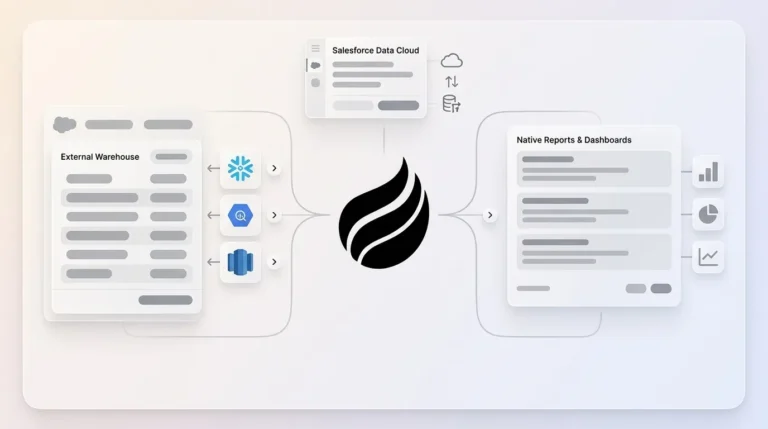
Coffee works in two modes, depending on whether the team needs a system of record or an agent layer on top of one. As a Standalone AI-First CRM, it is the system of record for small teams that have outgrown spreadsheets but find legacy CRMs to be expensive manual chores. As a Companion App, it layers on top of an existing Salesforce or HubSpot instance, where the Coffee Agent handles the data-in process so the system of record stays accurate without human effort. Either way, the Pipeline Compare feature delivers the “good data out” payoff. It visualizes week-over-week pipeline changes automatically and turns forecast reviews from interrogation sessions into strategic discussions.

Coffee makes either framework work by ensuring the fields it depends on are populated with real evidence, rather than by replacing the framework itself.
Real-World Scenarios for Hybrid Qualification
The hybrid model looks different depending on team size and existing stack. Two configurations cover most situations.
For teams under 50 people that have outgrown spreadsheets, BANT plus Coffee’s Standalone CRM handles qualification without admin overhead. The Coffee Agent captures BANT fields from email and calendar automatically, so the filter stays honest without requiring reps to log calls manually.

For teams where integration with Salesforce or HubSpot is non-negotiable, MEDDIC plus the Coffee Companion App keeps the heavier field set populated automatically. The agent writes enriched qualification data back to the primary CRM, so required fields reflect real deal state rather than placeholder values entered to clear a validation rule.

Newer alternatives such as Day.ai and Clarify lack the integration depth to serve established teams running Salesforce or HubSpot with quotas, forecasting, and required fields. Legacy CRMs Are Passive Databases. The agent layer is what makes them active.
Total Value of Ownership for BANT and MEDDIC
Full MEDDIC Implementation in a Sales Team Typically Takes Six to Twelve Weeks. Training accounts for two weeks. Integrating criteria into the CRM and applying the framework to active deals takes four weeks, and consolidating habits through coaching takes another four to six weeks. BANT installs faster but still requires CRM field mapping, stage-gate configuration, and manager reinforcement to function as more than a verbal checklist.
The hidden cost of both frameworks is ongoing maintenance, and it compounds from two directions. B2B Data Degrades by 25 to 30% per Year, meaning a MEDDIC scorecard filled out three months ago is likely outdated on at least two criteria. At the same time, Reps Lose Roughly 75% of Training Content Within Six Days Without Reinforcement, so the framework a team picks is only as strong as the practice volume and inspection cadence behind it.
Agent-based capture removes the maintenance burden at the source. When the Coffee Agent logs every call, email, and meeting automatically and structures the output against the team’s chosen framework, the fields stay current without a weekly reminder to update the CRM. Reps Are Not Refusing the CRM — They Are Refusing to Retype What They Already Wrote in an Email. Removing that requirement creates the operational change that makes a hybrid BANT-MEDDIC rollout sustainable at scale.
Conclusion: Data Quality Makes the Hybrid Model Work
BANT filters and MEDDIC forecasts, yet both collapse when CRM data degrades. The hybrid stage-gate model, with BANT at first touch and MEDDIC from qualification to close, only works when fields stay populated with real evidence and reps avoid double entry.
Coffee acts as the agent that keeps those fields accurate. It captures and structures qualification data automatically from email, calendar, and call transcripts, whether the team runs BANT, MEDDIC, or SPICED. It operates as a Standalone CRM for teams that want a modern system of record, or as a Companion App that layers on top of Salesforce or HubSpot so the existing system stays accurate without human effort. The Pipeline Compare feature delivers the forecast reliability that MEDDIC promises but rarely achieves when teams maintain fields manually.
The framework choice matters less than the data behind it. Coffee fixes the data.
Explore Coffee for Hybrid BANT–MEDDIC Teams