Written by: Doug Camplejohn, CEO & Co-Founder, Coffee | Last updated: September 16, 2026
Key Takeaways
- Enrichment works as a pipeline you run. Success depends on a clear stack of database, orchestration, verification, and CRM write-back layers.
- Each layer serves a distinct function. Mixing up databases and enrichment layers leads to buying tools that do not match the job.
- CRM write-back is the most neglected layer. Enriched records that never reach the system of record create dirty data and duplicates.
- Waterfall orchestration multiplies cost through credit consumption on failed matches. Annual data decay makes disciplined write-back more important than vendor choice.
The Stack Model: Database, Orchestration, Verification, and CRM Write-Back
Enrichment covers several jobs, so no single tool can handle every layer well. A database needs orchestration to stay fresh. Orchestration needs verification to avoid burning credits on bad matches. Enrichment needs a CRM write-back path to prevent dirty records and duplicate creation.
Each layer has a distinct function:
- Database: The source of contact and company records. ZoomInfo and Cognism typically fill the combined contact-plus-firmographic database slot in B2B enrichment stacks, with ZoomInfo strongest for US enterprise and Cognism for EU/UK data.
- Orchestration: The routing layer that queries multiple sources in sequence. Clay dominates here.
- Verification: The quality gate that confirms emails and phone numbers before they enter your workflow.
- CRM Write-Back: The layer most teams neglect and where enrichment value often dies.
A Data Enrichment Waterfall queries multiple sources in sequence. Each additional source escalates the cost per credit. The second provider only sees records the first missed; the third only sees what the first two missed. Waterfall orchestration multiplies cost because each record may be queried against several sources. Match-rate decay means you still pay for credits that return nothing. In Clay’s waterfall enrichment, every provider attempt consumes an Action regardless of whether that provider returns a result, while Data Credits are only charged when a provider returns a successful result, which often creates cost surprises.
Database vs. Enrichment Layer describes two different jobs. A database supplies records you do not yet have. An enrichment layer augments records already in your system. ZoomInfo provides a prospecting database of 500M contacts and 100M companies for discovering net-new contacts. Clearbit (now HubSpot Breeze Intelligence) enriches records you already have in your CRM. Clearbit now comes bundled into HubSpot and is no longer available as a standalone product for non-HubSpot customers. Confusing these roles leads to buying the wrong tool.
Tool choice matters less than disciplined write-back into the CRM. An agent-led approach like Coffee fits this need because it handles data entry and enrichment natively and writes back automatically.
Best B2B Contact Data Enrichment Tools for GTM Teams: One-Line Verdicts
This comparison table shows how each vendor fits into the enrichment stack. Focus on the “Primary Slot” column to see which job each tool actually performs.
| Vendor | Primary Slot | Best For | Pricing Model |
|---|---|---|---|
| ZoomInfo | B2B contact database / sales intelligence platform | Enterprise North American outbound prospecting, with weaker data quality outside the US and Canada | Seat-based, premium |
| Clay | Orchestration | Technical RevOps or GTM engineering teams that already own an engagement platform and need flexible enrichment across many data providers | Credit-based (Data Credits + Actions) |
| Apollo | Database + Sequencing (unifying prospecting, enrichment, and sequencing) | Lean B2B teams at sub-25-rep SMB scale running a bundled outbound motion, where it beats stitched specialists on total cost of ownership | Per-seat subscription combined with usage-based credits |
| Cognism | Compliance-first B2B sales intelligence and contact database with strong EMEA coverage | EMEA-focused, phone-heavy outbound teams where GDPR-verified mobile data is a procurement requirement | Platform fee + per-seat (~$15K platform + $1.5K/seat/year) |
| Coffee | Enrichment + Write-Back | Teams that want a consolidated stack | Seat-based, unlimited agent labor |
All pricing model descriptions sourced from vendor documentation and third-party pricing analyses.
ZoomInfo and Cognism act as databases. Clay handles orchestration. Hunter is an all-in-one cold outreach platform that finds and verifies professional email addresses, with email verification as a core feature. HubSpot Breeze is HubSpot’s AI suite that powers the customer platform, including Breeze Assistant (formerly Copilot), Breeze Agents, embedded AI features, and Breeze Intelligence for enrichment and buyer intent. These tools work best as complementary layers rather than direct substitutes.
See how Coffee consolidates your stack and replace multiple point solutions with one agent-led system.
Coffee: The Agent-Led Answer to the Enrichment-to-CRM Problem
Coffee acts as a CRM agent that closes the loop the rest of the stack leaves open.
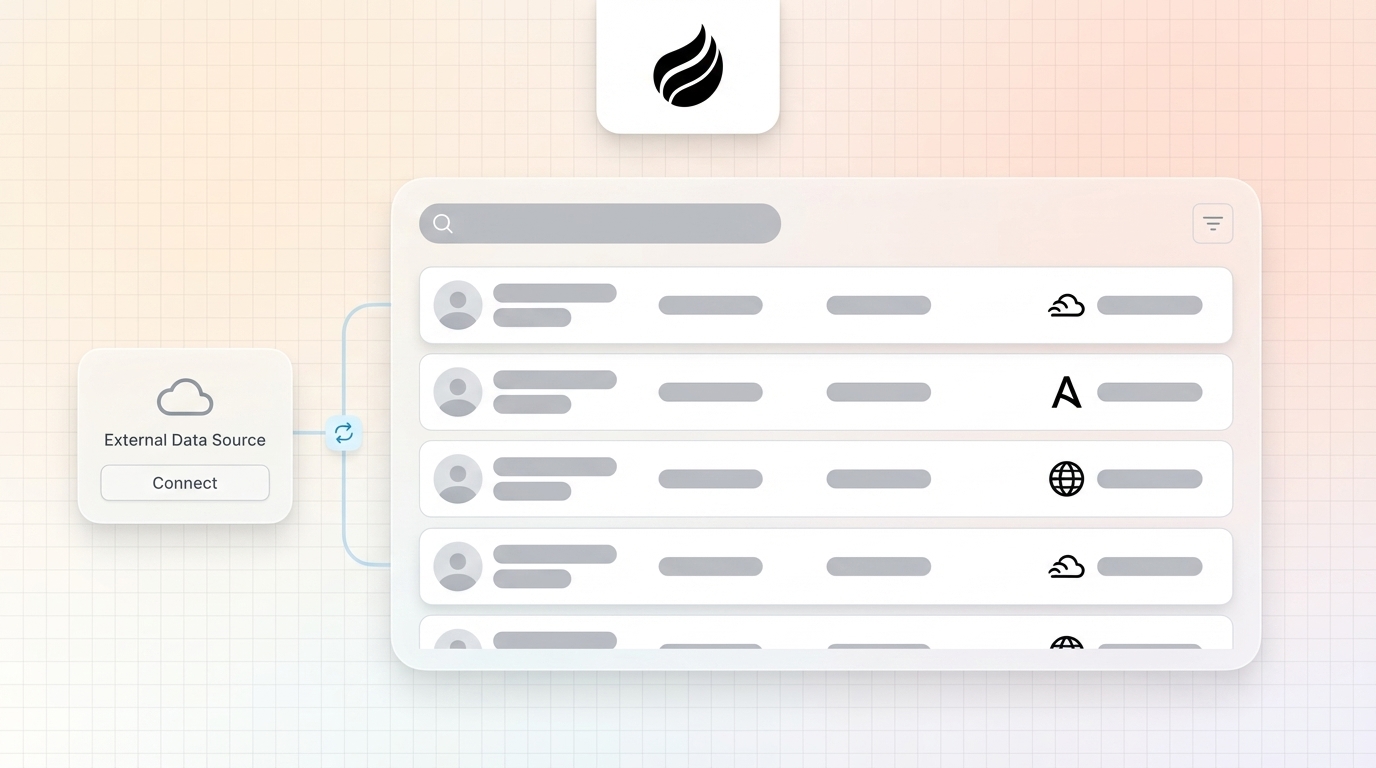
Point solutions enrich data outside the system of record. Records get enriched in Clay, verified in Hunter, then manually imported to Salesforce. Many never reach the CRM at all. Coffee removes this failure mode by handling the labor of putting good data into the system.
Coffee auto-creates and enriches contacts and companies from Google Workspace or Microsoft 365. It logs activities and unifies structured and unstructured data, from emails to call transcripts. Teams then get accurate pipeline intelligence out.

Coffee deploys in two models:
- Standalone AI-First CRM for small teams (1–20 employees) that have outgrown spreadsheets
- Companion App that layers on top of existing Salesforce or HubSpot instances for small to mid-market teams with low adoption and poor data quality
Coffee replaces several point solutions in the stack:
- Built-in enrichment via licensed data partners, which removes the need for Apollo
- Lead Finder as a built-in alternative to ZoomInfo
- Campaigns as a native alternative to Outreach or Salesloft
- Pipeline Compare for week-over-week pipeline visibility without CSV exports
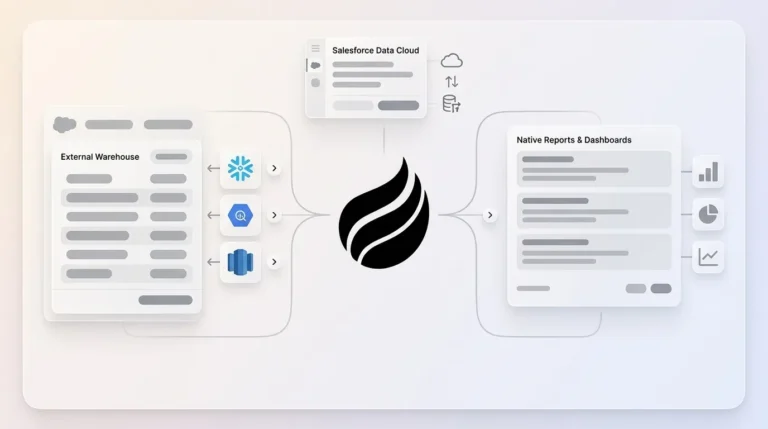
Coffee is SOC 2 Type 2 and GDPR compliant and does not use data to train public models. Pricing is simple seat-based with unlimited agent labor included. Coffee’s differentiator is a proactive agent that works with structured and unstructured data on a built-in data warehouse. It meets teams either as the system of record or as the agent feeding Salesforce or HubSpot.
Explore Coffee pricing and remove the write-back failure mode from your stack.
How Much Does B2B Data Cost?
B2B data pricing follows three dominant models, and each behaves differently at scale.
Per-Seat Pricing charges by user. Enterprise platforms typically run $5K–$25K per seat annually. This model breaks down for engineering use cases because APIs do not map cleanly to seats.
Credit-Based Pricing charges per record or per lookup. Rates typically run $0.01–$0.50 per record. Waterfall orchestration multiplies cost because each record may be queried against multiple sources. Clay’s “no charge on failure” policy applies only when the entire waterfall step returns nothing. Individual failed provider attempts within a waterfall still consume Actions. A five-provider waterfall on 1,000 contacts therefore burns 5,000 Actions whether or not data is found.
Annual Contract Models bundle platform access with usage allowances and usually require upfront commitment. Cognism’s Grow tier runs approximately $15K platform plus $1.5K per seat annually.
Three forces drive cost at scale. Waterfall credits compound across sources, so each additional provider multiplies spend. Match rates determine how many of those credits return nothing. Seat minimums lock in spend regardless of usage. Active GTM teams frequently spend between $500 and $2,000+ per month on Clay once enrichment credits, waterfall lookups, phone number searches, AI actions, and third-party data costs are included.
Coffee’s model uses simple seat-based pricing where the agent’s unlimited labor is included, with no complex metering on LLM usage or processes.
Free and Low-Cost Options for B2B Contact Data
Free tiers help you test workflows but rarely support production pipelines.
Clay’s free plan includes 100 Data Credits and 500 Actions per month with a 200-row table limit. That allowance is enough to prototype a workflow, not enough to run one at scale. Free tools usually exclude verification and CRM write-back, which is where dirty CRM data often starts.
Coffee’s built-in enrichment and Lead Finder remove the need for a separate paid database subscription for most use cases.

Best Enrichment Choice for EMEA and GDPR Compliance
Cognism serves as the default choice for EMEA-focused teams.
Its compliance framework includes processing under GDPR’s legitimate interest lawful basis (Article 6.1(f)) with Legitimate Interest Assessments, scrubbing against 15 international Do Not Call registries, and ISO 27701, SOC 2 Type II, and ISO 27001 certifications. Cognism’s database contains over 440 million contacts and more than 100 million mobile numbers, with strongest coverage in the UK, DACH, France, and the Nordics.
NA-focused providers may not meet EMEA consent requirements. GDPR shapes vendor choice through consent basis, data residency, and the ability to honor deletion requests. Under GDPR, when B2B contact data is obtained indirectly through enrichment providers, Article 14 obligations apply and individuals must be informed within a reasonable period, at the latest within one month.
Coffee’s compliance posture, including SOC 2 Type 2 and GDPR compliance and a policy of not using data to train public models, matches the standard GTM teams should expect from any vendor in the stack.
Where Enrichment Breaks in Real GTM Pipelines
Most vendor comparisons ignore the operational failure modes that actually break enrichment.
- Waterfall Cost Escalation. A typical six-step Clay workflow run on 1,000 contacts can consume 8,000–15,000 Actions and 10,000–25,000 Data Credits, exhausting the Launch base plan’s 15,000 Actions and 2,500 Credits in a single campaign.
- Match-Rate Decay. As noted earlier, B2B data decays at 22.5% annually. An unrefreshed database from 18 months ago has effectively lost about half its actionable value.
- GDPR Constraints. NA-only vendors limit EMEA coverage. Consent basis, data residency, and deletion capability determine whether you can legally use enriched data in European markets.
- CRM Write-Back Failures. Enriched records sit in a spreadsheet or point tool while the CRM stays stale. Validity’s 2025 report found that 76% of organizations say less than half their CRM data is accurate and complete, and 37% of CRM users reported losing revenue due to poor data quality. Duplicate creation spikes when multiple tools write to the same CRM without conflict-resolution rules.
These issues reflect pipeline design more than vendor choice. Stack composition and write-back discipline matter more than which database you buy. Because Coffee handles data entry and enrichment natively and writes back automatically, it removes the write-back failure mode from the pipeline.
Recommended Stacks by GTM Motion
Different GTM motions need different enrichment stacks. Use these patterns as starting points, then adjust for your team and region.
- Early-Stage Outbound: Lean database plus sequencing, or Coffee Standalone. Apollo fills the database slot, and Coffee replaces separate enrichment and outreach tools.
- Scaling SaaS: Database plus orchestration plus verification plus CRM write-back. Use ZoomInfo or Cognism for the database, Clay for orchestration, Hunter for verification, and Coffee Companion App for write-back into Salesforce or HubSpot.
- Enterprise ABM: Intent data plus orchestration plus strict compliance. Use Bombora for intent, Clay for orchestration, Cognism for EMEA compliance, and Coffee for CRM write-back discipline.
- RevOps Data Infrastructure: API-first sources plus orchestration plus warehouse. Use People Data Labs for API access, Clay for orchestration, Snowflake or BigQuery for storage, and Coffee for CRM activation.
Coffee replaces several slots at once, including enrichment, prospecting, outreach, and write-back, for teams that want to consolidate.
See how Coffee consolidates your stack and run enrichment through one agent-led system.
CRM Write-Back Discipline: Keeping Enriched Records Clean
Enrichment without a write-back path is the most common failure in GTM stacks. Enriched records stay in a spreadsheet or point tool while the CRM remains stale. As Validity’s 2025 report showed, most organizations already know their CRM data is incomplete.
Good write-back does three things. It creates contacts and companies automatically. It logs activities so the record reflects the full relationship. It updates fields only when the new value preserves historical context. Bad write-back overwrites valid data, creates duplicates, or pushes low-confidence values into fields sales reps rely on, as one security-focused company discovered when 15% of contacts were tied to the wrong company after a bulk enrichment run.
Writing waterfall enrichment output back to a CRM without conditional logic can overwrite valid existing data, create duplicate records, or push low-confidence values into key routing and personalization fields. The recommended model updates a field only if it is empty, stale, or the new value has higher confidence than the existing one.
Coffee’s Companion App provides the write-back layer for Salesforce and HubSpot teams. The Standalone CRM offers a write-back-native option for teams without a legacy CRM.
Conclusion: Fix Write-Back Before Adding More Tools
Enrichment functions as a pipeline you operate. The right stack depends on GTM motion, region, CRM, and technical capacity, but CRM write-back is the layer that often determines whether enrichment delivers value.
Coffee provides an agent-led system that handles data entry, enrichment, and CRM write-back in one place, either as a Standalone CRM or a Companion App on top of Salesforce or HubSpot. Before signing another enrichment contract, review your current write-back path. If enriched data does not land in your CRM automatically, you are paying for records that never reach your pipeline.
Turn your enrichment pipeline into a closed loop with Coffee and convert more of your data spend into revenue.