Written by: Doug Camplejohn, CEO & Co-Founder, Coffee | Last updated: September 10, 2026
Key Takeaways
- Attio is an AI-native CRM that deploys in days for lean teams, while Salesforce is an AI-layered platform that usually takes months to implement for enterprise scale and governance.
- Attio embeds AI as a core capability from day one. Salesforce adds AI as a layer on top of its 25-year-old architecture, with advanced features gated behind higher-priced editions.
- Neither platform solves the core issue of maintaining clean CRM data. Both still rely on humans to keep records accurate and up to date.
- Attio fits small teams that need fast setup and low overhead. Salesforce fits large enterprises that need compliance, deep customization, and regulated-industry governance.
- Teams that want to eliminate manual data entry entirely can add Coffee on top of existing CRMs or use it as a standalone solution. See Coffee’s pricing and deployment options.
The AI Philosophy Split: AI-Native Vs AI-Layered
Attio shipped Ask Attio in February 2026 as a natural-language agent embedded directly into the CRM. The agent connects to the core data model instead of sitting in a sidebar chat window. Ask Attio runs across multiple LLM providers, including Anthropic, Vertex AI, and OpenAI, and lets users select models such as Claude Opus 4.7. The underlying architecture uses what Attio calls Universal Context, which understands the business meaning behind CRM data instead of treating records as flat database rows. Ask Attio can search records, notes, calls, and emails, build workflows, create and update records, and draft emails from plain-language instructions.
Salesforce’s AI story follows a different structure. Einstein launched in 2016 as a predictive analytics layer and later expanded into generative AI and autonomous agents through Agentforce, which runs on the Atlas Reasoning Engine. Einstein blends Salesforce’s proprietary models, OpenAI’s enterprise-grade models, and bring-your-own-model support via Einstein Model Builder, which connects to Amazon SageMaker and Google Vertex AI. Every AI request passes through the Einstein Trust Layer, which masks confidential data before it reaches any LLM, enforces a zero-retention policy on completions, and applies toxicity detection. That design gives Salesforce a meaningful advantage for regulated industries.
The architectural distinction matters in daily use. Attio was designed after ChatGPT with AI as a foundational assumption. Pull Einstein out of Salesforce and Salesforce still works exactly the same way. The AI sits on top of the architecture rather than forming it. That difference shapes how much manual work remains after both platforms are deployed.
Setup And Operational Reality
Attio’s basic setup, including importing contacts, configuring a pipeline, and connecting email, can be completed in a few hours. A full implementation with custom objects, automations, and data migration typically takes one to five days. Mid-market Attio implementations run two to six weeks depending on migration weight and integration count.
Salesforce timelines are categorically longer. A basic SMB Sales Cloud rollout typically spans four to eight weeks and covers discovery, configuration, data migration, user training, and go-live. Mid-market implementations take three to six months. Complex transformations often take six to twelve months or longer.
The operational failure mode neither vendor page highlights is structural. Most SMBs that attempt to self-implement Salesforce abandon it within six months, and the number one reason implementations fail is user adoption, not technical issues. Salesforce automation requires admins to configure and maintain it, and Attio automation still requires humans to keep records clean. Buyers describe “becoming a Salesforce administrator is difficult,” with custom nuances growing so deep they cannot even benchmark against peers. Admin overhead, in other words, becomes a standing cost rather than a one-time investment.
Pricing With Real Tiers
The table below shows the real cost of AI-powered CRM automation: entry-level pricing, the tier where AI features actually unlock, and setup costs. The pattern is consistent across vendors. On both Attio and Salesforce, the AI capabilities that matter most sit behind more expensive plans.
Attio repriced in July 2026, so most comparison sites still quote the old $29 and $69 rates. The current tiers are Plus at $35/seat/month annual ($44 monthly), capped at 10 seats, and Pro at $79/seat/month annual ($99 monthly) with unlimited seats. Call Intelligence and Sequences, the features most relevant to AI-powered CRM automation, are gated behind Pro.
Salesforce’s visible price rarely reflects the total cost. Data Cloud is a mandatory requirement for Agentforce and costs an extra $25–50/user/month, and implementation usually requires professional services from $50,000 to $150,000+. A mid-market team of 50 reps on Salesforce Sales Cloud Enterprise plus Einstein Copilot can easily reach $10,000+ per month before professional services.
Why Teams Are Questioning Salesforce In 2026
Salesforce shares declined nearly 33% in 2026 after falling more than 20% in 2025, reflecting investor concern that rapidly evolving AI tools could pull enterprise clients away from traditional software. KeyBanc Capital Markets downgraded Salesforce in July 2026, citing slow Agentforce adoption and warning that only about 23,000 of Salesforce’s 150,000 customers are using the platform. Only 34% of Salesforce customers have adopted Agentforce since its 2024 launch.
KeyBanc identified two adoption blockers. The first is data readiness: “Customers’ data is not in order to do meaningful AI work.” The second is product maturity: “Agentforce, as a product, just isn’t there.” Many Salesforce users reported spending as much time preparing and organizing data as they did using Agentforce’s AI. That pattern shows how the hidden labor cost of clean CRM records persists even after an agentic AI layer is deployed.
The PAA questions “Will Salesforce survive AI?” and “What will replace Salesforce?” have straightforward answers. Salesforce is not disappearing. The enterprise core is wired through Salesforce for a decade and is essentially immobile, because every workflow, report, and integration is built on top of it. Bobby Mukherjee, CEO of IT consulting firm Loka, notes: “It’s usually smarter to build on top of existing systems” and “no serious person is predicting the demise of HubSpot or Salesforce.” For most teams, the replacement for Salesforce is an agent layer on top of the existing stack. That approach resolves the data-entry problem without a rip-and-replace and reframes the comparison: the question becomes where each platform actually wins.
Where Attio Wins, Where Salesforce Wins, And Where Neither Wins
Where Attio wins: lean teams that need fast setup and native AI without add-on licensing. These teams also benefit from lower total cost and a modern data model that flexes to the business rather than forcing the business to bend to the schema. Attio is now the fastest-growing CRM vendor in Ramp’s 2026 spend data, serving roughly 5,000 companies.
Where Salesforce wins: enterprise scale, governance, deep customization, the AppExchange ecosystem, and regulated industries where the Einstein Trust Layer’s data isolation is a compliance requirement. Salesforce holds 23%+ CRM market share and 90%+ Fortune 500 use.
Where neither wins: the ongoing labor cost of keeping data clean. Salesforce’s own 7th Edition State of Sales Report found that reps spend 60% of their time on non-selling tasks, and that 51% of sales leaders say technology silos hinder their AI efforts. Attio’s AI-native architecture improves coverage, but automated capture solves the empty field while governance still decides what the filled field means. Both platforms remain passive containers that depend on humans to keep records accurate.
The next section looks at how an agent layer addresses that gap in practice.
The Third Option: Coffee As The Agent Layer
If neither Attio nor Salesforce maintains its own data, the question becomes what does. Coffee is built specifically for that gap as an autonomous agent that handles data entry, enrichment, meeting management, and pipeline intelligence. Where Attio and Salesforce wait for humans to feed them accurate data, Coffee’s agent performs the feeding.

Coffee operates in two deployment models:
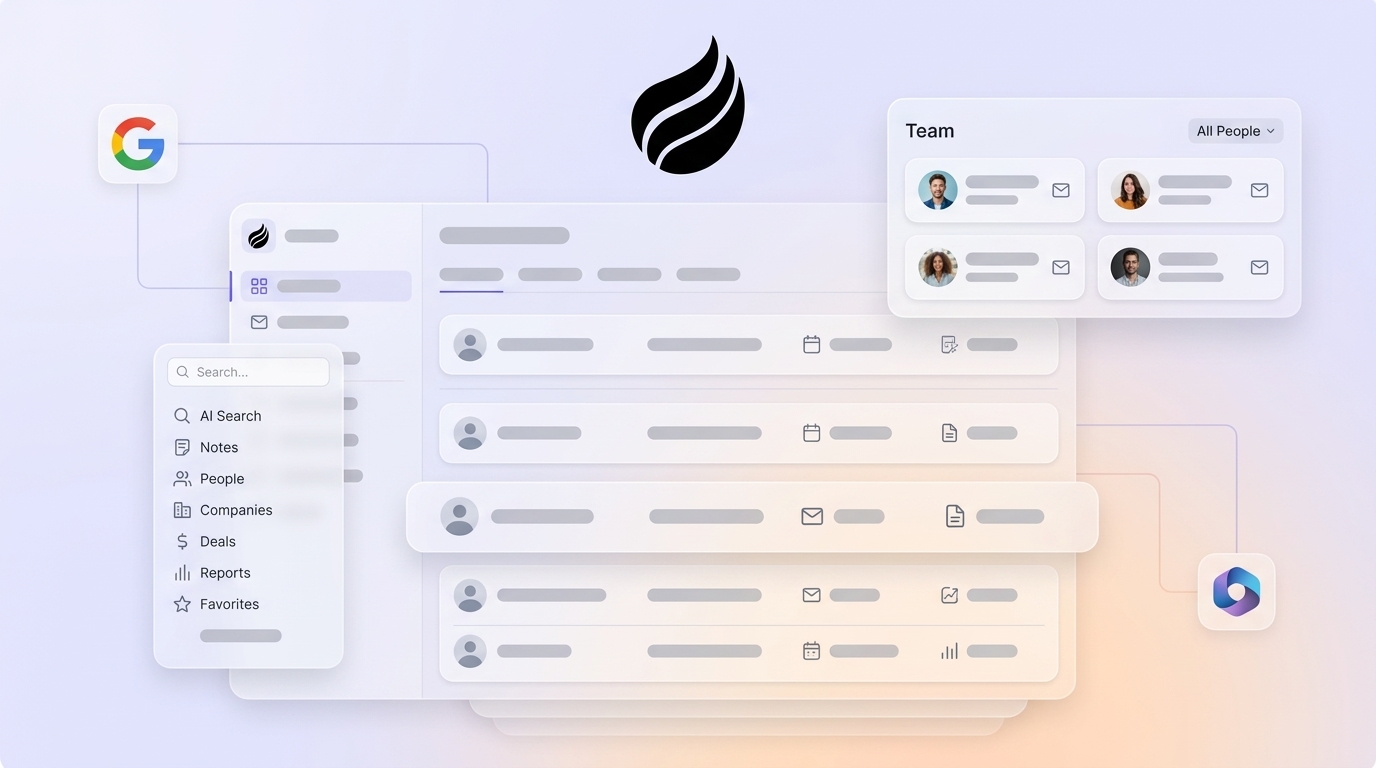
- Standalone AI-First CRM: Designed for small companies (1–20 employees) that have outgrown spreadsheets but find manual CRMs like HubSpot or Pipedrive to be expensive, outdated chores. The Coffee Agent manages the system of record by auto-creating contacts from Google Workspace or Microsoft 365, enriching records with job titles, funding, and LinkedIn profiles, and logging every activity without rep intervention.
- Companion App For Salesforce And HubSpot: Deploys the Coffee Agent as an intelligent layer on top of an existing installation. The agent handles the “data in” process so the system of record stays accurate without human effort. Coffee’s improved summary templates, released November 2025, are customizable to match workflows and writable back to Coffee, HubSpot, or Salesforce.
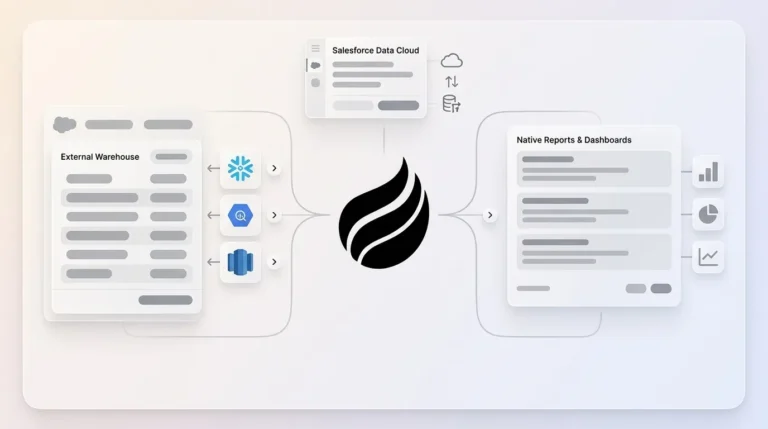
For teams already committed to Salesforce, the Companion App keeps the system of record in place. The Coffee Agent joins calls, transcribes them, generates summaries and action items, drafts follow-up emails, and writes structured data back to Salesforce. The CRM reflects reality without a rep touching a field. Coffee’s AI search on deals, released January 2026, answers natural-language questions such as “Which deals are stuck in negotiation?” or “What’s closing this month?” That capability turns pipeline reviews from interrogation sessions into strategic discussions.

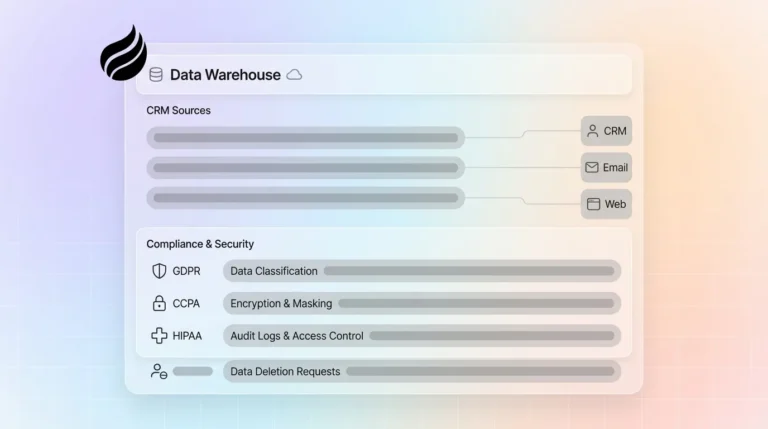
Coffee is SOC 2 Type 2 and GDPR compliant. Data is not used to train public models. Pricing is seat-based with the agent’s unlimited labor included. Teams avoid AI credit metering and per-conversation fees stacked on top of a base license.
Explore how Coffee handles CRM data entry for your team.

Decision Framework By Company Stage And Sales Motion
The right choice depends on company stage and sales motion, not on feature lists.
- Founder-Led (1–10 Employees): Coffee’s Standalone CRM is the fit. The team avoids admin overhead and implementation cost, and the agent handles data entry from day one. Attio is a viable alternative if the team wants a flexible data model and is willing to manage records manually.
- Early Outbound (10–50 Employees, No Salesforce Admin): Coffee’s Standalone CRM or Attio Pro both work. Salesforce at this stage creates more admin burden than it resolves. The $79/seat Attio Pro tier unlocks Call Intelligence and Sequences, while Coffee includes equivalent capabilities with autonomous data entry built in.
- PLG Or Product-Led (Any Size): Attio’s flexible relational data model handles the non-linear customer journeys common in PLG motions. Coffee’s Companion App can layer on top if data quality becomes the bottleneck.
- Mid-Market Committed To Salesforce (50–200 Employees): Coffee’s Companion App is the fit. The system of record stays in Salesforce, and the Coffee Agent handles the “data in” process so adoption and data quality improve without a rip-and-replace.
- Enterprise (200+ Employees, Regulated Industry): Salesforce with the Einstein Trust Layer remains the defensible choice for governance and compliance. Coffee’s Companion App can still reduce manual entry overhead on top of an existing Salesforce instance.
Compare Coffee’s Standalone and Companion deployment options.
What To Evaluate In Any AI CRM
Three evaluation criteria separate platforms that reduce admin work from those that add it.
- Data Enrichment Quality: Does the platform enrich records continuously and automatically, or does enrichment require a manual trigger or a separate tool subscription? A CRM contact database loses 20–30% accuracy per year to natural attrition, so enrichment that runs on a schedule rather than continuously already lags behind.
- Unstructured Data Handling: Can the platform ingest and structure data from email threads and call transcripts, or does it rely on reps to translate conversations into structured fields? Salesforce Agentforce and HubSpot Breeze agents act on data already in the CRM and still need a capture layer feeding accurate values in.
- Whether Automation Reduces Or Adds Admin Work: Does the platform’s agent capture data at the source, from calls, emails, and calendars, or does it depend on humans to provide clean inputs before AI can act? Most organizations need six to twelve months of clean historical data before Einstein produces useful predictions. An AI layer that requires clean data as a prerequisite shifts the admin burden earlier rather than eliminating it.
Frequently Asked Questions
What Are The Key Differences Between Attio And Salesforce?
Attio is an AI-native CRM built after ChatGPT, with AI embedded in its core architecture. Salesforce is an AI-layered platform built for enterprise scale, governance, and deep customization. The practical difference comes down to speed and cost. Attio deploys in days with no dedicated admin, while Salesforce deploys in months and typically requires a certified admin or professional services partner. Neither platform maintains its own data, so teams that want autonomous data entry add an agent layer like Coffee.
Will Salesforce Survive AI?
Salesforce will continue to exist for the foreseeable future. Its enterprise core is structurally embedded in the workflows, reports, and integrations of tens of thousands of large organizations, which makes switching costs prohibitive at scale. The open question is whether Salesforce’s AI strategy will generate the growth investors expect. Agentforce adoption has been slower than projected, and the 23,000-customer figure mentioned earlier is the clearest evidence of that gap. The primary blocker is data readiness, because enterprises cannot deploy AI agents effectively when CRM records are incomplete, fragmented, or stale. The agent-layer approach, where an autonomous data-entry agent sits on top of Salesforce, is the path most likely to unlock Agentforce’s value for committed customers.
What Will Replace Salesforce?
For most teams, the answer is an agent layer on top of the existing stack rather than a competing CRM. A small number of startups are building custom applications using AI coding tools to replace CRM functionality entirely, but this approach trades a known maintenance burden for an unknown one and diverts engineering resources away from product. For the majority of mid-market and enterprise teams, the realistic path is keeping Salesforce as the system of record and deploying an autonomous agent, such as Coffee’s Companion App, to handle the data-entry work that makes Salesforce useful. For small teams that have never committed to Salesforce, AI-native alternatives like Attio or Coffee’s Standalone CRM replace spreadsheets and manual CRMs in a more practical way.
Which CRM Is Better For A Small Sales Team?
For teams of one to twenty with a founder-led or early outbound motion, Coffee’s Standalone CRM or Attio Pro are the practical choices. Both deploy in days, require no dedicated admin, and cost a fraction of Salesforce’s total cost of ownership. The key difference is data entry. Attio’s AI assists on request, while Coffee’s agent handles data entry autonomously by auto-creating contacts, enriching records, logging activities, and generating post-meeting summaries without rep intervention. For teams of twenty to fifty already using Salesforce or HubSpot, Coffee’s Companion App resolves adoption and data-quality problems without a platform migration.
How Long Does Implementation Take?
Attio’s basic setup takes a few hours, with full implementations running one to five days for small teams and two to six weeks for mid-market. Salesforce’s basic SMB Sales Cloud rollout takes four to eight weeks, with mid-market implementations taking three to six months and complex transformations six to twelve months or longer. Coffee’s Standalone CRM connects via Google Workspace or Microsoft 365 authentication and begins capturing data immediately, so no formal implementation project is required. Coffee’s Companion App for Salesforce or HubSpot deploys through a simple authentication flow that allows the agent to sync, enrich, and write data back to the existing system of record.
Conclusion: Choosing The Agent That Maintains Your CRM
The real question in the Attio vs Salesforce debate for AI powered CRM automation is which platform actually maintains its own data. Both platforms are passive systems that depend on humans to keep records accurate. Attio’s AI-native architecture improves on Salesforce’s AI-layered approach for lean teams, yet Ask Attio still assists on request instead of maintaining records autonomously. Salesforce’s Agentforce is the most capable autonomous agent in the enterprise CRM market, but it requires clean data as a prerequisite, and most organizations lack that level of data hygiene.
Coffee resolves the problem neither platform solves on its own. The Coffee Agent handles data entry, enrichment, meeting management, and pipeline intelligence autonomously and continuously, without requiring a rep to touch a field. It deploys as a Standalone AI-First CRM for teams that want to start clean, or as a Companion App for teams committed to Salesforce or HubSpot that want to stop doing their CRM’s data entry without ripping out their system of record.
See how Coffee can take over CRM data entry for your team today.