Written by: Doug Camplejohn, CEO & Co-Founder, Coffee | Last updated: September 24, 2026
Key Takeaways
- Attio leads in flexible data modeling and AI architecture for non-standard GTM motions, while HubSpot excels in integration depth and marketing alignment.
- Both platforms act as passive databases that depend on manual data entry, which limits AI accuracy when data quality slips.
- HubSpot’s strongest AI features sit behind higher tiers with mandatory onboarding fees, which creates steep cost jumps for growing teams.
- Migration between Attio and HubSpot requires significant rebuilds of workflows, reporting, and automations, so teams often spend weeks rather than days.
- Coffee adds an agent layer that feeds either CRM with clean data so AI can reason over accurate, structured records.
See How Coffee Fills The Data Gap
Why This Comparison Matters Now
Teams that shortlist Attio and HubSpot for AI-driven sales already know the feature lists and pricing pages. They need a tiebreaker that shows which platform will age better over the next 18 months and whether CRM choice is even the main constraint.
The Attio vs HubSpot CRM debate often hides the deeper issue of who fills the CRM with good data. Only 35% of sales professionals say they completely trust their pipeline data. AI that reasons over bad data produces worse decisions at higher speed, so data quality becomes the real decision point.
How We Are Comparing Attio And HubSpot
This comparison focuses on AI-driven sales teams at 10–50 person SaaS companies. It does not target marketing-led organizations or enterprises that already run Salesforce as the system of record.
Attio and HubSpot appear on the same shortlist because they represent different bets on how a sales team should operate. Attio positions itself as an AI-native, flexible-data-model challenger. HubSpot presents an all-in-one platform with more than 1,800 App Marketplace integrations.
Both platforms share one critical flaw and behave as passive databases. HubSpot’s biggest disadvantage for sales teams is the gap between what the CRM collects and what reps actually enter. Reps forget to log calls, skip notes, and leave key fields blank. Attio offers a more elegant interface but faces the same behavior. Neither platform removes the data-entry burden on its own.
This guide also introduces a third option: an agent layer that sits on top of either CRM and tackles the data-entry problem directly.
Evaluation Criteria For AI-Driven Sales Teams
These criteria mirror the real tradeoffs AI-driven sales teams face when choosing between Attio and HubSpot, rather than a generic feature checklist.
- AI Architecture: what each platform’s AI actually automates, and what remains manual
- Data Model Flexibility: how well the schema fits non-standard GTM motions
- Pricing Mechanics And Total Cost Of Ownership: per-seat costs, onboarding fees, and AI credit consumption
- Migration Friction: what transfers cleanly and what breaks when switching
- Data Quality And Manual Entry Burden: where the data-entry chore still falls on the rep
- Integration Depth: native connections versus Zapier workarounds
- User Adoption: interface friction and rep behavior
- Long-Term Scalability: platform risk and growth ceiling
Attio Vs HubSpot: Side-By-Side Comparison
The table below lines up the main evaluation criteria so you can see where Attio and HubSpot diverge before diving into the details.
Why HubSpot Is Falling Behind For AI-Driven Sales Teams
HubSpot falls behind for AI-driven sales teams because its strongest AI features sit behind higher tiers and its AI cannot reach data outside HubSpot.
Most meaningful HubSpot Breeze AI capabilities, including predictive lead scoring, the Prospecting Agent, and the Customer Agent, require Professional or Enterprise tiers. The Prospecting Agent requires Sales Hub Professional. Predictive lead scoring requires Marketing Hub Enterprise and 12+ months of clean contact engagement history and 200+ closed deals attributed to HubSpot contacts before it performs meaningfully.
The pricing cliff hits small teams hard. A 10-person sales team moves from $200/month on HubSpot Starter to $1,000/month on Professional, plus a mandatory one-time onboarding fee cited at $4,500. Breeze can only reason over data inside HubSpot, so it cannot qualify a lead using product usage data in Snowflake, score a deal using call recording metadata, or route based on enrichment outside HubSpot without workarounds.
Key Downsides Of HubSpot CRM For Startups
Startups feel HubSpot’s downside most in cost anxiety and a persistent data-entry burden that its AI cannot escape without already clean data.
71% of sales reps say they spend too much time on data entry. HubSpot does not change that pattern. Its Breeze AI requires clean structured CRM data as a prerequisite, and duplicate contacts, empty fields, and inconsistent data make Breeze predictions unreliable. The AI depends on the very data quality problem teams struggle to fix.
AI credit consumption adds another layer of cost. HubSpot Sales Hub Professional’s 3,000 monthly AI credits cover roughly 60 resolved customer-agent conversations or 30 prospecting-agent outreaches, so a busy inbound team can exhaust the allowance in about two weeks. A team handling 500 customer conversations per month on HubSpot Customer Platform Professional can spend around $1,770 monthly in agent credits alone before any seat overages.
Control HubSpot Data Costs With Coffee
HubSpot Breeze Vs Attio AI Attributes: What Each Actually Automates
HubSpot Breeze and Attio AI Attributes take different architectural approaches, which changes how much manual work remains after each runs.
Attio AI Attributes live as record-level fields that auto-research, classify, summarize, or complete via prompts. The structured output can be filtered and sorted, so Attio’s AI sits inside data objects and flows into views and workflows rather than staying in a chat window. Ask Attio handles natural-language Q&A over CRM data for pipeline health checks and meeting prep. Attio’s Revenue Agents run continuously for PLG activation, renewal risk detection, and lead routing.
HubSpot Breeze operates as three separate pillars without a central orchestrator. Each Breeze Agent, including Customer, Prospecting, and Data, runs independently without coordination across the funnel. HubSpot’s Smart Deal Progression analyzes transcripts and suggests CRM updates, but every suggested update must be reviewed and applied by a rep with one click, so no field updates automatically. Breeze’s AI cannot reach data outside the HubSpot environment.
Both platforms still leave initial data capture from calls, emails, and meetings as manual work unless another tool handles it. Neither Attio nor HubSpot autonomously logs interactions and enriches records without human input or a third-party integration.

Attio Vs HubSpot Pricing 2026: Seats, Onboarding, And AI Credits
Pricing checked September 2026 from published pricing pages and third-party analyses. The table shows how costs change by tier and where onboarding fees and AI credits start to matter.
Key cost traps deserve attention. Attio Plus is capped at 10 seats. An eleventh hire forces a jump to Pro at $79/user/month. That change creates a 126% per-seat cost increase applied to the entire team at once. On HubSpot, a five-person team on Sales Hub Professional annual billing pays $6,990 in year one, including seats, onboarding, and typical credit overages. Sticker prices on both platforms understate total cost of ownership once AI credits, Zapier workarounds, and integration projects enter the picture.
Attio Vs HubSpot Migration: What Actually Breaks When You Switch?
Migration traps often become the most underestimated cost in the Attio vs HubSpot decision. Forum accounts consistently report that contacts transfer while most other elements require a rebuild.
Contacts and companies transferred cleanly via Attio’s Import2 migration service, but deal-stage mapping failed. One 8-person team had to manually rebuild pipeline stages, which took about half a day. Activity logs created more friction. Call notes, email threads, and meeting records transferred only partially with inconsistent formatting, which led to nearly two days of cleanup and lingering issues weeks later.
Several critical assets do not transfer at all. Sequences, email templates, workflows, automations, custom objects and relationships, reports and dashboards, sending reputation, and integrations all require manual rebuilds. HubSpot’s historical reporting does not migrate to Attio, so years of pipeline data, conversion rates, and deal velocity metrics stay behind because you can import records but not the reporting history.
Timeline expectations should reflect that reality. Plan for two to three weeks rather than a weekend. Budget for adoption drag as well. CRM usage dropped to roughly 40% of normal for the first two weeks after the switch. Configuration overhead for rebuilding automations alone took two weeks in a documented parallel test. The data-model audit and process redesign usually take longer than the raw data transfer, so volume rarely drives the difficulty.
Plan Migration With Coffee As Your Data Layer
Will AI Replace Your CRM Or The Data Entry Inside It?
Migration friction and pricing cliffs both stem from the same root issue: neither platform removes the data-entry burden. That reality raises a broader question about the role of AI in a CRM.
AI replaces the data-entry labor while leaving the system of record intact, and that distinction sets the stage for AI value in any CRM.
AI features save minutes per task, while AI architecture lets the same headcount handle two to three times the pipeline volume. The difference lies in whether the AI stays stateless and triggered by human action or runs as a persistent, self-initiating layer. Gartner describes AI as an accelerant of productivity that speeds up whatever already exists, including broken handoffs. Broken processes then fail faster, at higher volume, with less visibility.
Coffee enters at this point. Coffee provides the agent layer that addresses the data-quality problem for either Attio or HubSpot. Coffee’s improved summary templates, released November 2025, are customizable to match workflows and writable back to Coffee, HubSpot, or Salesforce. The agent captures and structures data from calls, emails, and calendars, then writes it to whichever system of record the team already uses. The CRM becomes accurate because the agent enters the data instead of the rep.

Best-Fit Use Cases For Attio, HubSpot, And An Agent Layer
Choose Attio if your team is small and focused on sales. It fits best when you need custom objects for a non-standard GTM motion such as PLG, partnerships, or outbound. Attio also suits teams that value UX over deep reporting and rely on only a few integrations beyond email and calendar. Attio is the better product to use for flexible workflows, but not yet the better product to rely on for deep pipeline forecasting or broad native integrations.
Choose HubSpot if you have a dedicated marketer who needs marketing and sales alignment on one platform. HubSpot also fits teams that depend on five or more native integrations, already have significant automation and reporting history, or need out-of-the-box pipeline forecasting that works on day one.
Consider an agent layer if your core problem is data quality. Typical symptoms include reps not logging calls, fields left blank, and pipeline numbers that leaders do not trust. Coffee deploys as a Companion App on top of either Attio or HubSpot. It handles data capture from emails, calendars, and call transcripts and writes clean, structured data back to the CRM. Coffee’s AI search on deals, released January 2026, answers natural-language questions such as “Which deals are stuck in negotiation?” or “What’s closing this month?”. Those answers only help when the underlying data is accurate, and Coffee makes that accuracy possible.

Operational And Long-Term Considerations
Total cost of ownership for either platform stretches far beyond per-seat pricing. Modern CRM TCO includes licensing, implementation, training, maintenance, customization, and third-party integrations, and AI features often bill as a separate cost center with per-user or usage-based fees.
Attio’s hidden costs show up in configuration overhead and integration gaps. One 8-person team’s hidden migration costs broke down into roughly 40 hours of migration work across three people, 10 hours building reporting workarounds over three months, and an estimated 15% productivity loss across the team for two weeks. Zapier workarounds for missing native integrations add subscription cost and introduce new failure points.
HubSpot’s hidden costs concentrate in onboarding fees, AI credit overages, and the manual data entry burden that its AI cannot escape without clean data. RevOps teams spend 30 to 40 percent of their week on avoidable data cleanup. That time never appears in pricing tables but compounds every week the CRM runs on bad data.
Risks, Limitations, And Common Misconceptions
Attio’s main risks involve setup burden and configuration overhead. The flexible object model demands deliberate schema design. AI Attributes also increase credit burn, and Attio’s Research Agent runs are credit-heavy at roughly 10 credits per run. Attio ships without marketing features, so there is no email marketing, no landing pages, and no lead scoring based on marketing engagement. As a startup, Attio carries a different platform risk profile than HubSpot.
HubSpot’s risks center on pricing escalation, AI features gated behind higher tiers, and the assumption that buying the platform fixes data quality. Activating Breeze AI before cleaning the CRM is the most common implementation mistake and leads to lead scoring that does not reflect reality. Many HubSpot Breeze agents remain in beta, and HubSpot reserves the right to start charging for free beta features with 30 days’ notice.
The shared limitation, as noted earlier, is that neither platform solves the data-quality problem on its own. Software alone cannot repair a broken process. The agent layer, Coffee, provides the architectural answer to the shared flaw both platforms carry.
Decision Framework: Match Your CRM To Your Constraints
This simple framework helps you match each option to your current constraints and avoid overfitting on features.
- Need marketing-sales alignment on one platform? Choose HubSpot.
- Need custom objects for a PLG or partnership motion? Choose Attio.
- Need 5+ native integrations working on day one? Choose HubSpot.
- Starting fresh with a small sales-only team? Choose Attio.
- Have significant HubSpot automation and reporting history? Stay on HubSpot because the migration cost is real.
- Core problem is data quality, with reps not logging and fields blank? Add Coffee as the agent layer on top of whichever CRM you choose.
Coffee works as a Companion App on top of HubSpot or Salesforce, or as a standalone CRM for teams that want the agent to run the entire system of record. The specific CRM matters less than whether that CRM holds accurate data. Coffee becomes the variable that changes that equation.
Let Coffee Run Your Data Layer
Frequently Asked Questions
The questions below cover implementation, expertise, and data-quality details that usually surface once teams move past the initial comparison.
How Long Does It Take To Implement Attio Vs HubSpot?
HubSpot can support basic pipeline management on day one, since contacts, deals, and email tracking work out of the box. Reaching full functionality with sequences, custom reporting, and workflow automation on HubSpot Professional typically takes about 4 to 6 weeks of configuration per Hub, with a measured average of 3.5 weeks. HubSpot’s mandatory onboarding program usually runs for roughly 90 days. Attio’s implementation timeline depends heavily on schema design. A simple sales CRM with standard objects can go live in 2 to 4 weeks on Attio. A custom-object setup for a non-standard GTM motion needs deliberate data-model work and typically takes 4 to 6 weeks. Migration from HubSpot to Attio consistently measures in weeks rather than days. One documented migration required three weeks before the team was fully functional, not counting the two-day activity log cleanup. Teams with multiple hubs, custom objects, integrations, and automations should plan for substantially more preparation and testing.
What Internal Expertise Is Required For Each Platform?
HubSpot targets non-technical operators and can be managed by a RevOps generalist or a sales manager with moderate technical comfort. The Professional and Enterprise tiers introduce workflow complexity that benefits from dedicated RevOps ownership. Attio’s flexible data model acts as both strength and tax. Building a schema that fits a non-standard GTM motion requires someone who can think in data architecture terms instead of only CRM administration. Teams without a technical RevOps owner will experience Attio’s configuration overhead as significant. Both platforms require ongoing maintenance. The data-entry burden on both platforms falls on reps unless an agent layer handles it.
How Do Attio And HubSpot Handle Data Quality Differently?
Both platforms treat data quality as a human responsibility and rely on manual entry. Attio’s AI Attributes can auto-research and classify records via prompts, and its Research Agent performs web research to produce structured answers on leads, but these features consume credits and require deliberate setup. HubSpot’s Breeze Data Agent enriches contact and company records from web research and HubSpot’s proprietary database. Some users report accuracy and consistency concerns at scale, and Smart Deal Progression still requires rep approval on every suggested field update. Neither platform autonomously captures data from calls, emails, and calendars and writes it to the CRM without human action. That gap is where an agent layer like Coffee fits, ingesting unstructured data from emails, call transcripts, and calendars and writing clean, structured records back to the CRM automatically.
Can I Use An Agent Layer With Either CRM?
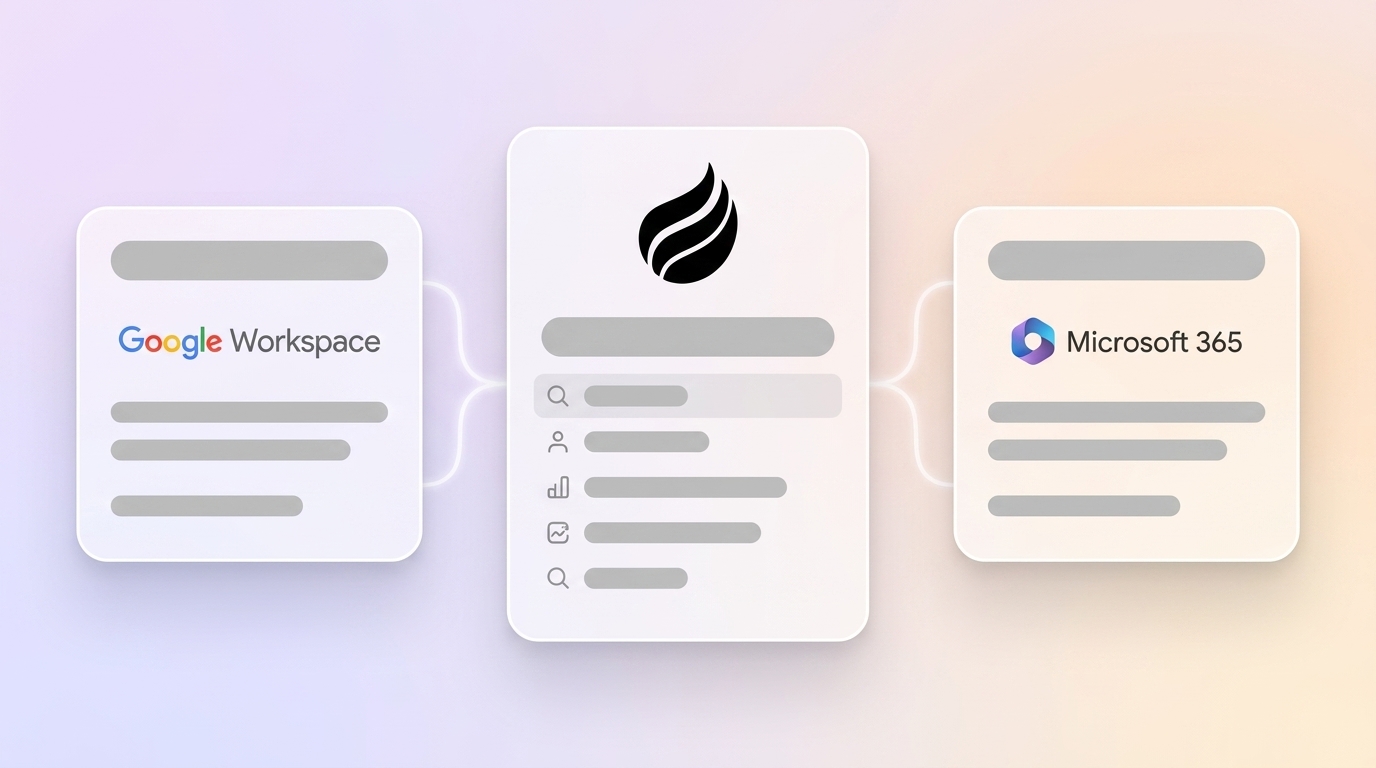
Yes. An agent layer is CRM-agnostic by design. Coffee deploys as a Companion App on top of existing HubSpot or Salesforce instances and handles data capture and enrichment without requiring a CRM migration. The agent connects to Google Workspace or Microsoft 365, scans emails and calendars to auto-create contacts and companies, joins calls to record and transcribe, and writes summaries, action items, and field updates back to HubSpot or Salesforce.