Written by: Doug Camplejohn, CEO & Co-Founder, Coffee | Last updated: August 27, 2026
Key Takeaways
- Zero-touch automation removes manual CRM data entry by capturing emails, calendar events, calls, and transcripts automatically.
- Reps spend only 28% of their time selling, with the rest lost to administrative tasks such as manual CRM logging.
- Five capture surfaces must be automated for true zero-touch performance: email, meetings, calls, web forms, and documents.
- Agent-first architectures like Coffee cut admin work without forcing reps to change habits or learn new interfaces.
- See how Coffee eliminates manual data entry from day one.
The Problem: Manual CRM Entry Is Still the Default in 2026
Pipedrive’s 2026 CRM Trends Report, surveying 1,000 U.S. sales professionals, found that nearly four times as many spend most of their time logging calls, emails, and meetings as those focused on closing deals. Forum threads in 2026 still surface the same complaint: “I still have to log calls manually.” That frustration reflects a structural product problem, not a training gap.
The Salesforce State of Sales 2026 report found that reps spend 28% of their time selling, with the remainder on non-selling tasks including administrative work such as CRM entry. A separate analysis found that 32% of reps spend more than an hour per day on manual CRM data entry. That combination of low selling time and high logging time creates a clear case for automation.
True zero-touch automation has a precise definition in 2026. The July 2026 Layer3 Labs guide defines it as every client interaction landing in the CRM within minutes with the right fields filled and nobody typing it. An AI-native CRM must capture activity itself, keep records current without data entry, and prepare or take the next action. If the AI disappeared, there would be no product left. Five capture surfaces must all be automated: email, meetings, calls, web forms, and documents. This comprehensive standard sets the baseline for the comparison that follows.
See how Coffee eliminates manual data entry from day one.
How This Comparison Evaluates Zero-Touch CRMs
Five criteria determine whether a CRM delivers genuine zero-touch automation for a 2–10 person team:
- Hours saved per rep per week. This measures the actual reduction in admin time from automated capture, not projected savings from marketing claims.
- Native inbox and calendar sync depth. The system must connect directly to Gmail or Outlook and capture all activity without manual triggers or Zapier bridges.
- Unstructured data handling. Modern LLM-based automation extracts structured fields such as budget, timeline, and next steps from unstructured text in emails, meeting transcripts, and documents, a capability legacy relational databases lack.
- Pricing predictability for 2–10 seat teams. Tiered feature gating, per-contact surcharges, and mandatory add-ons often push real cost to two to five times the advertised per-user price.
- Ongoing administrative burden. Licensing accounts for only 30–40% of actual CRM spend, with the rest coming from implementation, administration, integrations, marketplace apps, and productivity loss during adoption.
2026 Hours-Saved Benchmark for Leading Tools
The table below covers nine platforms or automation layers evaluated against the five criteria above. Hours-saved figures draw from 2026 benchmark studies. Sync depth and pricing predictability reflect published architecture and pricing structures as of August 2026. All data points are cited inline.
| Tool / Layer | Hours Saved / Rep / Week | Sync Depth | Pricing Predictability (2–10 seats) |
|---|---|---|---|
| Coffee (Standalone) | 8–12 hrs (agent handles all data entry, enrichment, and meeting management) | Native Gmail / Outlook and calendar, auto-creates contacts, logs activity, writes summaries back to record | Seat-based, agent labor included, no contact-count tiers or AI credit meters |
| Coffee (Companion for Salesforce / HubSpot) | 8–12 hrs (agent writes enriched data and summaries back to existing CRM) | Authenticates to existing instance, syncs, enriches, and writes insights back without manual entry | Seat-based add-on, no additional Salesforce / HubSpot admin overhead required |
| Salesforce (legacy) | Minimal without add-ons, reps spend more time on manual logging than closing deals | Salesforce legacy Lightning Sync provides native contact and event sync with Microsoft Exchange without requiring Einstein Activity Capture or third-party connectors. | Enterprise tier $175/user/month, real TCO often 3–5× license fee after implementation and add-ons |
| HubSpot (legacy) | Partial, manual entry remains a primary frustration for some users | Native Gmail / Outlook sync available, call and transcript capture requires Sales Hub add-on | HubSpot entry plans cost ~$15–$20/user/month, teams commonly reach $90–$150/user/month after required feature upgrades. |
| Pipedrive | Partial, AI features reduce some admin but full logging automation requires additional tools | Email sync available, call logging largely manual without third-party integration | Lite plan ~$14/user/month, automation and AI features gated to higher tiers |
| Attio | Limited, classified as AI-added rather than AI-native, team still logs and maintains workspace manually | Email and calendar sync, AI features metered by credits | AI features metered separately through credits, real cost diverges from seat price with daily AI use |
| Clarify | Near-zero entry for seed-to-Series A teams, records meetings, enriches contacts, suggests pipeline updates | Autonomous capture of meetings and contacts, limited depth on established Salesforce / HubSpot integrations | Early-stage pricing, integration gaps with enterprise CRMs create unpredictable overhead for growing teams |
| AI Note-Taker Only (e.g., Fathom, Avoma) | 6–8 hrs from automated meeting notes and CRM logging for Account Executives | Meeting transcription only, does not capture email, calendar context, or enrich records | Point-solution pricing adds a separate subscription, data lives in a silo unless manually pushed to CRM |
| AI Applied Across All Workflows | 15–18 hrs when AI covers notes, CRM logging, scheduling, research, enrichment, and follow-ups | Requires assembling multiple tools, integration maintenance creates ongoing failure risk | Custom API integrations cost $50,000–$150,000 annually including maintenance, 32% of reps lose more than an hour per day when integrations fail |
Methodology note: Hours-saved figures reflect 2026 benchmark studies including the Revenue Velocity Lab benchmark (N=938 reps) and the Outreach 2026 Agent Productivity Impact Report. Coffee’s figures reflect published product capabilities; independent third-party benchmarking of Coffee specifically was not available at publication.
How Coffee Compares on Setup, Capture, and Flexibility
Setup and onboarding. Coffee connects to Google Workspace or Microsoft 365 via authentication and then scans emails and calendars to auto-create contacts and companies. Salesforce and HubSpot implementations for small teams typically require two to eight weeks. Staff productivity often dips for two to six weeks during transition, and realistic first-year costs reach $5,000–$7,000 for a five-person team once training, data migration, and integrations are included. Clarify and Day.ai offer faster onboarding but lack the integration depth required for teams already running Salesforce or HubSpot workflows with quotas and required fields.
Data capture and maintenance. Full automation significantly reduces the manual data entry burden for sales teams. Legacy CRMs rarely achieve this without separate enrichment tools, call intelligence tools, and note-takers. Coffee consolidates all five capture surfaces, covering email, calendar, calls, web forms, and documents, into a single agent. That consolidation removes the integration maintenance that can cost $50,000–$150,000 annually for custom API stacks.

Usability for frontline reps. Many teams own CRMs with AI capabilities that reps never touch, and some users do not know the features exist. Agent-first architectures avoid this adoption problem because the system captures data whether or not the rep opens the CRM. Passive databases depend on rep discipline to generate value. Agent architectures generate value regardless of rep behavior.
Manager visibility. Coffee’s agent captures every interaction automatically, so pipeline data reflects reality instead of rep memory. Coffee’s Pipeline Compare feature visualizes week-over-week deal changes, including progressed, stalled, and new deals, without CSV exports. When outreach platforms connect directly to CRMs with real-time bidirectional sync, pipeline accuracy moves from under 60% to 100% of touchpoints logged.
Integration complexity. The average company with 75–199 employees runs 44 SaaS applications, creating 44 potential failure points with no single source of truth. Coffee reduces stack complexity by performing the jobs of CRM, enrichment, prospecting, call recording, outreach sequencing, and forecasting inside one agent. For teams committed to Salesforce or HubSpot, the Companion model authenticates to the existing instance and writes enriched data back without replacing the system of record.
Long-term flexibility. Between 60% and 75% of custom CRM code becomes technical debt within two years. Coffee’s seat-based pricing with no AI credit meters or contact-count tiers keeps costs predictable as teams grow.
Which Teams Get the Most Value from Coffee?
Early-stage teams (1–10 people, no existing CRM). Teams that have outgrown spreadsheets and Notion but view HubSpot or Pipedrive as expensive maintenance burdens fit Coffee’s Standalone CRM well. Gmail users connect Google Workspace, and Outlook users connect Microsoft 365. The agent begins populating records immediately with no manual configuration of fields or workflows.

Growing sales organizations (10–50 people, evaluating consolidation). AI-augmented reps generate 41% more revenue ($1.75M vs. $1.24M per rep) while running 18% fewer activities when time saved from CRM logging is redirected to selling. Teams at this stage benefit from Coffee’s consolidated stack, replacing separate subscriptions for enrichment, call intelligence, and sequencing with a single agent and avoiding the six-figure integration costs mentioned earlier.
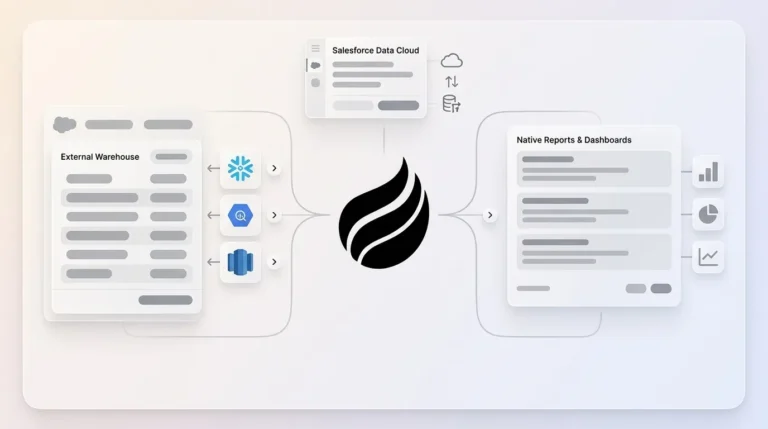
Teams committed to Salesforce or HubSpot. RevOps leaders and Heads of Sales who cannot migrate their system of record use Coffee’s Companion model. The agent authenticates to the existing instance, captures unstructured data from calls and emails, enriches records, and writes summaries back. Coffee’s November 2025 update introduced customizable summary templates writable back to HubSpot or Salesforce, and the January 2026 Stripe integration automatically imports customers, enriches them, and marks paid invoices as Closed Won. These updates remove manual CRM updates from those workflows.

Compare Coffee’s Standalone and Companion models.
Operational and Long-Term Factors to Weigh
Change management. 32% of users cite lack of technical expertise as a top adoption barrier. Agent-first systems reduce this barrier because reps keep their existing email and calendar workflows while the agent captures data in the background. The primary change management task becomes reviewing agent-generated summaries instead of learning a new data-entry interface.
Data hygiene. Any zero-touch capture automation must ship with deduplication rules and a human merge-queue owner on day one, because each of the five capture surfaces can independently create duplicate records for the same prospect. Coffee’s agent handles deduplication automatically, and teams should still assign a record owner for edge-case review to maintain data quality as the system scales.
Hidden maintenance. A 15% productivity decline over a 60-day CRM adoption period for a 10-person team generating $2 million in annual revenue represents approximately $50,000 in missed revenue. Seat-based pricing with no metered AI usage avoids the cost spikes that cause teams to restrict agent use to avoid overage charges.
Simple Decision Guide for Choosing Coffee
Match your team’s constraints to the appropriate path:
- No existing CRM, Gmail or Outlook, 1–20 people: Choose Coffee Standalone so the agent manages the system of record from day one.
- Existing Salesforce or HubSpot, low adoption, poor data quality: Use Coffee Companion so the agent handles data-in without replacing the system of record.
- Committed to Salesforce or HubSpot, need call and email capture only: Use Coffee Companion with summary write-back to the existing instance.
- Evaluating consolidation from a multi-tool stack: Use Coffee Standalone to replace CRM, enrichment, prospecting database, call recording, and sequencing tools in one seat-based subscription.
- Large enterprise with complex custom workflows or regulated industry requirements: Coffee is not the right fit; evaluate Salesforce with Agentforce or HubSpot Breeze for enterprise-grade compliance infrastructure.
Risks, Limitations, and Common Misconceptions
Overbuying on features. A key test for genuine zero-entry systems is whether AI features are included in base pricing or metered separately through credits, because credit-based models cause real cost to diverge from the advertised seat price once teams use AI daily. Teams should confirm that required automation capabilities sit in the plan they intend to purchase, not in a higher tier.
Incomplete capture. No system captures 100% of activity across every communication channel. In 2026, true zero-touch CRM automation must handle DM-channel events as first-class triggers, because more sales conversations now occur in Instagram DMs, WhatsApp, and Messenger than in inboxes for SMB and agency businesses. Teams with significant DM-based sales pipelines should verify channel coverage before committing.
Misconceptions about “AI features.” A Copilot waits for a human to ask a question, while an Agent perceives signals, reasons, and acts autonomously, and that autonomy enables real reductions in administrative work. CRMs that label suggestion engines or summarization buttons as “AI” do not meet the zero-touch standard. The practical test is whether the system updates records and logs activity without a human prompt.
Newer AI-native alternatives. Clarify and Day.ai provide agent-like features for early-stage teams but lack the integration depth required for established Salesforce or HubSpot deployments with quotas, forecasting, and required fields. Teams already running those systems need a companion that understands their existing schema, not a replacement that cannot write back to it reliably.
Frequently Asked Questions
How long does it take to implement Coffee and see results?
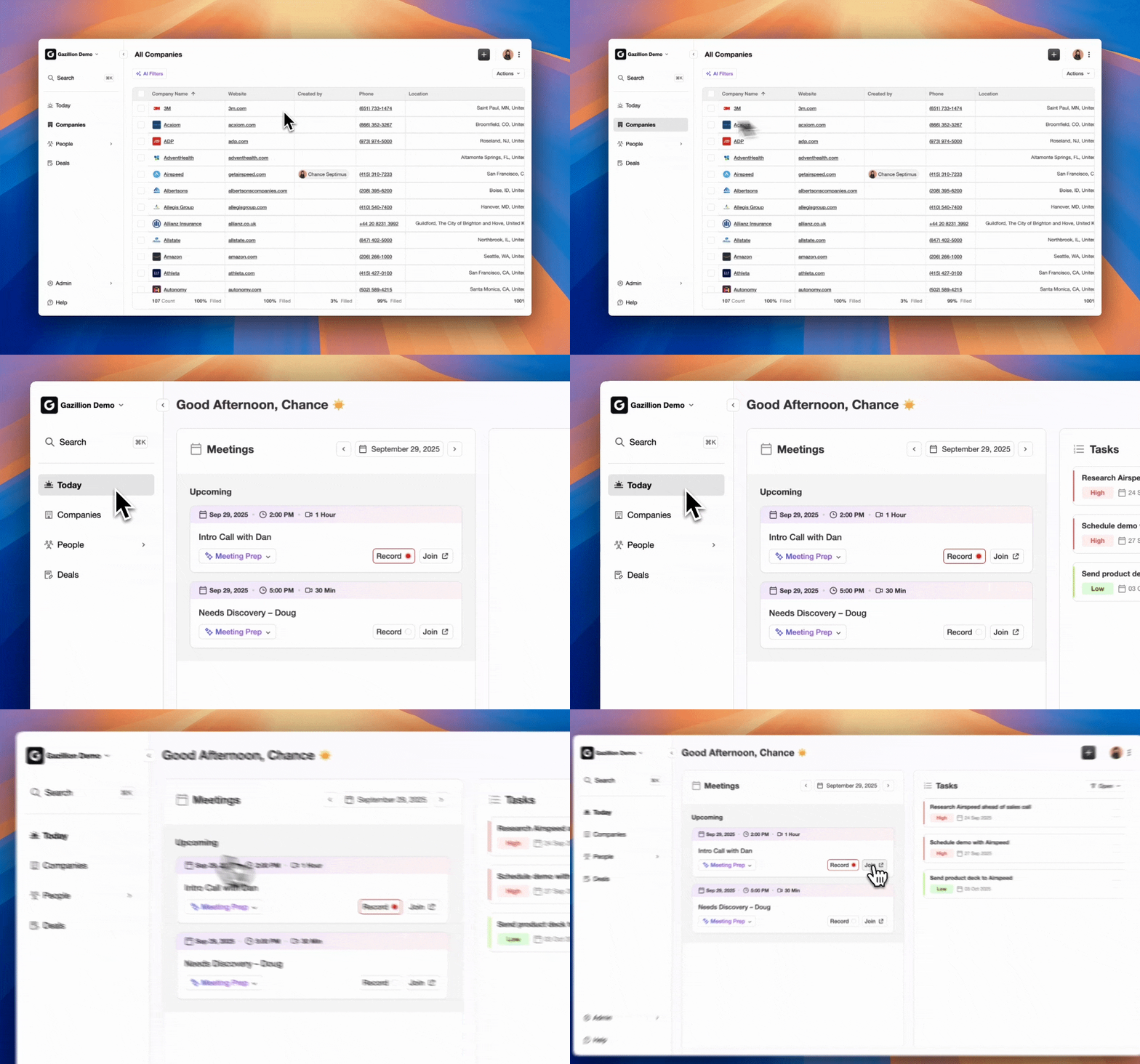
Coffee connects to Google Workspace or Microsoft 365 through a standard authentication flow. The agent begins scanning emails and calendars immediately after connection and auto-creates contacts and companies without manual configuration. Most teams have a populated CRM within the first working day. Legacy CRM implementations often require two to eight weeks of setup and a productivity dip during transition. Coffee’s agent-first architecture instead generates value from existing workflows, and teams using the Companion model for Salesforce or HubSpot follow the same authentication process while the agent enriches and writes data back to the existing instance.
Does Coffee require dedicated internal CRM expertise or an admin to maintain it?
Coffee does not require a dedicated internal CRM admin. Coffee’s seat-based pricing includes the agent’s labor, and the agent handles data entry, enrichment, deduplication, and activity logging autonomously. Legacy CRM deployments often require a dedicated administrator costing $80,000–$130,000 per year in base salary. Coffee removes that need for small teams by making the agent responsible for data quality. The only ongoing human task involves reviewing agent-generated summaries and handling edge-case duplicate merges, which takes minutes rather than hours per week.
What happens to existing Salesforce or HubSpot data when using Coffee as a Companion?
Coffee’s Companion model does not replace or migrate the existing system of record. The agent authenticates to the existing Salesforce or HubSpot instance, reads contact and deal data, enriches records with job titles, funding information, and LinkedIn profiles, and writes call summaries, meeting notes, and activity logs back to the correct records. Customizable summary templates introduced in November 2025 allow teams to match their existing field structure. The Stripe integration from January 2026 and the QuickBooks integration from February 2026 extend automatic data sync from financial systems into the existing CRM without manual entry, while the existing CRM’s quotas, forecasting, and required fields remain intact.
Is Coffee’s enrichment data reliable enough to replace tools like ZoomInfo or Apollo?
Coffee’s built-in enrichment, sourced through licensed data partners, covers job titles, company funding, and LinkedIn profiles at a quality level suitable for most small-team use cases. It does not aim to replace enterprise-grade data providers in highly specialized verticals. It does remove the need for a separate enrichment subscription for the majority of SMB and mid-market prospecting workflows. The Lead Finder feature also supports natural-language searches against Coffee’s own database, producing targeted prospect lists that live directly in the same system used for enrichment and outreach sequencing, which removes the CSV export step.
How does Coffee handle data security and privacy?
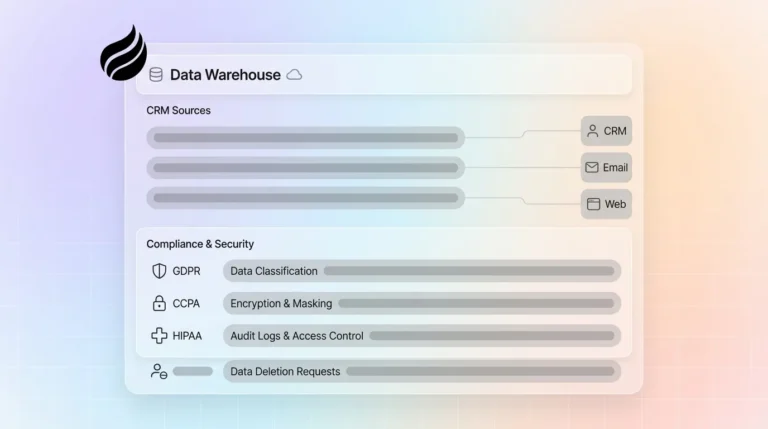
Coffee is SOC 2 Type 2 certified and GDPR compliant. Data ingested by the agent, including emails, calendar events, and call transcripts, is not used to train public AI models. Teams in regulated industries such as healthcare or finance that require multi-year security reviews or custom compliance validation should instead evaluate enterprise CRM platforms with pre-certified compliance infrastructure. For most small-to-mid-market sales teams, Coffee’s security posture meets standard commercial requirements without extra configuration.
Conclusion: Picking Your Path to Zero Entry
The five evaluation criteria of hours saved, sync depth, unstructured data handling, pricing predictability, and ongoing admin burden consistently separate agent-first architectures from passive databases. The shift from AI-assisted CRM to agentic AI marks the difference between a system that tells you what to do and one that does it for you. Legacy CRMs, regardless of added AI features, still rely on rep discipline to generate accurate data. Agent architectures remove that dependency.
Coffee is the only solution in this comparison that serves both new buyers and teams locked into Salesforce or HubSpot through a single agent architecture. The Standalone model replaces the passive database with an active agent. The Companion model makes an existing passive database accurate without requiring migration. Both paths remove the manual data entry grind and address the 28% selling-time constraint documented earlier.
Start your free trial and let the agent handle CRM data entry