Written by: Doug Camplejohn, CEO & Co-Founder, Coffee | Last updated: September 14, 2026
Key Takeaways
- Visitor tracking tools de-anonymize website traffic by matching IP addresses to company or individual records, recovering signal from the 97% of B2B visitors who never fill out forms.
- Tools fall into three tiers: company-level identification (Leadfeeder, Leadinfo), person-level identification (RB2B, Warmly), and full signal-to-outreach workflow platforms (Coffee, 6sense, ZoomInfo).
- Company-level tools reveal the visiting company and leave contact research to the rep, while person-level tools deliver a named individual but still require separate outreach tools.
- Full workflow platforms close the gap between signal detection and action by identifying visitors, recommending contacts, and enabling outreach inside a single system.
- Coffee combines visitor identification, persona-matched lead recommendations, and native outreach automation in one agent. See how Coffee turns anonymous traffic into pipeline.
The Three-Tier Identification Framework For Sales Teams
Every visitor tracking tool on the market fits one of three identification tiers. The tier tells you what a rep receives and what manual work remains.
Tier 1: Company-Level Identification
Tools in this tier — Leadfeeder, Leadinfo, Visitor Queue, Albacross — match the visitor’s IP to a company record. The rep receives a company name, firmographic data, and pages visited, so they can see which accounts are active. That is where the automation stops. Finding the right contact, sourcing their email, and writing the outreach all remain manual steps before any conversation can begin.

Tier 2: Person-Level Identification
Tools in this tier — RB2B, Warmly — match browser signals against an identity graph to return a named individual, typically with a LinkedIn profile and business email. Person-level identification works where the identity graph is deep, mostly the US, but struggles with VPNs, Safari’s tracking protection, and Apple Private Relay. The rep gets a name and profile, then moves to a separate sales engagement or email tool to run outreach.

Tier 3: Full Signal-To-Outreach Workflow
Platforms in this tier — 6sense, ZoomInfo, HubSpot Breeze, and Coffee — identify the visitor, recommend who to contact, and run or facilitate follow-up inside the same system. The gap between “signal detected” and “SDR takes action” is where many intent data implementations stall. Tier 3 tools exist to close that gap and keep reps in one workflow.
Best Visitor Tracking Tools For Sales Teams In 2026: Ranked Comparison
The table below ranks ten tools by identification tier, starting price, and CRM integration depth. Use it to see at a glance which tier each tool occupies and how deeply it connects to your CRM.
| Tool | Identification Tier | Starting Price | CRM Integration |
|---|---|---|---|
| Coffee | Full Signal-To-Outreach Workflow | See Pricing | Salesforce, HubSpot (Native) |
| Leadfeeder | Company-Level | €79/Mo (Paid) | Salesforce, HubSpot, Pipedrive |
| Leadinfo | Company-Level | €69/Mo (Annual) | HubSpot, Salesforce (Pro Tier) |
| RB2B | Person-Level | $79/Mo (Starter) | Salesforce, HubSpot Via Webhook |
| Warmly | Person-Level | See Vendor | Salesforce, HubSpot |
| HubSpot Breeze | Company-Level | ~$45/Mo | HubSpot (Native Only) |
| Visitor Queue | Company-Level | Volume-Based | HubSpot, Salesforce, Pipedrive |
| Albacross | Company-Level | €59/Mo (Annual) | HubSpot (Pro), Salesforce (Org Tier) |
| 6sense | Full Signal-To-Outreach Workflow | Custom | Salesforce, HubSpot, Marketo |
| ZoomInfo | Full Signal-To-Outreach Workflow | Consumption-Based | Salesforce, HubSpot, Dynamics |
1. Coffee — Best For Closing The Loop From Pixel Hit To LinkedIn Outreach
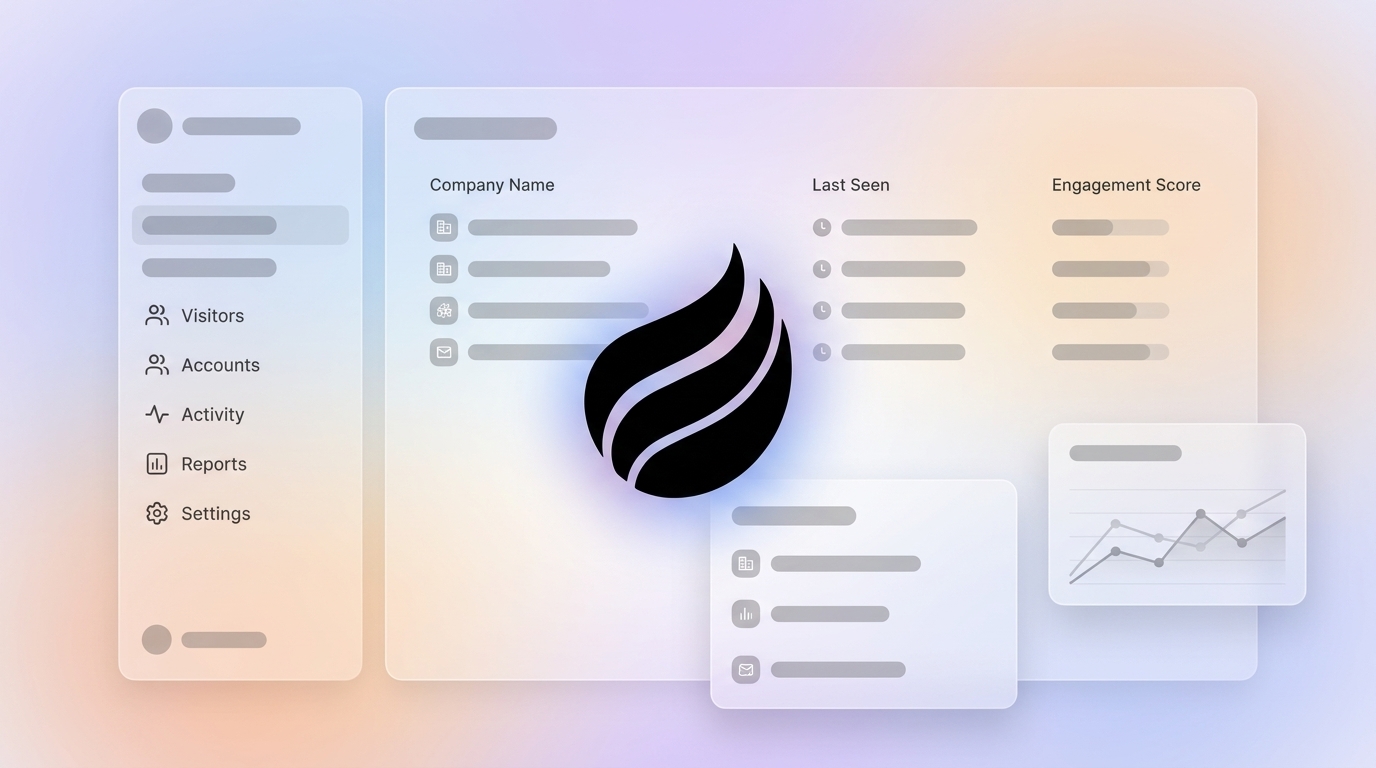
Identification Tier: Full Signal-To-Outreach Workflow. Coffee’s Visitor Identification pixel drops into the <head> tag of any site and immediately begins identifying visitors. The intelligence Coffee infers goes beyond a company name. It surfaces the visitor’s name, title, email, LinkedIn profile, company, pages visited, time on site, and whether it is a first or returning visit. Real-time Slack notifications surface high-fit visitors the moment they arrive. One click adds the prospect to Coffee with all enrichment pre-filled, ready for a LinkedIn connection request, an outbound email, or auto-enrollment into a Campaign sequence.
The key differentiator is Suggested Leads. Where RB2B and Warmly show a company name or a raw list of people, Coffee uses your buyer persona to recommend specifically which two or three humans inside that visiting company to reach out to and surfaces their LinkedIn profiles for instant outbound. The entire loop, from pixel hit to named individual to persona-matched recommendation and outreach, closes inside one agent without switching tools. Coffee is SOC 2 Type 2 and GDPR compliant, and data is not used to train public models.
2. Leadfeeder — Best For Google Analytics Integration And EU-Focused Teams
Identification Tier: Company-Level. Leadfeeder connects to Google Analytics data and enriches it with company identification and behavioral scoring. Its free Lite plan identifies up to 100 companies per month with 7-day history, and paid tiers start at the €79/month rate shown in the table. CRM integrations cover Salesforce, HubSpot, Pipedrive, and others. The rep receives only a company profile, so contact discovery and outreach remain manual. Leadfeeder performs company-level identification only and does not identify named individuals.
3. Leadinfo — Best For Cookieless GDPR Positioning
Identification Tier: Company-Level. Leadinfo operates a cookieless tracking mode and is ISO 27001 certified with EU data residency, which suits teams where GDPR is a primary constraint. Its Starter plan costs the €69/month price listed in the table and includes 67 free CRM integrations, which can be sent manually to your CRM, though Salesforce sync is gated to the Pro tier at €359/month. Leadinfo identifies roughly 30% of website visitors using IP-to-company matching. The rep receives a company record, then still needs to identify and source the right contact.
4. RB2B — Best For US-Only Person-Level Identification
Identification Tier: Person-Level. RB2B’s Starter plan costs $79/month and unlocks 300 monthly person-level resolutions. It posts individual LinkedIn profiles directly to Slack in real time. RB2B’s person-level identification is a US-only technology because it cannot identify overseas individuals under GDPR and CCPA constraints. The rep gets a name and LinkedIn profile, then runs outreach from a separate platform.
5. Warmly — Best For Real-Time Visitor Alerts
Identification Tier: Person-Level. Warmly layers LinkedIn profile matching for visitors with active LinkedIn cookies and delivers real-time Slack alerts with a live view of who is on the site right now. HubSpot has announced it is acquiring Warmly, which may affect its roadmap and pricing. The rep receives a named visitor, then relies on other tools for sequencing and follow-up.
6. HubSpot Breeze Intelligence — Best For HubSpot-Native Teams
Identification Tier: Company-Level. Clearbit, acquired by HubSpot in late 2023, was rebranded as HubSpot Breeze Intelligence. Its pixel is native to HubSpot and enrichment writes directly to CRM properties. Breeze Intelligence credit top-up packs start at approximately $45/month for 5,000 credits, and HubSpot has migrated pricing to unified HubSpot Credits. It appends firmographic data, including company name, industry, headcount, revenue range, and technology stack, directly to HubSpot records. It is a poor fit for teams running Salesforce. Contact research remains manual for reps.
7. Visitor Queue — Best For Startups And Small Businesses
Identification Tier: Company-Level. Leadinfo acquired Visitor Queue in January 2026, signaling consolidation in the affordable company-level identification segment. Visitor Queue integrates with HubSpot, Salesforce, and Pipedrive and delivers daily email digests of new account visits. The rep receives company visit details, then performs contact research separately.
8. Albacross — Best For European B2B Markets
Identification Tier: Company-Level. Albacross’s Starter tier is €59/month billed annually and bundles AI-powered email and LinkedIn outreach sequencing plus native LinkedIn, Google, and Facebook Ads retargeting. Albacross identifies only approximately 25–30% of IP addresses visiting a website, and its Salesforce integration is gated to the Organisation tier at €375/month annually. The rep still needs to pinpoint and contact the right buyer.
9. 6sense — Best For Enterprise ABM
Identification Tier: Full Signal-To-Outreach Workflow. 6sense identifies anonymous visitors, maps them to known accounts in its B2B data graph, and layers third-party intent signals, technographic data, and buying stage predictions on top of behavioral profiles. It integrates deeply with Salesforce, Marketo, and major sales engagement tools. Custom pricing applies, and enterprise platforms like 6sense operate on custom annual contracts starting at $60,000 or more. Implementation typically requires a dedicated RevOps owner.
10. ZoomInfo — Best For Teams Wanting A Built-In Database
Identification Tier: Full Signal-To-Outreach Workflow. ZoomInfo’s WebSights identifies visiting companies, and the platform includes a 500M-contact database. ZoomInfo Lite is a permanent free tier offering 10 monthly export credits with no time limit, including WebSights Lite with up to 10 website visitor reveals per day. Paid access is consumption-credit based. The rep can enrich contacts from the database, but outreach requires either a separate sales engagement tool such as Outreach or Salesloft, or ZoomInfo’s Engage add-on, which is sold separately from most SalesOS tiers.
See how Coffee identifies named buyers and runs outreach in one agent.
CRM Integration Depth With Salesforce And HubSpot
CRM integration determines how easily visitor data turns into pipeline inside your existing stack. Visitor tracking platforms commonly integrate natively with Salesforce, HubSpot, and Pipedrive, pushing company visit data, behavioral scores, and engagement timelines into existing CRM records automatically, but the specific objects and fields differ by tool.
Leadfeeder’s HubSpot integration creates new companies in HubSpot, connects to existing companies, and can create tasks and deals. Albacross gates its Salesforce integration to the Organisation tier and its HubSpot integration to the Professional tier. Leadinfo gates Salesforce and Marketo integrations behind its Pro tier at €359/month. HubSpot Breeze Intelligence is native to HubSpot only and is a poor fit for Salesforce teams.
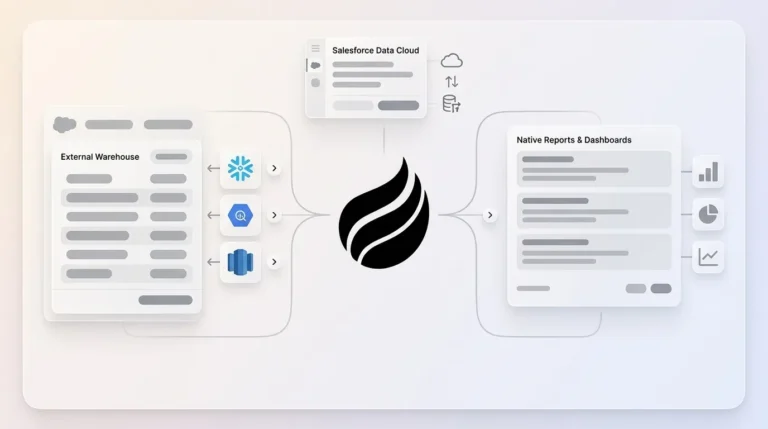
Coffee operates a dual-model strategy that addresses both CRM ecosystems with more depth than many newer alternatives. For small teams of 1–20 employees, Coffee functions as a Standalone AI-First CRM where the agent manages the entire system of record. For teams already committed to Salesforce or HubSpot, Coffee deploys as a Companion App, an intelligent layer that syncs data, enriches it, and writes insights back to the primary CRM automatically. Coffee’s detailed understanding of Salesforce and HubSpot integrations, including quotas, forecasting, and required fields, is a material advantage over newer alternatives like Day.ai and Clarify, which lack this integration depth and can create issues for established teams.
Connect Coffee to your Salesforce or HubSpot instance, or run it as your standalone CRM.
Compliance And Cookieless Tracking
CRM integration determines whether a tool fits your stack. Compliance determines whether you can legally deploy it at all. Privacy compliance is a procurement requirement. The EDPB’s guidelines on the technical scope of Article 5(3) of the ePrivacy Directive, adopted in final form on 7 October 2024, confirm that the consent rule reaches IP-based and cookieless tracking. DLA Piper’s January 2026 GDPR fines survey counts EUR 7.1 billion in cumulative GDPR fines since May 2018, including EUR 1.2 billion in 2025 alone.
Company-level identification is generally treated as more GDPR-friendly because it identifies legal entities rather than individuals, typically relying on legitimate interest under GDPR Article 6(1)(f). Person-level identification carries more legal sensitivity. In the EU, person-level identification must clear two separate legal hurdles: consent under ePrivacy rules for anything read from or stored on a visitor’s device, and a lawful basis under GDPR for processing the data.
Leadinfo operates a cookieless tracking mode and is ISO 27001 certified with EU data residency. RB2B states that GDPR does not apply to its person-level identification because its database only contains profiles matched to US home addresses, but requires customers to use a consent collection tool for its global company-level identification. Coffee’s compliance posture, described earlier, applies here as well.
How Visitor Tracking Differs From Sales Activity Tracking
Search results often conflate visitor tracking with sales activity tracking, but they solve different problems. Visitor tracking tools de-anonymize website traffic and answer “who visited our site?” Person-level and company-level identification are the outputs. Sales activity tracking monitors rep behavior, including calls made, emails sent, pipeline stages advanced, and quota attainment. Tools in that category include CRM activity logs, conversation intelligence platforms like Chorus, and sales engagement platforms like Outreach or Salesloft.
Teams that want to understand which companies or individuals are browsing their website should use the tools in this article. Teams that want to monitor rep productivity, pipeline hygiene, or call quality should look at sales activity tracking or conversation intelligence platforms instead of visitor identification. Coffee addresses both needs inside one agent. Its Visitor Identification pixel handles inbound signal capture, while Pipeline Intelligence, automated activity logging, and AI meeting summaries handle rep activity tracking and pipeline management.
Free Visitor Tracking Options For Sales Teams
Several tools offer free tiers, and each carries meaningful limitations for sales use cases.
- Google Analytics shows session volume, traffic sources, and page-level behavior but does not identify the company or person behind a visit. It functions as a behavioral analytics tool rather than a visitor identification tool.
- Leadfeeder Lite is a genuine free tier. It identifies up to 100 companies per month with 7-day history and unlimited users. Identification remains company-level, and the rep must find contacts manually.
- RB2B free plan provides 150 company-level resolutions per month after the 7-day full-featured trial. Person-level identification requires the $79/month Starter plan.
- ZoomInfo Lite is a permanent free tier offering 10 monthly export credits and WebSights Lite with up to 10 website visitor reveals per day.
- HubSpot’s website visits tool is available with all HubSpot products and plans and surfaces company-level visitor data directly in the CRM, but caps page view and visitor data at 100,000.
Free tiers help validate match rates on your specific traffic before committing to a paid plan. They rarely support a production visitor identification workflow because identification limits are low, behavioral context is thin, and outreach automation is absent.
Decision Checklist For Choosing A Visitor Tracking Tool
Use the following criteria to self-select the right tier and tool.
- Team Size 1–20, No Existing CRM: Coffee Standalone CRM, where the agent manages identification, enrichment, outreach, and pipeline in one system.
- Team Size 20–200, Committed To HubSpot: Coffee Companion App or Leadfeeder. Coffee adds Suggested Leads and native outreach, while Leadfeeder adds Google Analytics integration and strong EU coverage.
- Team Size 20–200, Committed To Salesforce: Coffee Companion App. Albacross and Leadinfo gate Salesforce sync to their highest tiers, and Coffee’s Companion App is built for Salesforce’s complexity including quotas, forecasting, and required fields.
- US-Only Traffic, Single-Decision-Maker Sales Cycles: RB2B or Warmly for person-level identification, paired with a separate outreach tool, or Coffee to close the loop without switching.
- Significant EU Traffic Or GDPR As A Primary Constraint: Leadinfo (cookieless, ISO 27001, EU data residency) or Leadfeeder (strong EU coverage, GDPR-compliant).
- Enterprise ABM With Dedicated RevOps: 6sense or ZoomInfo for full-stack intent orchestration at scale.
- Budget-Constrained, Validating The Channel: Leadfeeder Lite (free, 100 companies/month) or RB2B free tier (150 resolutions/month) to establish baseline match rates before committing.
Turn anonymous traffic into pipeline with Coffee.
Frequently Asked Questions
How Long Does Implementation Take?
For most visitor tracking tools, implementation involves dropping a JavaScript pixel into the site’s <head> tag and authenticating a CRM connection. Company-level tools like Leadinfo report self-serve onboarding that takes approximately 30 minutes from signup to live identification. Coffee verifies pixel installation automatically and begins identifying visitors immediately. Full-stack enterprise platforms like 6sense typically require a dedicated RevOps owner and a multi-week implementation engagement before the system is producing actionable output.
What Internal Expertise Is Required?
Pixel installation requires access to the site’s tag manager or codebase, a task typically handled by a developer or a marketer comfortable with Google Tag Manager. CRM integration setup typically requires elevated permissions: in HubSpot, the user must have App Marketplace permissions (and Super Admin permissions if that does not resolve the error), while in Salesforce, installing a managed package typically requires Salesforce admin credentials. Ongoing operation, including configuring ICP filters, building scoring models, reviewing identified visitors, and routing leads, requires a sales ops or RevOps owner for tools above the entry tier. Coffee’s agent handles data entry, enrichment, and outreach automation autonomously, which reduces the ongoing operational burden on the team.
What Migration Effort Is Involved?
Switching the core visitor tracking tool is lower-friction than switching a CRM: typically a 1–4 hour tag swap versus a 2–8 week CRM migration. The surrounding activation plumbing, such as CRM automations, Slack routing, ad audiences, and existing tracking debt, can still add meaningful friction. The primary migration tasks are replacing the old tracking script with the new one, reconnecting CRM integrations, and rebuilding saved reports and alerts. A broader migration also involves exporting historical data, running both tools in parallel, updating consent settings, and decommissioning the old tool. Historical visitor data does not typically transfer between visitor tracking platforms because they use incompatible data models and most privacy-first tools start counting from the day the tracking script is installed, though aggregated daily reporting can sometimes be imported. For teams moving to Coffee as a Companion App, the existing Salesforce or HubSpot instance remains the system of record, and Coffee authenticates against it and begins enriching and syncing data without requiring a data migration.
How Does Data Quality Compare Across Tools?
Data quality varies by identification tier and geography. Company-level match rates run 30–65% of US B2B traffic across major vendors, with accuracy strongest for large enterprises on stable corporate IP ranges and weakest for remote workers, mobile users, and VPN users. Person-level match rates are structurally lower, typically 15–35% for the best tools, because resolving a visitor to a named individual requires stronger signal combinations than resolving to a company. Any vendor claiming 80%+ person-level match rates is either measuring sessions rather than unique visitors or relying heavily on probabilistic inference. Coffee’s enrichment data quality is roughly on par with dedicated enrichment tools like ZoomInfo or Apollo for most use cases and is built into the agent at no additional per-seat cost.
Is Visitor Tracking Compliant With GDPR And CCPA?
Compliance depends on the identification tier and the visitor’s geography. Company-level identification, matching an IP to a legal entity, is generally treated as GDPR-compliant under legitimate interest, provided a documented balancing test supports the processing. Person-level identification is more legally sensitive in the EU. The EDPB’s October 2024 guidelines confirm that the ePrivacy consent rule reaches IP-based and cookieless tracking, which means identifying a named individual typically requires consent. In the US, the CCPA’s business-to-business data exemption expired at the end of 2022, so a California resident’s work email is now regulated personal information. Under CAN-SPAM, commercial email to business addresses is permitted on an opt-out basis without prior consent, provided headers are accurate and unsubscribes are honored. Teams should disclose visitor identification in their website privacy policy and consult legal counsel before deploying person-level identification for audiences with significant EU traffic. Coffee’s compliance posture, covered earlier, remains relevant here.
Conclusion
Many visitor tracking tools for sales teams address only part of the problem. Company-level tools tell a rep that Acme Corp visited the pricing page and then leave the rep to guess who at Acme to call, find their email, write the message, and send it from a separate tool. Person-level tools move closer to the goal with a name and a LinkedIn profile, yet outreach still happens elsewhere and the signal cools while the rep switches contexts.
Coffee closes the loop that other tools leave open. The Visitor Identification pixel surfaces named individuals in real time. Suggested Leads uses your buyer persona to recommend specifically which two or three humans inside the visiting company to contact. Campaigns runs the outreach natively from the rep’s own mailbox, with stop-on-reply, whether that CRM is Coffee’s own Standalone system or an existing Salesforce or HubSpot instance. The entire workflow, from pixel hit to LinkedIn outreach, runs inside one agent.
Start identifying your visitors and turning them into pipeline with Coffee.