Written by: Doug Camplejohn, CEO & Co-Founder, Coffee | Last updated: August 9, 2026
What Small Teams Need to Know About Visitor Tracking in 2026
- 98% of B2B website visitors leave anonymously, which represents millions in lost pipeline for small businesses that rely on inbound traffic.
- Google Analytics 4 provides only aggregate metrics and cannot deliver the person-level identification or CRM routing sales teams need.
- Privacy compliance in 2026 requires tools that honor CCPA Global Privacy Control signals, operate on consented data, and avoid cross-site consumer tracking.
- Website visitor identification delivers higher revenue ROI than physical visitor management systems for most 1–20 person B2B companies with a sales motion.
- Coffee’s one-line pixel and autonomous agent turn anonymous visitors into named, enriched leads routed directly to your CRM, so your team can act while intent is fresh. See pricing and plans.
The Problem: Anonymous Traffic Is Costing You Pipeline Every Day
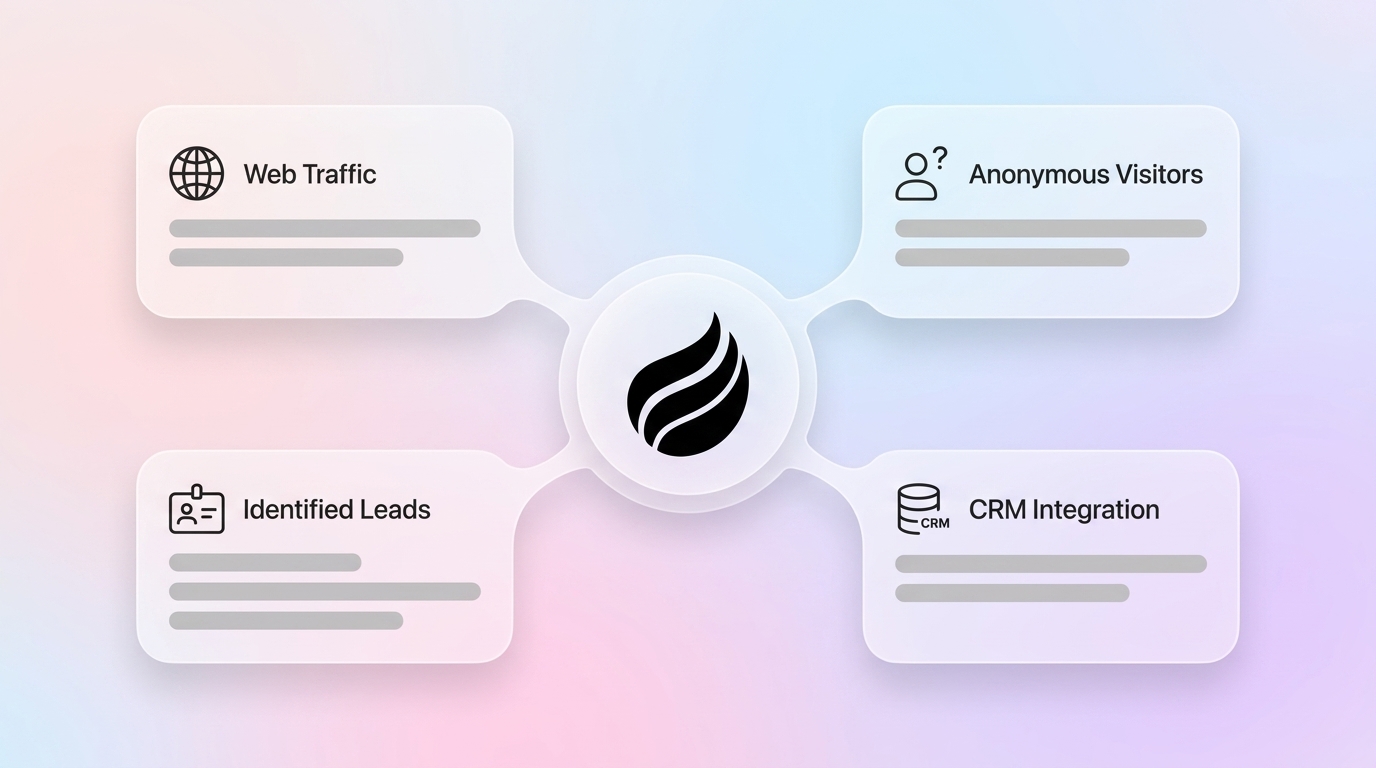
Most B2B website visitors leave without filling out a form or otherwise identifying themselves, which makes anonymous traffic the largest untapped pipeline source for many companies. For a small sales team that depends on inbound interest, those invisible visitors translate directly into lost revenue.
The scale of the opportunity is concrete. For SMB companies averaging 5,000 monthly visitors, de-anonymization at identification rates commonly between 15–65% can represent over $2M in potential annual pipeline. First-year ROI on website visitor de-anonymization can be positive, and larger companies with higher-traffic sites often see even stronger results.
The problem grows when you look at how most small businesses measure their websites. Approximately 34% of small businesses use Google Analytics 4, while 40% do not analyze their website traffic or metrics regularly, which means the majority lack basic visibility into site performance. Even for teams that use GA4, raw session counts and bounce rates only show that someone visited a pricing page, not who that person was, what company they work for, or whether they match the ideal customer profile. The result is a daily cycle of guessing instead of selling.
B2B buyers make this gap even wider because they research independently. B2B buyers are approximately 70% through their purchasing process before contacting sales. Most buying intent appears on the website long before any form is filled, and without identification that intent disappears forever.
Why GA4 Alone Falls Short for B2B Website Visitor Identification
Google Analytics 4 is the default analytics tool for many small businesses, yet it was built for aggregate audience measurement, not B2B lead identification. Several structural limitations make it insufficient as a standalone solution for sales teams.
The average GA4 setup uses only 12 of 40+ event types. More critically, only 34% of GA4 accounts have predictive metrics enabled, and many users do not feel confident extracting meaningful insights from Google Analytics. This gap leaves sales teams with numbers but without clear actions.
This limitation becomes concrete when you consider what sales teams actually need. They need to know that a VP of Sales at a 50-person SaaS company visited the pricing page three times this week, not just that someone viewed that page. GA4 provides no CRM routing, no Slack alerts, no deduplication logic, and no enrichment. It remains an audience measurement tool being asked to do a job it was never designed for. For B2B website visitor identification, GA4 serves as a starting point, not a complete solution.
2026 Privacy Standards for Compliant Visitor Tracking
Privacy compliance now sits at the center of any website visitor tracking deployment in 2026. The regulatory landscape has tightened significantly, and small businesses face the same expectations as larger organizations.
In the United States, under the CCPA, businesses that sell or share personal information must process a qualifying Global Privacy Control (GPC) signal as a valid request to opt out of the sale and sharing of personal information. The California Privacy Protection Agency has announced a joint investigative sweep into businesses potentially failing to honor the Global Privacy Control (GPC) signal but has not issued fines for such noncompliance. A 2026 webXray audit of more than 7,000 popular websites found widespread noncompliance with California’s GPC requirements, which signals active enforcement risk.
In the European Union, the ePrivacy Directive requires consent before gaining access to or storing information on users’ terminal equipment, including cookies and similar tracking technologies. The EDPB Guidelines 2/2023 on Article 5(3) confirm that ePrivacy rules apply to tracking pixels, local identifiers, SDK reads, and other technical interactions with terminal equipment beyond cookies. As a result, many forms of cookieless fingerprinting may still require consent.
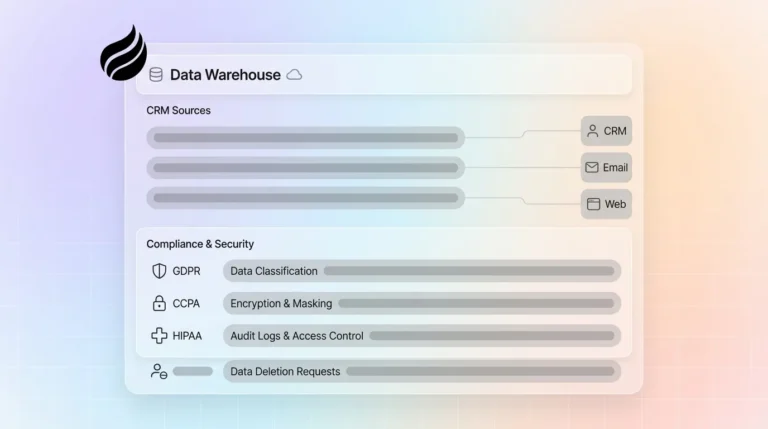
The practical standard for 2026 B2B visitor identification centers on a privacy-first pixel. That pixel operates on company-level and person-level signals derived from consented data partnerships, honors GPC signals, and avoids cross-site tracking of individual consumers. Tools that meet SOC 2 Type 2 and GDPR compliance standards provide the clearest path to compliant deployment. The measurement model most likely to survive 2026 regulatory changes uses aggregate pageviews, referrer domains, coarse device and country data, minimal-payload conversion events, short retention, no ad reuse, and no cross-site identity.
Choosing Between Website Tracking and Physical Visitor Systems
Website visitor tracking and physical visitor management systems solve different problems for a small business. The table below outlines how to think about budget and impact when you decide which system to prioritize.
| Business Need | Website Visitor Identification | Physical Visitor Management System |
|---|---|---|
| Primary use case | Identify anonymous web traffic as named B2B leads for sales outreach | Digitize lobby check-in, badge printing, and host notifications for office facilities |
| Typical entry cost | From free (RB2B 150 resolutions/month) to $79+/month for person-level US identification | ALICE Receptionist charges $199–$499/month, but typical entry costs for physical visitor management systems are lower, often $0–$200/month with many options under $100/month |
| Revenue impact | Can deliver positive first-year ROI for SMBs with CRM integration | Operational efficiency; can reduce costs associated with a full-time receptionist |
| Best fit | B2B companies with inbound web traffic and a sales team doing outbound outreach | Companies with a physical office receiving regular in-person visitors or clients |
For most 1–20 person B2B companies with a website and a sales motion, website visitor identification delivers higher revenue impact per dollar spent. Physical visitor management becomes relevant once the business has a staffed office with regular foot traffic that requires compliance-grade check-in logs.
Coffee’s Pixel-to-CRM Workflow for Small Teams
Coffee’s visitor identification feature turns the pixel-to-pipeline workflow into a single, agent-managed process that removes spreadsheets, manual enrichment, and extra headcount.
The implementation starts with a one-line pixel, a custom-generated script dropped into the <head> tag of the website. Once Coffee verifies installation, it immediately begins identifying visitors, and from that point forward the agent handles every subsequent step automatically.
When a visitor lands on the site, Coffee infers the person’s name, title, email, and LinkedIn profile. It also captures the company they belong to, the pages they visited, time on site, and whether it was a first or returning visit. High-fit visitors trigger real-time Slack notifications so the sales rep sees the alert at the moment it matters, not hours later after intent has cooled. Organizations using routing tools respond to leads significantly faster than those without, and Coffee’s real-time alerts compress that window even further.

With one click from the Slack alert, the prospect is added to Coffee with all enrichment pre-filled. The rep can send a LinkedIn connection request, send an outbound email, or enroll the prospect directly into a Campaign for automated multi-step follow-up. All of this happens inside the agent without switching tools.

Coffee’s differentiator is Suggested Leads. Where standalone tools surface either the company or an undifferentiated list of people, Coffee uses the buyer persona to recommend specifically which two or three individuals inside the visiting company the rep should contact, with LinkedIn profiles surfaced for instant outreach. This approach closes the gap between anonymous traffic and a named, qualified conversation.

How Coffee’s Agent Replaces Spreadsheets and Manual Enrichment
Manual enrichment drains time and budget from small sales teams. Reps lose roughly 550 hours and $32,000 in productivity per rep per year due to outdated and duplicate CRM data. Coffee’s agent removes this cost by handling deduplication, enrichment, and pipeline updates on its own.
Website visitor identification tools create new CRM records in real time, session by session, which makes them uniquely prone to generating duplicates at scale without active data quality governance. This duplication problem directly undermines the time savings these tools promise because a rep who receives alerts for the same prospect under three different CRM records wastes time reconciling data instead of selling. Coffee’s agent solves this by applying matching logic before any record is written. It checks for existing email matches first, then company domain plus name fuzzy matching, then account-level domain records, following the recommended hierarchy of always updating existing records rather than inserting new ones.
Intent scoring runs automatically in the background. Lead scoring combines fit signals such as company size, industry, decision-maker title, and geography with behavioral signals including pricing page visits, demo page visits, case study views, return visits, and multiple visitors from the same company. High-scoring visitors route to immediate outreach, while lower scores route to nurture or monitoring queues without any rep intervention.

The result is a pipeline that updates itself. Reps open Coffee and see named, scored, enriched prospects ready for outreach, not a spreadsheet of anonymous sessions that require manual research.
Cost Comparison: Standalone Stack vs Coffee Agent
Small teams that assemble a visitor identification stack from standalone tools face compounding subscription costs and integration overhead. The table below compares a representative standalone stack against Coffee’s seat-based agent for a team of three sales reps.
| Capability | Standalone Stack (representative tools) | Coffee Agent |
|---|---|---|
| Visitor identification | RB2B from $79/month or Leadfeeder from EUR 99/month | Included in seat price |
| CRM + enrichment | Separate CRM subscription plus ZoomInfo or Apollo enrichment layer | Included, with the agent auto-enriching job titles, funding, and LinkedIn profiles |
| Sales engagement / sequencing | Outreach or Salesloft as a dedicated subscription in a separate silo | Included, with Campaigns running natively from the rep’s own mailbox |
| Integration and routing | Zapier or iPaaS connector fees plus ongoing maintenance | Included, with the agent routing Slack alerts and CRM records automatically |
Beyond direct cost, the standalone stack requires a human to manage field mappings, deduplication rules, and routing logic across multiple systems. Automated workflows should be the default path from identification data into the CRM; manual push should be a break-glass exception because manual pushes bypass field mappings and scoring rules, leading to incomplete records. Coffee’s agent enforces this by design, so every visitor identification event follows the automated workflow path instead of relying on manual intervention.
Evaluation Checklist for B2B Visitor Identification Tools
Small B2B sales teams can use the following criteria as an objective framework when they compare website visitor identification tools.
- Identification accuracy: Benchmark tools against real-world performance. Leading tools achieve company-level match rates of 30–65% and person-level rates of 5–20% (or up to 30–40% on high-quality US B2B traffic) for website visitors.
- CRM integration depth: Look for native connectors to Salesforce and HubSpot with matching rules, custom field mapping, and activity logging, not just a CSV export or a Zapier zap.
- Privacy compliance: Confirm SOC 2 Type 2 certification, GDPR compliance, CCPA GPC signal honoring, and no cross-site consumer tracking.
- Deduplication logic: Require an automated matching hierarchy that updates existing records before creating new ones, with low-confidence matches held for review.
- Real-time routing: Use Slack or email alerts triggered by intent score thresholds and specific page behavior, not batch reports delivered the next morning.
- Persona-matched lead suggestions: Ensure the tool surfaces specific individuals who match the buyer persona, not just a company name or an undifferentiated people list.
- Implementation effort: Favor a one-line pixel install with verified setup confirmation that does not require an engineering sprint or a dedicated ops resource.
- Integrated outreach: Confirm the ability to move from identified visitor to enrolled email sequence without exporting data to a separate tool.
Frequently Asked Questions
Is website visitor identification legal and privacy-compliant for small businesses in 2026?
Yes, when teams configure it correctly. B2B visitor identification tools that operate on company-level signals derived from consented data partnerships, honor CCPA Global Privacy Control signals, and avoid cross-site tracking of individual consumers align with current US and EU standards. Coffee is SOC 2 Type 2 and GDPR compliant, and data captured through the Coffee pixel is not used to train public AI models. Small businesses operating in California should confirm that their pixel vendor acknowledges GPC signals, as the California Privacy Protection Agency has actively fined companies for noncompliance. For EU traffic, the ePrivacy Directive requires consent for most forms of individual-level tracking, so tools should run within consent-exempt aggregate measurement parameters for EU visitors.
How does Coffee’s visitor identification differ from tools like RB2B or Warmly?
RB2B identifies individuals visiting a website but limits person-level identification to US traffic and surfaces raw people lists without persona filtering. Warmly provides company- and person-level identification but starts at $15,000 per year and operates as a standalone tool separate from a CRM. Coffee includes visitor identification inside the agent, identifies named individuals, and adds Suggested Leads, a feature that uses the buyer persona to recommend specifically which two or three people inside the visiting company the rep should contact. The entire workflow from pixel hit to LinkedIn outreach or email sequence runs inside one agent without switching tools, exporting CSVs, or manual enrichment.
How long does it take to set up Coffee’s visitor identification and see results?
Setup takes only a one-line JavaScript pixel dropped into the head tag of the website. Coffee verifies installation automatically and begins identifying visitors immediately. Real-time Slack alerts surface high-fit visitors as they browse. Teams using CRM-integrated visitor identification workflows have sourced new pipeline opportunities within the first 30 days from accounts that had never filled out a form. The agent handles deduplication, enrichment, and CRM record creation without any additional configuration from the sales team.
Does Coffee work with existing CRMs like Salesforce or HubSpot?
Yes. Coffee operates in two modes. It can run as a standalone AI-first CRM for teams that have outgrown spreadsheets, or as a Companion App that deploys the Coffee Agent as an intelligent layer on top of an existing Salesforce or HubSpot installation. In Companion mode, the agent syncs data, enriches records, and writes visitor identification data and intent signals back to the primary CRM. Current integrations also include Zapier, with deeper native integrations on the product roadmap. Coffee has deep expertise in Salesforce and HubSpot integration requirements including quotas, forecasting, and required fields, an area where newer AI CRM alternatives frequently fall short.
How much time does Coffee’s agent actually save a small sales team?
Coffee’s agent saves sales reps 8–12 hours per week by automating contact creation, enrichment, activity logging, meeting summaries, and follow-up drafting. For visitor identification specifically, the agent removes the manual research cycle of identifying a company from an analytics dashboard, finding the right contact in a prospecting database, enriching the record, and logging it in the CRM. That workflow, which can take 20–30 minutes per prospect when done manually, shrinks to a single click from a Slack alert. For a team receiving 10 qualified visitor alerts per week, that shift represents 3–5 hours of recovered selling time weekly per rep.
Conclusion: Turn Every Visitor into Pipeline Revenue
Anonymous web traffic creates a pipeline problem, not a vanity metric problem. GA4 delivers only aggregate numbers with no person-level data or CRM routing, so small sales teams operate with a fundamental blind spot in their revenue data.
The answer is not another standalone tool that adds a new subscription, a new CSV export, and a new integration to maintain. The answer is an autonomous agent that installs in minutes, identifies visitors in real time, matches them to a buyer persona, routes Slack alerts to the rep, and writes enriched, deduplicated records directly into the CRM pipeline, all without manual steps.
Coffee fills that role for small B2B teams. It closes the loop from pixel hit to Suggested Leads to enrolled email sequence inside one seat-based plan, with SOC 2 Type 2 and GDPR compliance built in.
Turn your next website visitor into a qualified conversation and start your Coffee trial.