Written by: Doug Camplejohn, CEO & Co-Founder, Coffee | Last updated: August 10, 2026
Key Takeaways
- Visitor tracking for lead generation identifies anonymous B2B website traffic and turns it into named, pipeline-ready leads without forms.
- 98% of B2B visitors leave unidentified, creating a major revenue gap that visitor tracking tools can close by surfacing hidden pipeline.
- Modern visitor tracking uses layered identity resolution with IP matching, device fingerprints, and identity graphs to deliver 100+ data points per resolved visitor.
- Privacy compliance in 2026 requires consent for person-level data, and tools like Coffee maintain SOC 2 Type 2 and GDPR standards to stay fully compliant.
- Turn anonymous traffic into pipeline-ready leads with Coffee, and start identifying visitors today.
The Problem: Anonymous Traffic Is Silently Draining Pipeline
The vast majority of B2B website visitors leave without filling out a form, and the 98% figure mentioned above represents that hidden loss. For a company spending $50,000–$200,000 per month on demand generation to drive that traffic, the math is brutal. The average B2B site converts only 2–3% of visitors to leads through forms. Anonymous traffic becomes the single most under-measured line item in most GTM budgets.
The revenue impact is direct. A B2B company often sits on substantial hidden pipeline inside anonymous traffic once a portion of that traffic is identified and qualified. Most B2B visitors never return after their first session. Forms capture only a small percentage of those one-time visitors, so most potential deals never reach a rep.
The competitive stakes stay just as high. 94% of buying groups have already ranked their preferred vendors before contacting sales, and the vendor chosen during that anonymous research phase wins roughly 80% of the time. Anonymous traffic is not a vanity metric problem. It is a revenue problem.
Start identifying your anonymous visitors with Coffee and stop letting warm pipeline walk away unidentified.
How Visitor Tracking Turns Clicks into Known Buyers
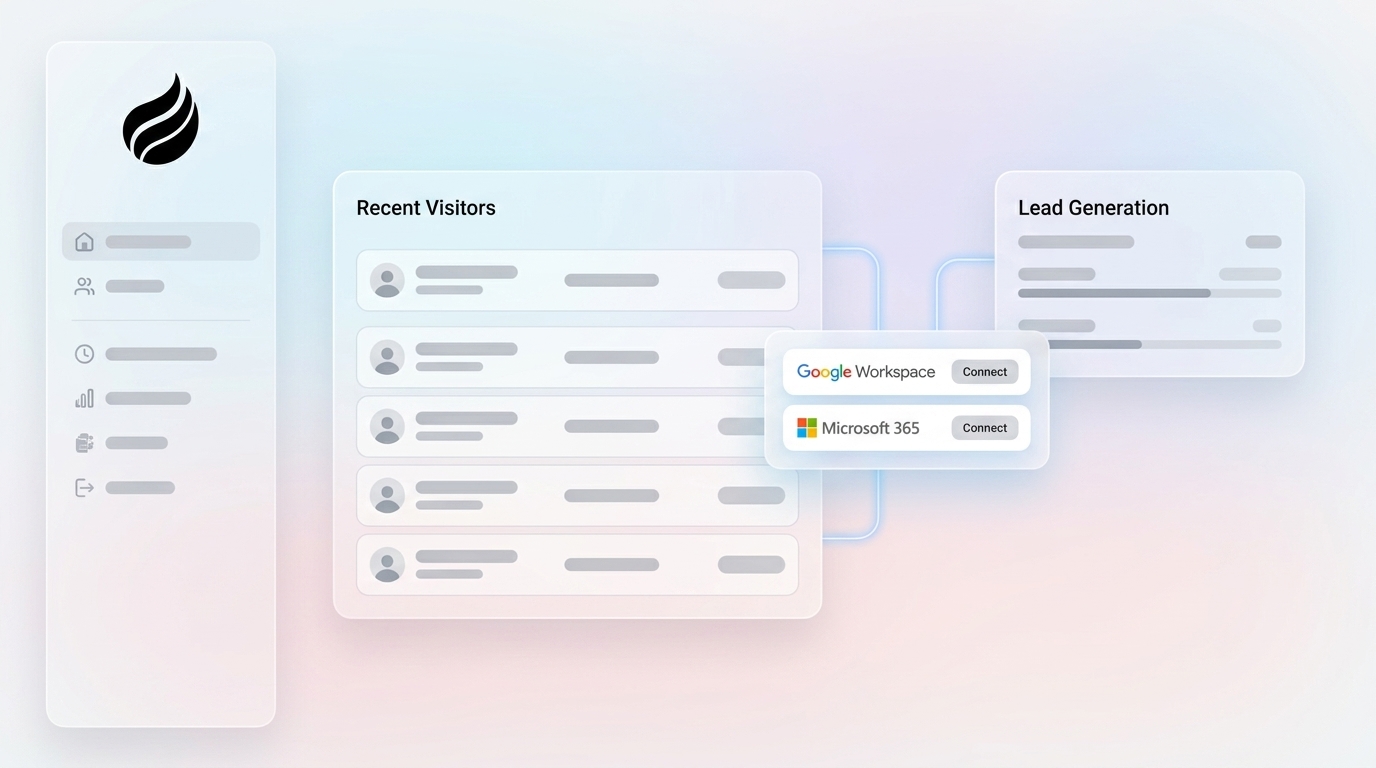
Modern B2B visitor tracking runs as a layered resolution process. A lightweight JavaScript pixel placed in the <head> tag of a website captures each session. That session data, primarily the visitor’s IP address, is checked against corporate IP-range databases to return a company match. A second resolution layer then attempts person-level identification by matching the session against an identity graph using signals such as first-party cookies, device fingerprints, and hashed email identifiers.
B2B identity resolution APIs often return more than 100 data points per resolved visitor. These details include firmographics, role, seniority, and contact information that sales teams can act on immediately.
Once a visitor is identified, the data must move quickly. Best-practice architecture routes identified visitor events through a webhook to the CRM for contact creation and activity logging, to a sales engagement platform for sequence enrollment, and to a Slack channel for real-time rep alerts. Contacting a web lead within five minutes makes a company roughly 100 times more likely to connect and 21 times more likely to qualify the lead than waiting 30 minutes, so automation of this handoff becomes non-negotiable.
B2B vs. B2C Visitor Identification: Why the Approach Changes
Understanding how B2B visitor identification differs from B2C approaches matters because accuracy expectations and technical requirements diverge sharply. B2B identity resolution requires deterministic matching with verified identifiers because the cost of error is high. A bad match can waste a sales call or damage a relationship. B2C identity resolution often relies on probabilistic matching with 50–65% accuracy, since the cost of error is only a fraction of a cent per mismatched ad impression.
The underlying signals differ fundamentally:
- B2B identification relies on IP-to-company matching, reverse DNS lookup, corporate identity graphs, and firmographic enrichment from providers such as ZoomInfo, Clearbit, and Bombora. Company-level B2B identification achieves realistic match rates of 15–65% of qualifying B2B traffic, while person-level identification usually lands between 5–20%. Any vendor claiming 40%+ person-level match rates is likely misleading or conflating company and person tiers.
- B2C identification relies on first-party cookies, logged-in sessions, mobile ad IDs, and email-based identity resolution, because consumer traffic on home and mobile networks rarely maps usefully via IP.
- Remote work erosion has reduced B2B IP-based match rates since 2020, as home internet connections resolve to consumer ISPs instead of corporate ranges. Modern B2B tools compensate with first-party cookies, email pixel matching, and identity graphs.
Free Analytics vs. Paid Identification: What You Actually Get
Free tools such as Google Analytics, basic heatmap trials, and native CRM web-tracking features provide session-level behavioral data but no identity resolution. They answer how many people visited the pricing page, not who visited the pricing page.
Paid visitor identification tools add the identity layer and vary widely in capability. Among paid tools, three dimensions matter most to B2B sales and RevOps teams in 2026. These include how deeply they identify visitors, how much of the CRM and outreach workflow they automate, and whether they help reps find the right buyer inside each account.
Leadfeeder/Dealfront identifies up to 45% of companies from website traffic, although independent analyses report actual company-level rates closer to 10–15%. It pushes accounts into the CRM, but reps still start outreach manually and receive only company visitor lists.
RB2B reports person-level identification for 40–45% of U.S. traffic and a combined person plus company identification rate of 70–80%. It delivers raw individual profiles via Slack with LinkedIn links, yet it does not write natively to the CRM or enroll contacts in campaigns.
Warmly reaches 65%+ company-level identification and some person-level matches at 15–25%. It sends Slack alerts and supports sequence routing, but teams still rely on separate CRM and engagement tools.
Lead Forensics focuses on company-level data via IP lookup with no person-level resolution. It integrates with CRMs, although reps must still qualify accounts and launch outreach manually.
Coffee identifies visitors at the person level, including name, title, email, LinkedIn profile, pages visited, and session depth. It adds automated CRM creation and campaign enrollment from Slack alerts, plus Suggested Leads that surface buyer-persona-matched individuals inside each visiting company.

Privacy and Consent for Visitor Tracking in 2026
Privacy compliance sits at the center of any visitor tracking strategy in 2026. Twenty U.S. states now enforce comprehensive privacy statutes, including new additions Indiana, Kentucky, and Rhode Island effective January 1, 2026. Twelve states require businesses to honor Global Privacy Control signals as a valid universal opt-out.
For B2B visitor tracking specifically:
- Pure company-level data such as a generic company address does not trigger GDPR, but once a tracking pixel links a visit to an individual representative’s IP or profile, the data becomes personal data and requires a lawful basis.
- Server-side reverse IP lookup with no cookie placed on the device generally does not require prior consent, while client-side pixels that store identifiers on the device for non-essential purposes usually require prior consent.
- B2B websites must display a cookie banner and obtain consent before setting analytics, marketing, or retargeting cookies. Most B2B sites using Google Analytics, LinkedIn Insight Tag, or HubSpot tracking fall outside the strictly necessary exemption.
- AI-driven lead scoring that assigns a purchase-probability score to an individual based on browsing behavior is considered Automated Decision-Making Technology and grants the data subject rights to access the score and understand how it was calculated.
- These requirements carry real enforcement risk. In 2025, the French CNIL issued two fines to data brokers for commercial prospecting without consent (€900,000 to Solocal Marketing Services and €80,000 to Caloga), and no multimillion-euro fines matching higher claimed amounts or targets were issued by European authorities.
Coffee is SOC 2 Type 2 and GDPR compliant. Visitor data is not used to train public models, and the platform supports data subject access, correction, and deletion requests.
Connecting Visitor Data to CRM and Outreach in Real Time
The gap between identifying a visitor and generating pipeline is where most tools fail. InsideSales research indicates that only 27% of MQLs ever get contacted by sales. Manual handoffs, fragmented tools, and slow routing create that failure.
Given the dramatic conversion advantage of sub-five-minute response times mentioned earlier, a production-grade pixel-to-pipeline workflow must stay tightly orchestrated. It requires eight sequential jobs: capture, enrich, match to existing CRM accounts, qualify against ICP, assign to a rep, schedule or alert, escalate on SLA breach, and audit. RevOps teams should treat visitor identification tools as a data source rather than a destination, routing events through a webhook architecture to CRM contact creation, sales engagement platforms, Slack alerts, and marketing automation at the same time.
Coffee collapses this entire stack into one agent. When a buyer-persona-matched visitor hits the site, a real-time Slack notification surfaces their name, title, email, LinkedIn profile, pages visited, and session depth. One click adds them to Coffee as a fully enriched contact. From there, the agent auto-enrolls them into a Campaign, a multi-step email sequence sent from the rep’s own mailbox with stop-on-reply enabled, and removes every manual data entry step.

See how Coffee automates your pixel-to-pipeline workflow without a single manual data entry step.
Measuring ROI from Identified Leads
ROI from visitor identification is measurable and usually arrives quickly. Identified website visitors respond to outreach at higher rates and generate more pipeline per lead than cold outbound with no prior site visit.
First-year ROI on visitor de-anonymization can be significant. To calculate that ROI precisely, four operational metrics connect visitor identification directly to CRM revenue.
- Cost per identified account is total tool cost divided by identified accounts in the period.
- Sourced pipeline is worked accounts multiplied by opportunity conversion rate and average deal size.
- Win-rate lift compares baseline win rate on non-identified opportunities with win rate on visitor-sourced opportunities.
- Payback period reflects that visitor identification typically delivers payback inside one sales cycle because a single sourced closed deal covers a year or more of all-in tool cost.
Companies using visitor identification tools often recover pipeline from anonymous traffic in the first 90 days. Pairing de-anonymization with automated outreach, as Coffee does natively, tends to lift those conversion rates even further.
5-Step Implementation Checklist for Coffee
- Install the pixel. Drop Coffee’s custom-generated script into the
<head>tag of your site. Coffee verifies installation and begins identifying visitors immediately. - Define your buyer persona. With the pixel capturing traffic, configure the ICP criteria such as job titles, seniority, company size, and industry. Coffee’s Suggested Leads feature then uses this profile to surface the two or three highest-fit individuals inside each visiting company.
- Set up Slack alerts. Once Coffee knows who matters most, connect it to your team’s Slack workspace. Real-time notifications then surface high-fit visitors the moment they hit key pages such as pricing or demo.
- Build your Campaign. With alerts flowing, create a multi-step email sequence for identified visitors using Coffee’s AI Campaign Generation. Describe the sequence in plain English, and the agent generates subject lines, body copy, and send delays. Enable stop-on-reply so reps never double-message engaged prospects.
- Establish your consent and compliance baseline. After the workflow is live, deploy a consent management platform, honor Global Privacy Control signals, and confirm Coffee’s SOC 2 Type 2 and GDPR documentation covers your data processing agreement requirements.
Launch Coffee and complete this checklist in a single afternoon.
Frequently Asked Questions
What is visitor tracking for lead generation?
Visitor tracking for lead generation identifies who visits a website by name, job title, company, and contact details, then converts those anonymous sessions into actionable sales leads. In a B2B context, this process uses a tracking pixel that captures session data, an identity resolution layer that matches that data against a contact graph, and an automation layer that routes identified visitors into CRM records and outreach sequences without manual entry. The goal is to recover pipeline from the roughly 98% of B2B traffic that never fills out a form.
How is Coffee different from tools like RB2B, Warmly, or Leadfeeder?
RB2B, Warmly, and Leadfeeder identify visitors at either the company level or the raw individual level, then surface that data in a Slack alert or dashboard. The rep must then decide who to contact, look up their information, create a CRM record, and enroll them in a sequence across multiple separate tools. Coffee combines person-level identification with Suggested Leads, which are buyer-persona-matched individuals inside the visiting company, and the automated workflow described earlier that removes manual data entry entirely.
How long does it take to see results from visitor identification?
Most teams see identified visitors within hours of pixel installation. Meaningful pipeline attribution typically appears within the first 30–60 days, as identified visitors enter outreach sequences and begin converting to meetings. Because identified visitors respond to outreach at roughly seven times the rate of cold outbound leads, a single closed deal from visitor identification commonly covers a full year of tool cost. Coffee’s Suggested Leads feature accelerates this further by removing the time reps spend deciding who to contact inside a visiting company.
Is visitor tracking compliant with GDPR and U.S. state privacy laws in 2026?
Compliance depends on implementation details. Company-level identification via server-side IP lookup generally does not require prior consent under GDPR, but person-level identification, which returns a named individual’s email, LinkedIn profile, and contact details, constitutes personal data and requires a lawful basis. For B2B cold outreach in most EU member states, legitimate interest is the most commonly used basis, provided a documented Legitimate Interests Assessment is on file, an easy opt-out appears in every email, and the data was obtained transparently. In the United States, twenty states now enforce comprehensive privacy statutes, and twelve require honoring Global Privacy Control signals. Coffee is SOC 2 Type 2 and GDPR compliant, and visitor data is never used to train public AI models.
Does Coffee require a separate CRM, or does it work with Salesforce and HubSpot?
Coffee operates in two modes. As a Standalone CRM, it serves as the full system of record for small to mid-sized B2B teams, with visitor identification, contact enrichment, pipeline management, and campaign sequencing all native to the platform. As a Companion App, Coffee deploys as an intelligent agent layer on top of an existing Salesforce or HubSpot instance, writing enriched visitor records, activity logs, and identified leads directly back to the primary CRM without manual entry. Both modes include the full visitor identification and Suggested Leads workflow.
Conclusion: Turn Anonymous Traffic into Revenue
Anonymous traffic is not a traffic problem. It is a revenue problem. The 98% of B2B visitors who leave without filling out a form represent real buyers who researched real solutions and formed real vendor preferences before a single sales rep knew they existed. Visitor tracking for lead generation exists to close that gap.
Tools that stop at company-level identification or raw people lists leave the hardest work, such as deciding who to contact, creating the CRM record, and launching the outreach, to the rep. That manual friction is where pipeline leaks. Coffee’s agent removes it entirely with one pixel, one Slack notification, one click to a fully enriched CRM record, and automatic Campaign enrollment, while Suggested Leads surface the exact buyer-persona-matched individuals worth contacting inside every visiting company.
The pixel-to-pipeline loop stays closed. No manual entry. No fragmented tools. No warm leads going cold while a rep copies data between tabs.
Turn your anonymous traffic into named, pipeline-ready leads with Coffee today.