Written by: Doug Camplejohn, CEO & Co-Founder, Coffee | Last updated: September 23, 2026
Key Takeaways
- Automated CRM data entry often delivers 200–400% three-year ROI, with payback ranging from 2–18 months depending on volume and adoption.
- The complete cost stack includes software subscriptions ($20–$400/month), implementation, training, exception handling, and ongoing governance, which buyers often underestimate by 20–40%.
- ROI uses the formula (Total Annual Benefit − Total Annual Cost) ÷ Total Annual Cost × 100, and adoption rate is the most critical variable for real returns.
- Baseline measurement of manual entry time, duplicate rates, missing fields, and lead response time for 2–4 weeks replaces vendor assumptions with defensible data.
- The benefit side of the ROI model depends on automation that removes manual entry entirely, which is the design goal behind Coffee’s CRM Agent.
What Does Automated CRM Data Entry Cost?
The cost stack for automated CRM data entry has several predictable lines.
- Software Subscription: As of 2026, native CRM AI data-entry automation features cost roughly $20–$75 per user per month, while dedicated capture-and-enrichment stacks run about $150–$400 per month total.
- Implementation: For small teams, a dedicated capture-and-enrichment stack typically costs $2,000–$5,000 per year for a 3-person firm and $4,000–$10,000 per year for a 10-person firm. Native CRM AI features cost less, roughly $1,000–$2,700 annually for a 3-person firm. Partner-led Salesforce rollouts start at $10,000–$25,000.
- Training Time: Most simple CRMs require 4–8 hours per person, valued at the fully loaded hourly cost of each attendee.
- Exception Handling And Human Review: This is the residual cost of records the automation cannot resolve without human judgment. Measure it as exception rate × average resolution time × loaded hourly cost.
- Ongoing Governance And Data-Quality Auditing: Plan for 5–10 hours per month of admin time at $50–$75 per hour, which adds $250–$750 per month that never appears on the subscription invoice.
Coffee uses simple seat-based pricing. The Agent’s unlimited labor is included, with no metering on LLM usage or processes. The software line does not scale with record volume the way per-record or per-process tools do, which matters when you model cost at growth.
With the cost stack defined, the next step is turning it into a formula. This article supplies the formula and a worked 5-person example with visible arithmetic. It also covers payback math, an honest section on when the ROI is zero, and a 2–4 week baseline plan. The goal is a one-page business case you can defend in a budget conversation.
How Do You Calculate The ROI Of Automated CRM Data Entry?
The ROI model for automated CRM data entry follows a simple structure.
ROI = (Total Annual Benefit − Total Annual Cost) ÷ Total Annual Cost × 100
Here are the inputs and their units.
- Number Of Reps (N): headcount using the CRM daily.
- Hours Per Week Each Rep Spends On Manual Data Entry (H): field reps spend a median of five hours every week on CRM data entry alone; the average B2B sales rep spends 5 to 6 hours per week on manual CRM data entry, with about one in four reps spending 11 or more hours weekly.
- Fully Loaded Hourly Cost Of Sales Time (R): salary + benefits + overhead ÷ annual working hours. Salesforce’s State of Sales 2026 found the average seller spends only 40% of their time selling, so every hour recovered from admin can return to revenue. A CFO will challenge any figure that uses base pay alone, so use the fully loaded rate.
- Records Created Per Week (V): contacts, companies, and activities logged.
- Duplicate Rate (D%): share of records that are duplicates at creation.
- Missing-Field Rate (M%): share of required fields left blank.
- Lead Response Time (LRT): minutes from lead creation to first rep activity. Harvard Business Review research found that responding within 5 minutes is 21 times more effective than responding within 30 minutes.
- Software Cost Per User Per Month (S): the seat price, inclusive of all tiers needed for automation features.
- Implementation Cost (I): one-time, paid in year one.
- Training Cost (T): hours per person × number of people × fully loaded hourly cost.
- Exception-Review Cost (E): exception rate × average resolution time × loaded hourly cost × annual volume.
- Governance Cost (G): monthly admin hours × loaded hourly cost × 12.
Total Annual Cost = (S × N × 12) + I + T + E + G
Total Annual Benefit = (H × N × 52 × R) + revenue impact of faster lead response + data-quality improvement value
The ROI of reducing manual data entry is calculated by multiplying hours reclaimed per rep by the fully loaded cost of rep time, then applying an adoption rate. That adoption rate is the variable most models omit, and it determines whether the benefit is real or theoretical.
Build Your ROI Model With Coffee
Worked Example: A 5-Person CRM-Driven Team
To see how the formula behaves with real numbers, here is a complete model for a 5-person team. Every figure below is a labeled assumption. Substitute your own inputs to produce your own model.
Assumptions:
- N = 5 reps
- H = 5 hours/week manual CRM data entry per rep (median from SPOTIO’s State of Field Sales)
- R = $75/hour fully loaded (assumed: ~$120K OTE + 25% benefits/overhead ÷ 2,000 hours)
- S = $75/user/month (mid-range automation-capable seat)
- I = $5,000 (one-time implementation, small team)
- T = $1,875 (5 people × 5 hours training × $75/hour)
- E = $3,000/year (assumed exception review: ~40 hours/year at $75/hour)
- G = $4,500/year (5 hours/month governance × $75/hour × 12)
- Adoption rate = 80% (reps redeploy 80% of recovered time to selling)
Step 1 — Annual Cost Of Manual Entry (The Problem Being Solved):
5 reps × 5 hours/week × 52 weeks × $75/hour = $97,500/year
Step 2 — Total Annual Cost Of The Automated Solution:
- Software: $75 × 5 × 12 = $4,500
- Implementation (amortized year 1): $5,000
- Training: $1,875
- Exception review: $3,000
- Governance: $4,500
- Total Year 1 Cost: $18,875
- Ongoing annual cost (years 2+): $13,875 (software + exception + governance)
Step 3 — Annual Benefit (At 80% Adoption):
$97,500 × 80% = $78,000/year in recovered sales capacity
Step 4 — ROI (Year 1):
($78,000 − $18,875) ÷ $18,875 × 100 = ~313% ROI
Step 5 — ROI (Year 2+, Ongoing Cost Only):
($78,000 − $13,875) ÷ $13,875 × 100 = ~462% ROI
This is where the 200–300% vendor claim comes from, and now you can see the arithmetic behind it. In a conservative scenario using Salesforce pricing, even if revenue gains are cut in half and only cost reductions are counted, CRM ROI is 535%, exceeding 300% in year two. These are assumptions, not guarantees. Your inputs will differ.
How Long Until Automated Data Entry Pays For Itself?
Payback In Months = Total Upfront And Recurring Cost ÷ Monthly Benefit
Using the example above: $18,875 ÷ ($78,000 ÷ 12) = $18,875 ÷ $6,500 = ~2.9 months at 80% adoption.
This is the arithmetic behind the 6–12 month industry range. The range widens because adoption rate, implementation speed, and rep count vary. Factors that shorten payback:
- Higher rep count (fixed implementation cost spreads across more beneficiaries)
- Higher fully loaded hourly cost (each recovered hour is worth more)
- More hours currently lost to manual entry
- Faster implementation and go-live
Factors that lengthen payback:
- Low adoption — poor user adoption accounts for 47% of CRM implementation failures
- Complex integrations requiring custom code
- Heavy exception handling volume
- Long procurement and legal review cycles that delay go-live
Most small business CRM implementations reach payback in 6–12 months, with simpler deployments with clear goals and strong adoption seeing it faster. The model above shows how a 5-person team with high adoption can beat that range significantly.
Why Does CRM Automation ROI Sometimes Fail?
Most zero-ROI outcomes trace back to a few predictable failure modes.
Failure Mode 1 — Adoption Failure. 55% of CRM implementations fail to meet their planned objectives, and the primary cause is poor user adoption rather than software limitations. If reps do not use the system, data stays bad and the benefit never materializes. The model’s adoption rate input is the single variable that most determines whether the ROI is real.
Failure Mode 2 — The Saved-Time-Isn’t-Cash Trap. Recovered hours only become cash if the team redeploys that time into selling. Salesforce’s State of Sales 2026 found the average seller spends 40% of their time selling. The 40% selling-time figure cited earlier is the reason: recovering 5 hours of admin per week means nothing if those hours migrate to other non-selling tasks. The benefit side of the model requires active management.
Process Before Automation. Automating a broken process produces bad data faster. If the sales process is not documented before configuration begins, the CRM will automate five contradictory workflows and produce dirty pipeline data with no usable forecast.
These failure modes also answer two common questions. CRM programs fail because leaders treat them as technology projects rather than change management initiatives. Over 60% of CRM failures are people-related, only 10% are technology-related. The downsides of using a CRM follow from the same root cause: the ongoing admin burden of manual data entry, low adoption creating a data-quality death spiral, and governance costs that never appear on the subscription invoice.
Baseline Measurement: What To Track For 2–4 Weeks Before You Buy
A short baseline period replaces vendor assumptions with your own data and makes the ROI model defensible.
- Manual Entry Minutes Per Rep Per Day: ask each rep to log time spent on CRM data entry for two weeks. Use a one-question Slack survey or a manager check-in.
- Records Created Per Week: pull from your current CRM or count manually. This is the volume input in the cost model.
- Duplicate Rate: sample 100 recent records and count how many are duplicates. The average CRM contains 10–25% duplicate contacts.
- Missing-Field Rate: check required fields across open opportunities. Industry averages for manual-entry workflows run 55–65% completeness, which sits well below the 90%+ target post-automation.
- Lead Response Time: measure minutes from lead creation to first logged rep activity. This is the metric most directly tied to revenue, and the 21x effectiveness gap cited earlier makes it the highest-leverage input in the model.
Two to four weeks of baseline data is enough to populate the model with real inputs. Without a pre-implementation baseline there is no way to know whether outcomes improved because of the automation or because of other simultaneous changes.
Post-Implementation Measurement Dashboard
Once the automation is live, the same five baseline metrics become your ongoing dashboard. Track these three categories to confirm the ROI model is delivering the benefit you projected.
Efficiency Metrics:
- Hours saved per rep per week (compare to baseline)
- Records auto-created per week (volume captured without manual input)
Data Quality Metrics:
- Duplicate rate (target: below 2%)
- Missing-field rate on required fields (target: above 90% completeness)
- Forecast accuracy (pipeline within 15% variance of actual close)
Revenue Metrics:
- Lead response time (target: under 5 minutes for inbound)
- Pipeline velocity (average days per stage)
- Win rate (closed-won ÷ total closed)
Measure each metric on the same cadence as the baseline. A successful automation implementation improves CRM completeness by 15–25 percentage points and reduces admin time by 2–3 hours per rep per week within the first quarter.
Why Coffee Fits This ROI Model
The failure modes above point to one requirement: the automation must remove the manual entry burden so completely that reps actually use it. That requirement is the design goal behind Coffee.
Every line in the cost model above prices out labor that Coffee’s Agent performs autonomously.
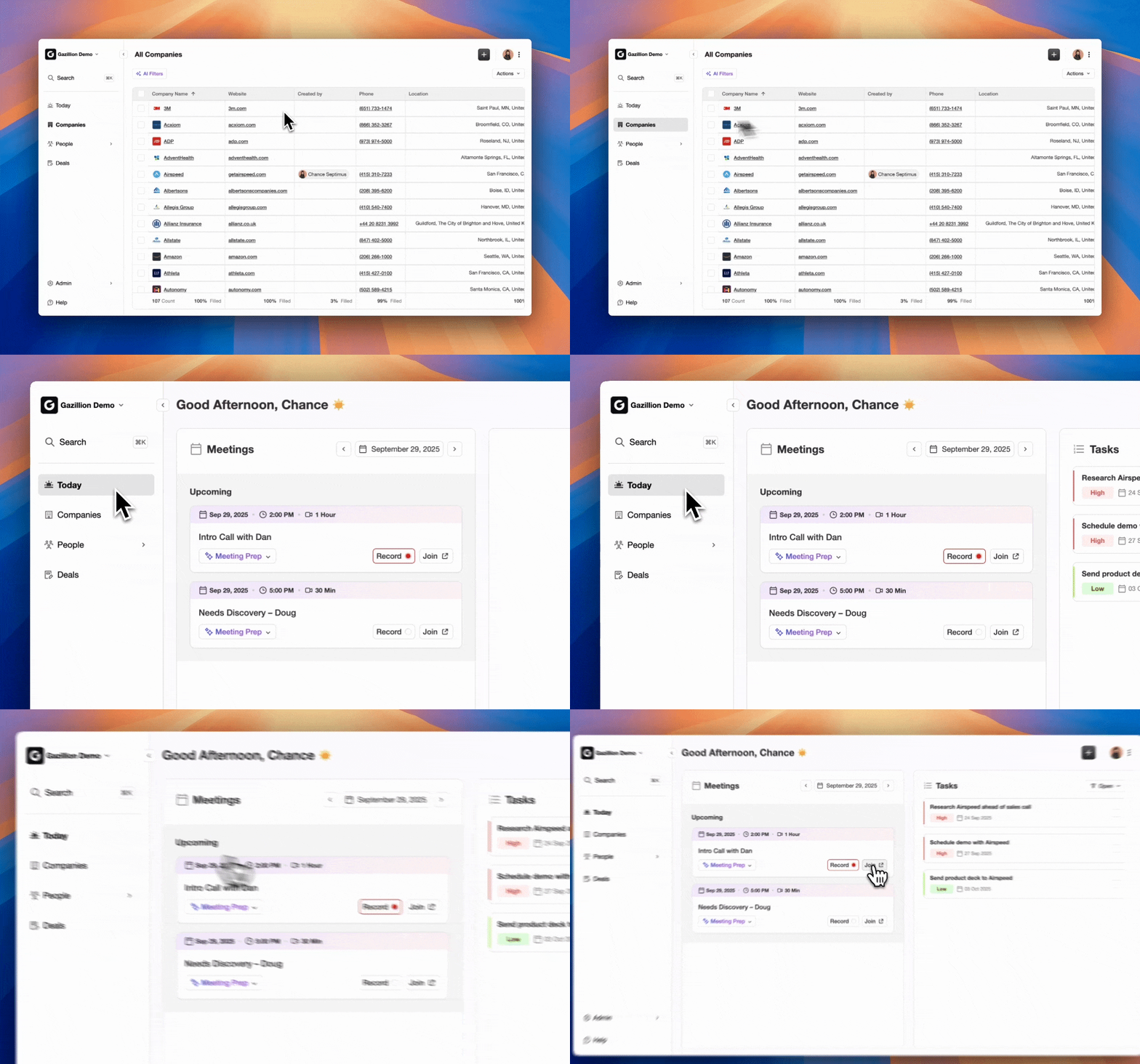
Upon connecting to Google Workspace or Microsoft 365, Coffee’s Agent immediately gets to work:

- Auto-Creates And Enriches Contacts And Companies from emails and calendars, which eliminates the manual entry hours that sit on the left side of the ROI formula.
- Logs Last And Next Activity Autonomously, so the missing-field rate drops because the Agent fills fields, not the rep.
- Joins And Transcribes Calls on Zoom, Teams, and Meet, then generates summaries, next steps, and follow-up drafts, which recovers the post-meeting admin time the model prices at the fully loaded hourly rate.
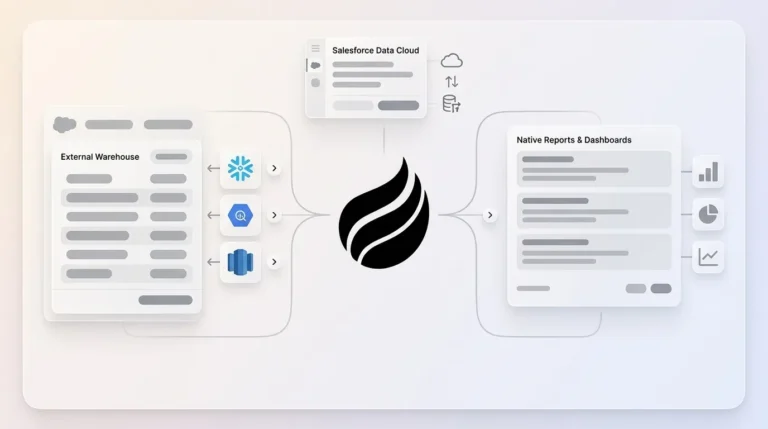
- Writes Insights Back To Salesforce Or HubSpot, so existing CRM investments stay in place and become accurate.
Coffee works in two primary modes. It can serve as a Standalone AI-First CRM for small teams that have outgrown spreadsheets. It can also act as a Companion App layered on top of existing Salesforce or HubSpot instances. The pricing model is simple seat-based, and the Agent’s unlimited labor is included with no metering on LLM usage or processes, so the software cost line in your model does not scale with volume.

Coffee is SOC 2 Type 2 and GDPR compliant and does not use customer data to train public models. For teams comparing Coffee to other automated data entry tools or evaluating it as the best automated data entry CRM for small business, those articles cover the tool-by-tool landscape. This article provides the model behind the decision.
See How Coffee Handles Your Data Entry

Frequently Asked Questions
How Do You Calculate The ROI Of Automated CRM Data Entry?
ROI = (Total Annual Benefit − Total Annual Cost) ÷ Total Annual Cost × 100. Total annual benefit is the hours recovered from manual entry multiplied by the fully loaded hourly cost of sales time, adjusted for the adoption rate, which is the share of recovered time actually redeployed to selling. Total annual cost includes software subscription, implementation, training, exception review, and ongoing governance. Every input should come from a 2–4 week baseline measurement, not vendor averages, so the model is defensible in a CFO conversation.
What Does Automated CRM Data Entry Actually Cost?
The complete cost stack has five lines. Software: as of 2026, native CRM AI data-entry automation features cost roughly $20–$75 per user per month, while dedicated capture-and-enrichment stacks run about $150–$400 per month total. Implementation: for small teams, CRM data-entry automation typically runs about $2,000–$5,000 per year for a 3-person firm and $4,000–$10,000 per year for a 10-person firm when using a dedicated capture-and-enrichment stack, with native CRM AI features costing less, roughly $1,000–$2,700 annually for a 3-person firm. Training time is valued at the fully loaded hourly cost of each attendee. Exception handling covers records the automation cannot resolve without human review. Ongoing governance usually requires roughly 5–10 hours per month of admin time. Most buyers underestimate total cost by 20–40% by counting only the subscription price. Coffee’s seat-based pricing includes the Agent’s unlimited labor with no per-record or per-process metering, which simplifies the software line and prevents cost from scaling with volume.
How Long Until Automated Data Entry Pays For Itself?
Payback in months = Total Upfront and Recurring Cost ÷ Monthly Benefit. For a 5-person team at a $75 fully loaded hourly rate recovering 5 hours per rep per week at 80% adoption, the model produces a payback of under 3 months. The industry range of 6–12 months reflects variation in adoption rate, rep count, implementation speed, and integration complexity. High adoption and a high fully loaded hourly rate shorten payback, while low adoption and complex integrations lengthen it. Coffee’s Agent supports adoption by eliminating the manual entry that reps resist, which directly compresses the payback period.
Why Does CRM Automation ROI Sometimes Fail?
Two failure modes dominate. First, adoption failure: if reps do not use the system, data stays bad and the benefit never materializes, and the 47% failure rate cited earlier is the evidence. Second, the saved-time-isn’t-cash trap: recovered hours only become revenue if the team actively redeploys them to selling rather than other admin. A third failure mode is automating a broken process, which means bad data enters the system faster but remains bad data. Coffee’s Agent addresses adoption failure directly by removing the manual entry burden that causes reps to resent legacy CRMs in the first place.
Is Automated Data Entry Secure?
Security requirements vary by vendor. Coffee is SOC 2 Type 2 certified and GDPR compliant, meaning its security controls have been independently audited against a rigorous standard. Coffee does not use customer data to train public models, which addresses the data-sovereignty concern most common among sales and RevOps leaders evaluating AI tools. Teams in regulated industries should verify that any automation vendor can produce a current SOC 2 report and a data processing agreement before connecting the tool to production CRM data.
Conclusion: Build The Model, Then Hire The Agent
The ROI of automated CRM data entry becomes defensible when the buyer supplies their own inputs. The vendor ROI and payback figures discussed earlier are real only when the arithmetic behind them holds for your team size, your fully loaded hourly rate, your adoption rate, and your actual hours lost to manual entry. The model in this article gives you the formula, the complete cost stack, a worked example with visible arithmetic, and a 2–4 week baseline plan to replace vendor assumptions with your own data.
Coffee is the definitive solution for the labor the model prices out. Its Agent auto-creates contacts and companies, logs activity autonomously, joins and transcribes calls, and writes insights back to Salesforce or HubSpot. The Agent performs the data entry work that sits on the benefit side of the equation, so the return becomes measurable rather than theoretical.
Calculate Your ROI And Start With Coffee