Written by: Doug Camplejohn, CEO & Co-Founder, Coffee | Last updated: September 15, 2026
Key Takeaways
- Native API syncs outperform Zapier bridges because they eliminate polling latency, task costs, and fragile field mappings when writing visitor data back to CRMs.
- Coffee and a few other tools surface named individuals with job titles, emails, and LinkedIn profiles for immediate outreach, while most Leadfeeder alternatives identify companies only.
- HubSpot and Salesforce teams gain the most from Coffee’s Companion App, which layers on top of existing CRMs while they remain the system of record.
- Real-time Slack alerts at the person level, Suggested Leads, and single-pixel installation distinguish Coffee from tools that rely on company-level signals or Zapier delays.
- Ready to upgrade your stack? Upgrade your stack with Coffee today.
What Integration Means In This Comparison
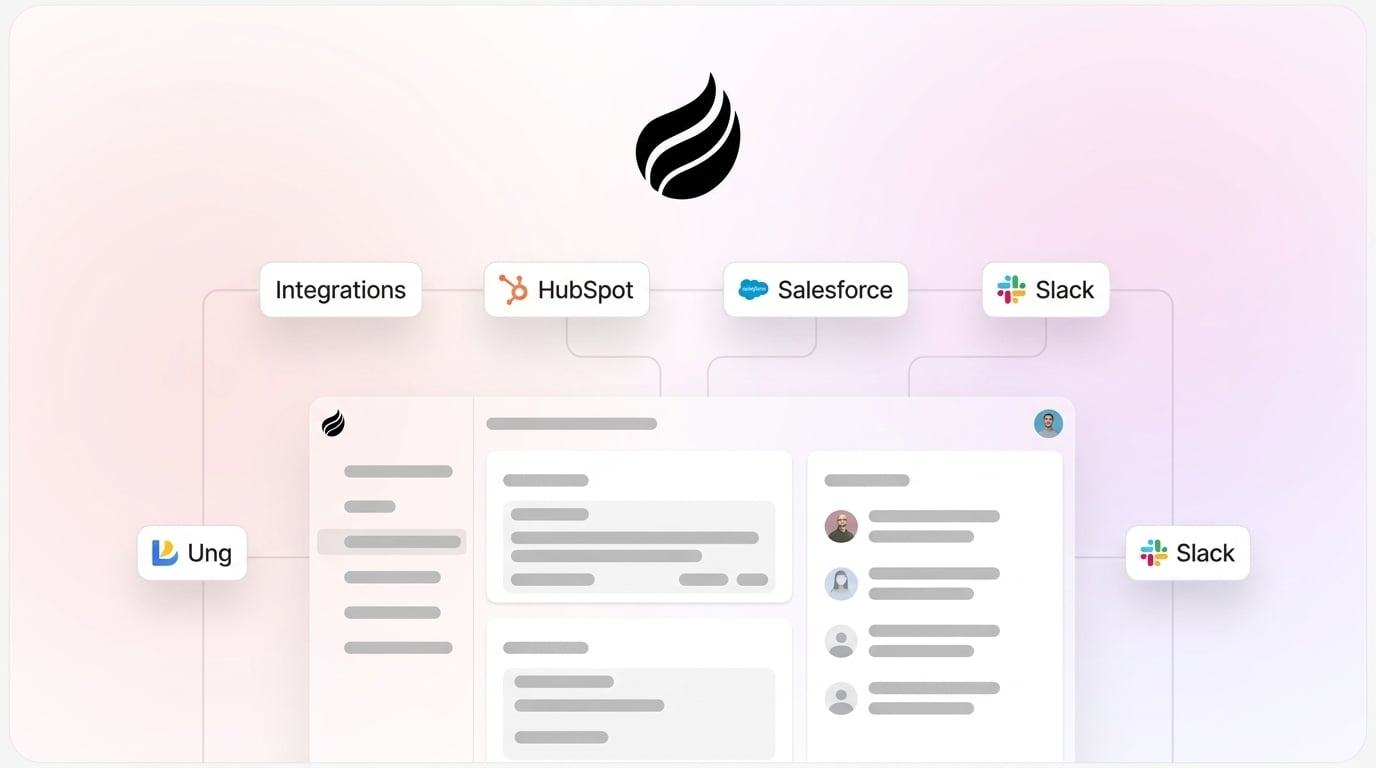
A native API sync typically authenticates once and writes directly to your CRM, avoiding per-task costs and generally syncing faster than middleware. Latency and directionality still vary by connector, and some native syncs are not truly real-time. A Zapier or Make bridge is trigger-based, one-directional by default, subject to task caps, and introduces polling latency of up to 15 minutes on lower-tier plans. Every comparison below applies this distinction as of 2026.
The alternatives evaluated here are: Leadinfo, Snitcher, Albacross, Warmly, Factors.ai, RB2B, 6sense, HubSpot Breeze Intelligence, and Coffee. To compare them fairly, we apply the same evaluation criteria to each tool.
How These Leadfeeder Alternatives Are Evaluated
The scorecard uses these criteria consistently:
- Native CRM write-back: which objects and fields sync, and whether the sync is bi-directional
- Native analytics integration: GA4 and equivalent
- Native outreach and alerting: Slack and email sequencers
- Zapier or Make coverage: available as fallback or primary path
- Sync latency: near real-time versus polling interval
- Field mapping control: custom fields, nested objects, required-field handling
- Historical data handling: what survives migration
- Total integration cost: Zapier task limits, API rate limits, CRM field conflicts
Best Leadfeeder Alternative Integrations At A Glance
The table below maps each tool to its verified native integrations. The key takeaway is that most alternatives lean on Zapier or webhooks for CRM write-back, while only a few offer true native API syncs. No “50+ integrations” claims appear here, only named, documented connections.
Deploy the Companion App on your CRM — see pricing
Leadfeeder Native Integrations Versus Zapier Bridges
This article addresses a gap in competing coverage. The consequences of choosing a Zapier bridge over a native integration are concrete and compounding.
Sync latency. As mentioned earlier, Zapier’s polling can introduce up to 15 minutes of latency, while native webhook-driven syncs propagate in seconds. For visitor identification, a 15-minute lag means a rep may call a prospect before the CRM reflects that the prospect just visited the pricing page.
Field mapping limitations. Middleware field mapping is shallow to moderate because nested objects and record associations flatten into flat fields. The richer your CRM schema, the more mapping degrades. When your Salesforce schema changes, Zapier field maps break silently.
Task costs. Zapier’s Professional plan starts at $29.99/month for 750 tasks. A standard contact-sync workflow with webhook trigger, formatter, CRM search, record upsert, field update, and notification consumes 4–5 tasks per run. A high-traffic site exhausts a plan within days.
Data residency. Enterprise security reviews often reject Zapier-based integrations because data transits Zapier’s infrastructure, introducing an unapproved third-party data sub-processor. This pattern triggers DPA requests or hard rejections.
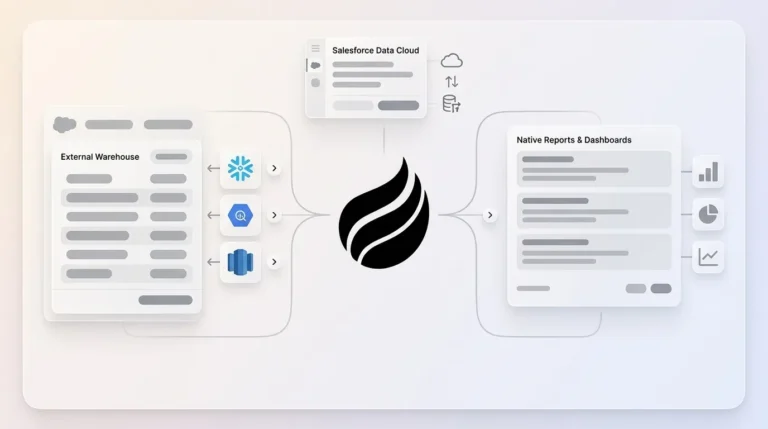
Coffee’s Companion App authenticates once via OAuth and writes enriched contacts, companies, and activities back to Salesforce or HubSpot directly. This avoids a Zapier hop, per-record task costs, and latency from polling.
Best Leadfeeder Alternatives For HubSpot Teams
For Leadfeeder alternatives for HubSpot, the relevant question is which fields each tool writes back natively. Leadfeeder’s HubSpot integration identifies companies already in the CRM, pushes visitor data, and syncs company and contact records. However, it does not surface the name, email, or LinkedIn profile of the individual visitor.
Coffee’s Companion App deploys on top of an existing HubSpot instance. Upon connecting Google Workspace or Microsoft 365, the Agent auto-creates contacts and companies. It then enriches those records with job titles, funding, and LinkedIn profiles via licensed data partners, and logs last and next activity. This keeps HubSpot as the system of record while the Agent handles data entry. Visitor identification adds named individuals from website traffic directly into HubSpot, with Suggested Leads recommending which two or three people inside a visiting company to contact first.
HubSpot Breeze Intelligence is a 2026 option that most Google top-10 articles omit entirely. It is native to the HubSpot ecosystem, with enrichment, buyer intent, and form shortening built directly into HubSpot CRM, but it does not write back to external CRMs. For teams already on HubSpot who want enrichment without a third-party tool, it is worth evaluating. For teams who need person-level visitor identification with outbound action, it does not close that loop.
HubSpot’s App Marketplace passed 2,000+ apps and 2.5 million active installs as of October 2025, meaning the ecosystem is deep. Depth does not automatically equal native write-back quality. Native connectors from HubSpot Data Sync check for changes every five minutes and update records within 10 minutes, which is reliable but not real-time.
Leadfeeder Alternatives For Salesforce: Native Write-Back Compared
For Leadfeeder alternatives for Salesforce, the stakes are higher. Leadfeeder’s Salesforce integration adds custom fields to Accounts, Leads, and Opportunities, and maps to standard and custom Salesforce fields per entity type. Enabling “send visits” has a significant impact on Salesforce API usage, where 200 CRM records constitute one API call. That constraint compounds at scale.
Coffee’s Companion App writes back to Salesforce while Salesforce remains the core CRM. This matters for teams with quotas, forecasting, required fields, and complex Salesforce configuration. Newer alternatives like Day.ai and Clarify often lack a deep understanding of how sophisticated Salesforce integrations work, especially around quotas, forecasting, and required fields. Coffee focuses on these integrations and is built to handle them without breaking existing workflows.
Leadfeeder’s Dynamics 365 native integration supports Online only, while the On-Premise version falls back to a one-way Zapier connection. Teams on Dynamics On-Premise should factor this into any migration plan.
Do Leadfeeder Alternatives Integrate With Slack?
Both RB2B and Coffee deliver real-time Slack alerts, but the data surfaced differs materially.
RB2B sends real-time visitor identification notifications to Slack and can feed data into over 50 apps including HubSpot, Salesforce, Clay, and Zapier. However, RB2B’s person-level identification is limited to U.S. visitors. International traffic resolves only at the company level.
Coffee identifies named individuals, including name, title, email, and LinkedIn profile, alongside company, pages visited, time on site, and first versus returning visit status, and pushes this to Slack in real time. Its Suggested Leads feature then recommends which two or three humans inside the visiting company to reach out to, with LinkedIn profiles surfaced for instant outbound. This flow closes the loop from pixel hit to outreach without leaving the agent.
Warmly and Albacross also offer Slack alerts, but at the company level rather than the person level. This means RevOps teams who need to act on a named individual, rather than route a company alert to a territory rep, face a choice between a signal and an action.
Migration Reality: Leaving Leadfeeder
Ranking articles often overlook what actually happens when you switch. Here is what breaks and what to do about it.
Historical data. Leadfeeder retains data for 30 days in system backups after account removal. Visit history, identified companies, and contact records do not automatically transfer to a replacement tool. Export everything before cancellation.
Field mappings. Leadfeeder matches HubSpot Companies on name, domain, website, country, city, and zip; Salesforce Accounts on Name, Website, BillingCountry, BillingCity, and BillingPostalCode. Any replacement tool must be mapped to the same fields or duplicates will be created.
Zapier automations. When a CRM integration is removed, companies, contacts, and leads can no longer be synced, and any Zapier Zaps built on Leadfeeder triggers will stop firing. Audit every active Zap before switching.
A pre-migration checklist:
- Export historical visitor data and identified company records before cancellation
- Document all active Zapier Zaps and their field mappings
- Map Leadfeeder’s outgoing field configurations to the replacement tool’s CRM properties
- Re-verify the new tracking pixel in the
<head>tag - Re-test Slack alerts and GA4 connections after go-live
Coffee’s visitor identification installs via a single tracking pixel in the <head> tag. Coffee verifies installation and begins identifying visitors immediately, with no data-modeling phase or professional services engagement.
Migrate seamlessly — explore Coffee’s plans
If Your Stack Is X, Pick Y — Decision Summary
- HubSpot + Slack, person-level alerts required: Coffee’s Companion App deploys on top of HubSpot, identifies named visitors, and pushes Suggested Leads to Slack while HubSpot remains the system of record.
- Salesforce with complex quotas and forecasting: Coffee’s Companion App writes back to Salesforce while Salesforce stays primary, handling required fields, custom objects, and existing workflow rules.
- U.S.-only traffic, lightweight Slack feed, no CRM write-back needed: RB2B’s Pro plan covers this use case at lower cost, though person-level identification is U.S.-only and CRM integrations require the Pro tier.
- ABM and multi-channel ad sync (LinkedIn, Google, Facebook): Factors.ai covers this use case, with SOC 2 Type II and GDPR compliance, though advanced ABM capabilities start at the $20,000 Growth tier.
- Already on HubSpot, want enrichment without a third-party tool: HubSpot Breeze Intelligence is the native option, but it does not provide person-level visitor identification or write back to external CRMs.
- 1–20 person team that has outgrown spreadsheets: Coffee’s Standalone AI-First CRM is built for this profile. The Agent handles data entry, enrichment, and outreach sequencing without requiring Salesforce or HubSpot.
Frequently Asked Questions
What Are Some Alternatives To Leadfeeder?
The main alternatives to Leadfeeder as of 2026 are Leadinfo, Snitcher, Albacross, Warmly, Factors.ai, RB2B, 6sense, HubSpot Breeze Intelligence, and Coffee. Each differs significantly on integration mechanics, specifically whether CRM connections are native API syncs or Zapier bridges, and on whether identification is at the company level or the person level. Coffee is the only alternative that deploys as a Companion App on top of existing Salesforce or HubSpot, identifies named individuals via a single tracking pixel, and surfaces Suggested Leads matching your buyer persona.
Which Platform Is Best For B2B Lead Generation?
The answer depends on your stack and how you define lead generation. If you need person-level visitor identification that writes back to HubSpot or Salesforce natively and surfaces specific individuals to contact, Coffee is the strongest fit for 50–200 person B2B SaaS teams. It combines visitor identification, CRM write-back, Suggested Leads, and outreach sequencing inside one agent, eliminating the need to stitch together separate tools for enrichment, sequencing, and CRM sync. For teams focused on ABM and multi-channel ad targeting, Factors.ai or 6sense cover that use case at higher price points.
Do Leadfeeder Alternatives Integrate With GA4?
Leadfeeder itself integrates natively with Google Analytics and Google Ads. Among alternatives, GA4 integration varies: most tools connect via Google Tag Manager, where the tracking pixel fires alongside GA4 tags, rather than a direct GA4 API integration. Factors.ai offers ad platform integrations including LinkedIn Ads, Google Ads, and Facebook Ads. Coffee’s visitor identification pixel installs in the same <head> tag as GA4 and operates independently. It does not require GA4 to function, and visit data is surfaced directly in the Coffee interface and pushed to Slack and CRM without routing through GA4.
Leadfeeder Vs Leadinfo Integrations Compared
Leadfeeder’s native CRM integrations cover HubSpot, Salesforce, Dynamics 365 (Online only), Pipedrive, Zoho, and webCRM, with Zapier as the documented fallback for tools outside that set. Leadinfo covers HubSpot, Salesforce, Pipedrive, Dynamics, and ActiveCampaign natively, and adds n8n and webhooks for custom routing. The practical difference for most RevOps teams is that n8n’s per-execution billing model avoids Zapier’s per-task cost model. One full workflow run counts as a single execution regardless of step count, while Zapier bills each data-moving step. However, this does not guarantee lower total cost in every case. n8n Cloud has execution caps, self-hosting carries maintenance overhead, and very high-frequency, few-step workflows can still favor per-task pricing, while Leadfeeder’s Salesforce integration is more mature and better documented for complex field mapping and required-field handling than Leadinfo’s, which gates its Salesforce integration to its top-tier Pro plan and lacks comparable public documentation. Neither Leadfeeder nor Leadinfo identifies the actual named individual visiting a website by default, since both resolve visits to the company level, though both may also display publicly available contact details for people at those companies, and Leadinfo’s Persona Insights can suggest which known contacts might be behind a visit.
Can I Keep Salesforce Or HubSpot And Still Use An AI Agent?
Yes, this is exactly what Coffee’s Companion App is built for. It deploys as an intelligent layer on top of your existing Salesforce or HubSpot instance via a simple OAuth authentication. The Coffee Agent handles data entry, enriches records with job titles, funding, and LinkedIn profiles, logs activity, and writes everything back to your CRM while it remains the system of record. Your existing quotas, forecasting, required fields, and workflow rules remain intact. Coffee is SOC 2 Type 2 and GDPR compliant, and data is not used to train public models. Seat-based pricing includes unlimited agent labor with no per-task or per-record metering.
Conclusion
Leadfeeder alternatives differ sharply on integrations. The native versus Zapier distinction determines sync latency, field mapping control, task costs, and whether your CRM stays accurate after the switch. As covered, Zapier bridges introduce delays and costs that native syncs avoid.
As noted, Coffee’s Companion App deploys on top of existing Salesforce or HubSpot, identifies named visitors via a single tracking pixel, writes enriched contacts and activities back to your CRM natively, and surfaces Suggested Leads. For teams with complex Salesforce configurations or HubSpot as their system of record, it is the integration-first alternative built to handle what newer tools cannot.
Close the loop — get pricing for Coffee