Written by: Doug Camplejohn, CEO & Co-Founder, Coffee | Last updated: September 25, 2026
Key Takeaways
- MEDDIC is a six-element deal-qualification framework that exposes what reps do not yet know about an opportunity, and Highspot is the platform where reps learn, practice, and access guidance.
- Highspot should handle methodology training and content access, while CRM must capture the specific names, numbers, and documented evidence for every MEDDIC letter.
- Each MEDDIC letter maps to a specific pipeline stage as a required exit criterion, with validation rules preventing stage advancement without verifiable proof.
- Manager training and standardized inspection questions are essential to replace conversational deal reviews with evidence-based qualification checks.
- Coffee automates the capture of MEDDIC qualification data from calls and emails, eliminating manual data entry and keeping evidence standards consistent across the sales process.
Explore Coffee For MEDDIC Teams
The Highspot/CRM Architecture Decision: What Goes Where
MEDDIC fails when the place reps learn is confused with the place deal facts are proven. The architecture decision becomes the spine of a successful implementation. Highspot is where reps learn, practice, and access guidance. CRM is where the deal facts live. That means specific names, numbers, and documented evidence for every letter.
The table below shows why the split matters. Every MEDDIC letter has a Highspot artifact that teaches the skill and a CRM field that proves the skill was applied. Notice that no letter’s evidence lives in Highspot.
| MEDDIC Letter | Build In Highspot | Capture In CRM |
|---|---|---|
| Metrics | ROI calculator, value hypothesis SmartPage, financial impact talk tracks | Confirmed success metric, quantified business impact (buyer-stated number, rep entry tied to that number) |
| Economic Buyer | EB persona SmartPage, executive battle card, EB engagement play | EB name, title, access status, date of last direct interaction |
| Decision Criteria | Criteria comparison guide, technical vs. business criteria SmartPage | Confirmed criteria list, our fit rating per criterion, source of criteria (buyer-stated or assumed) |
| Decision Process | Mutual Action Plan template, decision process discovery guide | Documented approval steps, named approvers, target dates, paper process owner |
| Identify Pain | Discovery guide, pain-point play, implication question library | Documented pain statement, business impact of inaction, buyer-stated consequence |
| Champion | Champion enablement kit, champion test scenarios, internal selling guide | Champion name, evidence of internal selling (for example, introduced EB, presented ROI to committee) |
The CRM fields in the right column should behave as required evidence fields. Validation rules should prevent stage advancement without required fields populated. For example, no advancing to Stage 3 without an Economic Buyer name, and no Commit without a documented Decision Process. The evidence standard shifts the question from “Is this field populated?” to “Do we have verifiable proof?”
The most pervasive MEDDIC implementation mistake is treating it as a checklist rather than a qualification framework. Reps then fill CRM fields with surface-level answers like “Champion: Yes” without gathering verifiable evidence. A champion field reading “VP of Sales, met once, seemed interested” signals risk. “VP of Sales, introduced us to CFO, presented our ROI model to the steering committee last Tuesday” meets the evidence standard.
See How Coffee Improves MEDDIC Data Quality
How To Implement MEDDIC In Highspot: Step By Step
- Build the MEDDIC master play in Highspot. Create a single destination that packages all MEDDIC methodology content, including discovery guides, persona SmartPages, battle cards, and Mutual Action Plan templates, organized by letter and stage.
- Deploy SmartPages for each MEDDIC letter. Each SmartPage should surface the right content for that letter. The Metrics SmartPage hosts the ROI calculator and value hypothesis. The Champion SmartPage hosts the enablement kit and champion test scenarios.
- Map each letter to your CRM stages. Assign each MEDDIC letter to a specific pipeline stage where it becomes a required exit criterion. Pain and Champion belong at Discovery. Economic Buyer and Decision Criteria fit at Qualification. Decision Process aligns with Evaluation. Metrics belongs at Business Case.
- Train managers first. Frameworks die when managers run deal reviews conversationally. Managers must be able to inspect evidence for every letter before reps are trained.
- Connect Highspot to Salesforce or HubSpot. Configure the CRM integration so deal context triggers contextual guidance. A “MEDDIC Gap: Economic Buyer” prompt should surface the EB engagement play and recommended questions directly in the opportunity record.
- Run MEDDIC deal reviews. Use a standardized inspection question per letter. Require reps to produce the supporting artifact, not just state a score.
- Measure adoption, execution quality, and business outcomes. Track three layers: CRM field completion quality, Highspot play usage by stage, and win rate movement on fully qualified deals.
Building The MEDDIC Master Play And SmartPages In Highspot
Highspot Sales Plays package messaging, objection handling, content, and training into a single destination for every selling scenario. They provide role-specific guidance and AI-recommended content surfaced based on deal stage and buyer persona. The MEDDIC master play acts as the top-level container. SmartPages serve as the per-letter destinations inside it.
Structure the content taxonomy by three dimensions: MEDDIC element, persona, and stage. A rep working the Economic Buyer letter in the Evaluation stage with a CFO persona should land on a SmartPage that surfaces the executive battle card, the EB engagement play, and a recorded best-practice call. That experience keeps the rep out of a generic content library.
Configure these Highspot features for the MEDDIC master play:
- SmartPages, one per MEDDIC letter, organized by persona and stage
- Sales plays, including the master MEDDIC play plus sub-plays for high-risk letters such as Economic Buyer and Champion
- Scorecards to track play adoption and content usage by letter and stage
- AI role-play, where Highspot AI Role Play turns real scenarios, personas, objections, and stages into repeatable practice, with reps receiving instant scoring and skill-aligned feedback
- Meeting intelligence, where Highspot Meeting Intelligence captures real sales calls and delivers instant recaps and transcripts, feeding coaching data back into the role-play framework
- Engagement analytics to surface which MEDDIC content buyers engage with and which assets reps skip
Highspot performs best when someone owns taxonomy, content governance, sales plays, training quality, and adoption. Assign a named owner for each MEDDIC SmartPage before launch. With the content architecture in place, the next decision is when each letter becomes mandatory, which is what the stage-gate model defines.
The Stage-Gated MEDDIC Model: Tightening Qualification By Stage
The stage-gated MEDDIC model raises the qualification bar as deals advance. A flat checklist applied once at the top of the funnel turns into a compliance exercise. Deals should only advance when MEDDIC components are verified through direct evidence, not assumed based on early-stage optimism. The table below maps each letter to the pipeline stage where it becomes a required exit criterion and shows how requirements accumulate.
| Pipeline Stage | Required MEDDIC Letters | Evidence Standard |
|---|---|---|
| Discovery | Identify Pain, Champion (identified) | Buyer-stated pain documented; champion name and role in CRM |
| Qualification | Economic Buyer, Decision Criteria | EB name and access status confirmed; criteria list buyer-stated, not assumed |
| Evaluation | Decision Process, Champion (tested) | Approval steps and dates documented; champion has spent political capital |
| Business Case | Metrics | Quantified impact confirmed in writing by a named buyer |
| Negotiation | All six letters re-verified | All letters scored; EB engaged within the last 14 days |
| Commit | All six letters at evidence level | Supporting artifact producible on demand for every letter |
Retorio advises tracking score movement between deal reviews rather than the total score. A deal moving from low to high qualification in a fortnight looks healthy. A deal frozen at the same score for six weeks signals risk, regardless of how strong the number appears in isolation.
The Manager MEDDIC Deal-Review Play: Questions And Evidence
Managers keep MEDDIC alive by running consistent, evidence-based deal reviews. The play below gives managers a standardized inspection question per letter and a clear evidence standard. The goal is to replace “How do you feel about this deal?” with a structured inspection that exposes real qualification gaps.
| MEDDIC Letter | Manager Inspection Question | Evidence Standard |
|---|---|---|
| Metrics | What specific number did the buyer give us, and who stated it? | Buyer-stated figure in CRM, tied to a named contact |
| Economic Buyer | When did you last speak directly with the EB, and what did they say? | Direct interaction logged; EB has attended at least one meeting |
| Decision Criteria | Can you show me the criteria list the buyer gave us? | Written criteria from buyer; our fit documented per criterion |
| Decision Process | Walk me through every approval step, name, and date. | Documented process with named approvers and target dates in CRM |
| Identify Pain | What did the buyer say happens if they do nothing by end of quarter? | Buyer-stated consequence of inaction captured in CRM |
| Champion | What has your champion done internally on our behalf this week? | Specific action requiring political capital, such as EB introduction, internal presentation, or procurement advocacy |
The test that separates a champion from a friendly coach is the “risky favor”. A coach gives information. A champion spends political capital.
When execution breaks down, the inspection question reveals where. A rep who cannot answer the Decision Process question from memory has not qualified the deal. That situation creates a coaching opportunity rather than a reliable forecast entry. If a rep cannot answer the key qualification questions from memory, the deal is not qualified and the review has identified a coaching opportunity.
Connecting Highspot To Salesforce Or HubSpot For MEDDIC
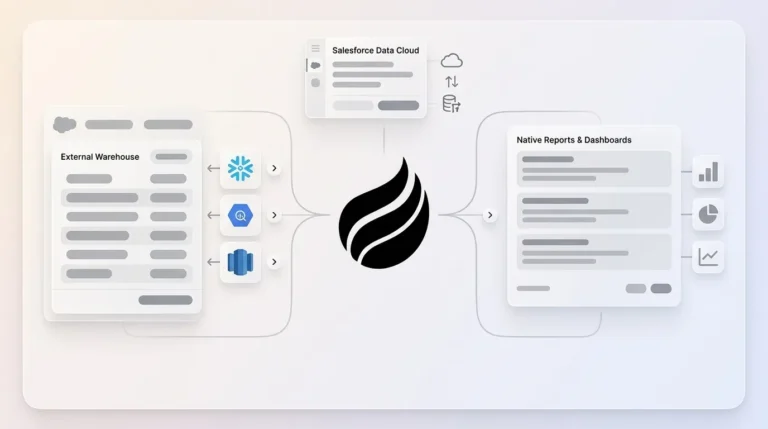
Highspot’s native Salesforce connector embeds content recommendations, sales plays, buyer engagement tracking, and AI deal guidance directly on Salesforce opportunity, account, and contact records. When a rep’s CRM record shows a MEDDIC gap, such as an empty Economic Buyer field at Stage 3, Highspot surfaces the EB engagement play and recommended discovery questions directly in the opportunity record. Deal context drives the guidance, so the rep does not have to search for it.
For HubSpot users, Highspot’s integration ecosystem includes HubSpot alongside Salesforce and Microsoft Dynamics 365. The Salesforce integration carries deeper native functionality. Configure required deal properties on HubSpot stage transitions to enforce the same stage-gate model.
The CRM side of this architecture is where many MEDDIC implementations fail. If deal facts are missing, stale, or entered as placeholder text, Highspot’s guidance has nothing reliable to act on. The next section covers how to train and certify the team so those facts get captured consistently.
Coffee then strengthens this architecture by handling the hardest part: accurate data capture. Coffee works as a Standalone AI-First CRM for small companies or as a Companion App on top of Salesforce or HubSpot for small to mid-market teams. Coffee’s autonomous agent captures and enriches the deal facts MEDDIC requires without manual data entry. It joins calls, generates summaries, and structures notes according to MEDDIC, BANT, or SPICED, so consistent qualification data enters the system automatically.

Coffee’s Pipeline Compare feature supports the manager deal-review play by visualizing week-over-week changes, highlighting stalled opportunities, and surfacing progressed deals. Pipeline reviews shift from interrogation sessions to strategic discussions without spreadsheets. Coffee’s meeting briefings, summaries, and follow-ups provide the evidence standard for each MEDDIC letter. When a manager asks “What did the Economic Buyer say on the last call?”, the answer appears in Coffee’s structured summary instead of sitting in a rep’s personal notes.

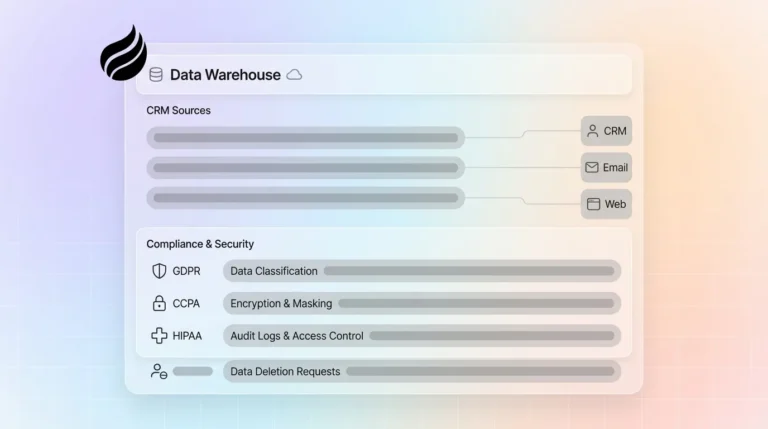
Coffee also handles both structured and unstructured data on a data warehouse, which creates a reliable “Good Data In, Good Data Out” foundation for MEDDIC execution. Automating capture from meetings and email reduces manual backfilling and improves adoption. Coffee’s agent performs this capture autonomously, so reps can focus on selling instead of data entry.

Automate Your MEDDIC Data Capture
MEDDIC Training And Certification As A Program
<pTeams change behavior when training runs as a program, not a single event. Eighty-four percent of sales training content is forgotten within three months, which makes single-session rollouts an expensive way to miss behavior change. Structure MEDDIC training as a program with six modules delivered over the first 30 days, then reinforced continuously.
- Fundamentals — MEDDIC letter definitions, evidence standards, and the Highspot/CRM architecture decision
- Discovery — Pain implication questions, buyer-stated versus rep-inferred metrics, and the discovery guide SmartPage
- Stakeholder Mapping — Economic Buyer identification, champion versus coach distinction, and multi-threading
- Decision Process — Approval path documentation, paper process awareness, and Mutual Action Plan configuration
- Deal Inspection — Manager inspection questions, evidence standards, and scorecard use
- Live-Deal Application — Reps apply each letter to an active deal and bring findings to the next pipeline review
Highspot AI Role Play lets managers turn real scenarios, personas, objections, and stages into repeatable practice. Build role-play scenarios for the highest-risk letters. For example, create an Economic Buyer scenario where the rep must pivot a technical champion to business value, a Champion Testing scenario that requires the contact to sponsor a CFO meeting, and a Pain Implication scenario where the AI prospect claims everything is “fine.”
Certification programs are genuinely useful for giving a large, distributed sales organization a shared vocabulary quickly. They do not, by themselves, change what a rep says in the fourteenth minute of a discovery call. That behavior shifts with repetition and feedback rather than a completion certificate.
Measuring MEDDIC In Highspot: Adoption, Execution Quality, And Outcomes
Teams only know MEDDIC is working when they measure adoption, execution quality, and commercial outcomes together. Methodology success should be judged by execution quality and commercial outcomes such as win rates, pipeline quality, and forecast confidence, not training completion scores or seller self-assessment. Track three separate layers.
Layer 1: Adoption
- Percentage of Stage 3+ deals with an identified Economic Buyer name in CRM
- Percentage of Stage 3+ deals with a documented Decision Process
- Highspot play usage rate by MEDDIC letter and stage
- CRM required-field completeness by rep and stage
Layer 2: Execution Quality
- Evidence quality checks: spot-check a random sample of high-scoring deals monthly to verify field entries reflect real knowledge, not placeholder text
- Highspot workflow completion signals: which SmartPages are accessed and which role-play scenarios are completed
- Manager inspection consistency: whether deal reviews use the standardized inspection questions or revert to narrative
- Time savings: hours recovered from automated data capture versus manual entry
Layer 3: Business Outcomes
- Win rate on fully qualified deals, where all six letters sit at evidence level, versus partially qualified deals
- Sales cycle length by MEDDIC completeness score
- Forecast accuracy, measured as the percentage of Commit-stage deals that close as forecast
- Stage conversion rates before and after MEDDIC enforcement
Teams that require a minimum qualification score before forecast inclusion see 30–40% more accurate forecasts than teams that include all open deals regardless of qualification depth. Set the threshold, enforce it in CRM, and then measure the gap between current performance and the target.
Track MEDDIC Metrics With Reliable Data
Common MEDDIC Implementation Mistakes And Fixes
Treating Highspot as the system of record. Highspot is where reps learn and access content. Deal facts such as names, numbers, dates, and evidence belong in CRM. When Highspot becomes the de facto record, qualification data stays unstructured, unsearchable, and invisible to managers.
Letting MEDDIC become checkbox theater. A documented MEDDIC failure mode is focusing on CRM field compliance instead of skill development. That focus creates resentment and weak behavior change. Enforce evidence standards and treat placeholder entries as zeros. A field with “TBD” should receive no credit.
Skipping manager training. The most common reason MEDDIC fails to stick after training is manager behavior. Managers must be able to inspect evidence for every letter before reps are trained, otherwise deal reviews revert to conversation, as noted in Step 4.
Failing to define evidence for each letter. Vague entries such as “Champion: Yes” do not meet the standard. Define the evidence requirement for each letter before rollout and publish it in the MEDDIC master play SmartPage.
Measuring only training completion. Self-reported CRM data is a poor diagnostic tool for qualification gaps because reps often fill in fields to satisfy managers rather than to reflect the actual state of the deal. Use call recordings and manager inspection to validate.
Applying MEDDIC once and moving on. Champions get reorganized, budgets get reallocated, and new stakeholders enter evaluations. Build MEDDIC reassessment into every deal review by asking “What has changed since our last assessment?” for each component.
Variations And Scaling: Adapting MEDDIC In Highspot To Your Team
The stage-gated model above fits mid-market and enterprise deals. Adjust it based on team size, CRM maturity, and deal complexity so the framework feels achievable instead of overwhelming.
Small teams (fewer than 20 reps). Start with three required letters at Stage 3: Economic Buyer, Identify Pain, and Champion. Add Decision Process and Metrics at Stage 4. Defer Decision Criteria until the team has consistent data on the first three. Coffee can serve as a Standalone CRM here, which removes the CRM adoption problem because the agent captures qualification data automatically while reps focus on selling.
Teams with low CRM maturity. Audit current CRM stages, required fields, and activity completeness before launching a big training program, and fix the CRM foundation first if stage names are vague and qualification data is missing. A MEDDIC rollout on top of a broken CRM simply produces better-labeled garbage.
Teams considering MEDDPICC. If the last ten slipped deals slipped after a verbal yes while paperwork moved between security, legal, and procurement, MEDDPICC is needed. Add Paper Process as a required field at the Negotiation stage and Competition at Evaluation. The Highspot architecture adds two SmartPages, and the CRM adds two required fields.
Scaling to enterprise. As deal complexity grows, the stage-gate model tightens. Legal and procurement can add 30–90 days to any enterprise deal. Not knowing the paper process until after verbal commitment ruins quarterly forecasts. Add a Paper Process owner and timeline as required CRM fields at Stage 4 before scaling the model to enterprise deals.
Multi-region teams. Assign a named SmartPage owner per region. Localize the discovery guide and pain-point play for regional buyer personas. Keep the CRM field model identical across regions so pipeline reviews and forecast calls use the same evidence standard everywhere.
Frequently Asked Questions (FAQ)
What’s The Difference Between MEDDIC And MEDDPICC?
MEDDIC is the original six-element framework: Metrics, Economic Buyer, Decision Criteria, Decision Process, Identify Pain, and Champion. MEDDICC adds a seventh element, Competition, for deals in crowded categories where a strong technical fit still loses to a cheaper or safer choice. MEDDPICC adds both Competition and Paper Process, bringing the total to eight elements. Paper Process covers the legal, procurement, and contracting steps required to finalize a deal after verbal agreement, which is the stage where enterprise deals most commonly slip quarters. MEDDIC is typically sufficient for deals under $100K ACV with cycles under 90 days. MEDDPICC is designed for enterprise deals above $150K ACV with formal procurement, multiple competitors, and real quarter-end operational consequences. Choose the variant that matches your last ten slipped deals. If they slipped in procurement after a verbal yes, add Paper Process.
What Is The MEDDIC Sales Checklist?
The MEDDIC sales checklist is a six-question qualification instrument that forces a rep to document a specific name or number under every letter, which makes vagueness visible. The six questions are: What is the quantified business impact the buyer has confirmed? Who is the Economic Buyer with final budget authority, and have we met them directly? What are the buyer’s stated decision criteria, and how do we fit each one? What are the approval steps, named approvers, and target dates? What is the buyer-stated pain and the consequence of inaction? Who is our champion, and what have they done internally on our behalf? A deal reaches qualification only when every question has a specific, verifiable answer instead of a rep assumption. The checklist acts as a living instrument that teams re-assess at every deal review.
Is MEDDIC Still Relevant?
MEDDIC and its MEDDPICC extension remain the dominant qualification frameworks for complex, multi-stakeholder B2B enterprise sales, with MEDDPICC now the modern enterprise standard for larger deals with longer cycles. The core insight, that deals fail because reps do not know what they do not know, still applies. PTC used this insight to grow from roughly $300M to $1B in revenue in four years. What has changed is the evidence standard and the tooling. Modern implementations require buyer-stated evidence for every letter and use AI-powered CRM agents to capture that evidence automatically from calls and emails. The framework has also evolved. MEDDPICC has become the dominant variant for enterprise SaaS teams dealing with procurement complexity and competitive pressure. MEDDIC remains the qualification standard that separates forecast theater from forecast accuracy.
Who Invented MEDDIC?
MEDDIC was created inside PTC (Parametric Technology Corporation) in 1996 by Dick Dunkel and Jack Napoli, working under sales leader John McMahon. The framework originated from reverse-engineering lost deals to identify recurring qualification gaps, then distilling the habits of PTC’s best closers into a six-question checklist. The same PTC growth story cited above, from roughly $300M to $1B, came out of that reverse-engineering exercise. Andy Whyte later codified the MEDDPICC variant, adding Paper Process and Competition, in his 2020 book, which became the dominant reference for enterprise SaaS teams.
How Much Does MEDDIC Certification Cost?
MEDDIC certification costs vary by provider, program format, and team size. Several providers offer individual online certifications, while others offer cohort-based programs with live coaching and deal application. Pricing is not standardized across the market, and most enterprise programs are quoted based on team size and customization requirements. The more important investment question concerns reinforcement cost. The training itself is the smaller variable. The larger variable is whether managers are trained to inspect MEDDIC evidence in deal reviews and whether the CRM is configured to enforce the evidence standard. Certification without those two elements produces a completion certificate instead of a behavior change.
Conclusion: Making The Highspot/CRM Split Explicit
MEDDIC implementations fail on architecture more often than on the methodology itself. Many teams already use Highspot and reference MEDDIC, yet they have not made the Highspot/CRM split explicit. Highspot drifts into a content library that nobody uses for qualification. CRM turns into checkbox theater where fields are populated to satisfy managers instead of reflecting the actual state of the deal. The result is a forecast built on assumptions rather than evidence.
A prescriptive architecture fixes this pattern. Teach the methodology in Highspot. Capture the deal facts in CRM. Require evidence for every letter. Build the MEDDIC master play and per-letter SmartPages in Highspot. Deploy the stage-gated qualification model so each letter becomes a required exit criterion at the right stage. Train managers to inspect evidence instead of field completion. Connect Highspot to Salesforce or HubSpot so deal context triggers contextual guidance. Then add Coffee to handle the hardest part of the architecture, which is getting reliable qualification data into CRM without turning reps into data entry clerks.
Coffee’s autonomous agent captures and enriches the deal facts MEDDIC requires automatically. It structures notes according to MEDDIC from every call and email and gives managers the Pipeline Compare view they need to run evidence-based deal reviews. Whether your team needs a Standalone AI-First CRM or a Companion App on top of Salesforce or HubSpot, Coffee strengthens the CRM side of the MEDDIC architecture and creates a practical path to “Good Data In, Good Data Out” for qualification that actually sticks.
Put Coffee At The Center Of Your MEDDIC Stack