Written by: Doug Camplejohn, CEO & Co-Founder, Coffee | Last updated: July 26, 2026
How Top Enterprise Reps Run MEDDPICC Day to Day
- MEDDPICC works as an operating system when reps follow the same sequence on every deal, across every stage of the sales cycle, instead of treating it as a one-time checklist.
- Enterprise AEs improve win rates by tying each MEDDPICC element to specific calls: Metrics and Pain on the first discovery call, Economic Buyer by the second, and Decision Criteria, Decision Process, Paper Process, and Champion validation in the middle of the cycle.
- Post-meeting CRM updates create the biggest adoption barrier, because reps spend 20–40 minutes per call manually logging eight fields. An AI agent that transcribes, maps, and writes data back removes this time cost.
- Weekly deal reviews work best when managers ask element-specific questions such as “What evidence do we have that the Economic Buyer is engaged?” instead of close-date questions, and use a Red/Yellow/Green scorecard to control Commit forecast status.
- Teams that fully adopt MEDDPICC report 18% higher win rates and 24% larger deal sizes; see how Coffee’s AI agent captures MEDDPICC data automatically so your reps can focus on selling instead of data entry.
Readiness Checklist for Running MEDDPICC as an Operating System
Before running MEDDPICC as an operating system, confirm three things. First, your CRM must have a dedicated field (free-text plus a Red/Yellow/Green picklist) for each of the eight elements, because without structured fields, reps have nowhere to log data consistently. Second, your buyer persona must be defined well enough that you can identify an Economic Buyer by title and budget threshold before the first call, since you cannot qualify what you cannot recognize. Third, your manager must agree on the minimum MEDDPICC score required before a deal enters the Commit forecast, and teams often set this threshold at 70% or higher, so everyone shares the same definition of “qualified.” Without those three inputs, the steps below create activity, not pipeline.
Step 1: Pre-Call MEDDPICC Prep for Every Conversation
Inputs: Prior call transcripts, email history, LinkedIn profiles of attendees, and any existing CRM notes on the account.
Decision: The rep decides which MEDDPICC elements are Green, which are Yellow, and which remain Red. A rep entering a second call with no confirmed Economic Buyer and no quantified Metrics operates without a clear plan.
Red-flag triggers:
- No named Economic Buyer after two calls, because deals where the Economic Buyer engages late show lower win rates.
- Pain documented only as a category such as “efficiency” instead of a quantified impact.
- No intel on Paper Process for a deal above $100K ACV.
Output: A one-page call plan with three to five targeted questions mapped to the Red elements. Building this plan manually requires pulling prior transcripts, reviewing CRM notes, and researching attendees on LinkedIn, which often means an hour of prep time per call. The Coffee Agent surfaces this automatically by pulling prior transcript context, enriching attendee records, and generating a pre-meeting briefing, so the rep walks in prepared without the manual research tax.

Step 2: Discovery Call Execution with MEDDPICC Anchors
Enterprise reps who thoroughly document MEDDPICC pillars in their CRM notes tend to achieve higher win rates. The sequence matters, so they surface Metrics and Identify Pain on the first call, confirm the Economic Buyer by the second, address Decision Criteria and Decision Process mid-cycle, and lock Paper Process and Champion before proposing.
Exact question phrasing by element:
- Metrics: “What is the specific outcome you are trying to move, and how do you measure it today?” and “If this problem is still unresolved 12 months from now, what does that cost the business in concrete terms?”
- Economic Buyer: “Who has the final say on budget allocation for this initiative?” and “If your team recommends moving forward, who can still stop it from happening?”
- Decision Process: “Walk me through every step from here to a signed agreement.”
- Paper Process: “Once your team decides to move forward, what does procurement look like? Who signs off, and how long does it typically take?”
- Identify Pain: “What is the business impact of your current approach?” followed by a quantification push: “What does that translate to in dollars or hours per quarter?”
- Champion test: “Would you be willing to set up a 20-minute intro with [Economic Buyer name]?” A true Champion says yes, while a Coach deflects.
For push-back handling, when a prospect says “I am the decision-maker,” a rep can respond with “Understood, and for a purchase at this level, is there anyone in finance or legal who typically gets looped in before contracts go out?” This response surfaces the Paper Process and Economic Buyer without confrontation.
Reps who use multiple MEDDPICC-anchored discovery questions for each pillar tend to have lower deal stall rates than reps who do not run a structured qualification process.
Step 3: Post-Meeting CRM Updates Without Typing
The standard post-call workflow costs 20 to 40 minutes per meeting, because the rep opens the CRM, finds the opportunity, recalls what was said, types notes into eight separate fields, logs next steps, and drafts a follow-up email. Multiply that by five calls a day and the manual burden becomes unsustainable, which is why 76% of organizations report that less than half of their CRM data is accurate and complete. This data quality gap directly undermines MEDDPICC adoption, since the framework only works when every field stays current.
The Coffee Agent removes this burden. After each call, the agent transcribes the conversation, maps statements to the correct MEDDPICC field, updates the Red/Yellow/Green scorecard, logs next steps as tasks, and drafts a follow-up email for the rep to review and send, all without the rep touching the keyboard. The template the agent populates looks like this:

- Metrics: [Quantified outcome + current baseline + cost of inaction]
- Economic Buyer: [Named individual + title + confirmed or inferred]
- Decision Criteria: [Top three stated requirements]
- Decision Process: [Steps, owners, timeline]
- Paper Process: [Legal, procurement, security steps + estimated weeks]
- Identify Pain: [Quantified pain + personal career impact on champion]
- Champion: [Named individual + evidence of champion behavior]
- Competition: [Named alternatives + stated evaluation criteria]
Because the agent writes to the CRM in real time, the scorecard is current before the rep’s next call, not after the Friday update sprint.
Step 4: Running Evidence-Based Mid-Cycle Deal Reviews
The weekly deal review is where MEDDPICC either becomes an operating system or reverts to a compliance exercise. Managers should ask “What evidence do we have that the economic buyer is engaged?” instead of “When is this deal closing?”
Manager forecast questions by element:
- Metrics: “What number changes on their dashboard if this succeeds, and did they say that or did you infer it?”
- Economic Buyer: “Have you met them directly, or are you working through your champion?”
- Champion: “What is the last thing they did without you asking? Did they send internal info, set up a meeting, or defend the initiative internally?”
- Paper Process: “Do you have a named procurement contact and a realistic week count to signature?”
The Red/Yellow/Green scorecard standard often requires no Reds and limited Yellows across the elements for Commit forecast status. Deals below that threshold move to Best Case or Pipeline until the gaps close.
Coffee’s Pipeline Compare feature turns this review into an evidence-based conversation. Because the agent captures every deal change automatically, managers can see week-over-week movement, including progressed deals, stalled opportunities, and scorecard regressions, without asking reps to build slides or export CSVs. The review becomes a coaching session, not an interrogation, and it sets up the final step of aligning both sides on a Mutual Close Plan.
Step 5: Building Mutual Close Plans That Reflect Paper Process
Reps who deploy Mutual Action Plans early on larger deals can achieve higher close rates. A Mutual Close Plan (MCP) is not a rep-side to-do list, because it functions as a shared document with named owners on both sides, specific dates, and milestones tied directly to the buyer’s Paper Process.
A functional MCP for a $250K enterprise deal includes:
- Security questionnaire submitted by [rep name] — [date]
- InfoSec review completed by [buyer contact] — [date + 2 weeks]
- Procurement package submitted — [date]
- Legal redlines exchanged — [date + 1 week]
- Executive sign-off by [Economic Buyer name] — [target close date minus 5 business days]
The Coffee Agent maintains the MCP by tracking email threads and calendar events tied to each milestone, surfacing overdue items as tasks, and flagging when a Paper Process step has gone silent for more than five business days. Many forecasted Commit deals slip a quarter when the Paper Process element is missing or only generically documented, and the MCP provides the operational fix.
Three Common Mistakes That Kill MEDDPICC Results
Mistake 1: Treating Paper Process as Administrative Cleanup
Paper Process often gets ignored until after verbal commitment, when legal, security, and procurement stages can introduce significant delays and new veto stakeholders. Map it in week 2, not week 10. Ask your champion for a named procurement contact and a realistic timeline before you submit a proposal.
Mistake 2: Letting Economic Buyer Validation Slip
Many “Champions” logged in CRM are actually Coaches, and those deals tend to slip more often. Use a simple test and ask your champion to arrange a 20-minute meeting with the Economic Buyer. If they cannot or will not, the deal is at risk regardless of what the CRM scorecard shows.
Mistake 3: Logging Data Only at Stage Changes
B2B data degrades at approximately 22.5% per year, which means a champion confirmed in week 2 may have left the organization by week 8. MEDDPICC fields must function as a living document updated after every meaningful interaction, not a one-time qualification exercise completed at Stage 2 entry.
Scaling MEDDPICC Across Pods, Teams, and CRMs
For a five-rep pod, MEDDPICC governance stays straightforward, with one shared scorecard template, a weekly 30-minute deal review, and a manager who asks element-specific questions rather than close-date questions. For a 30-rep team, the framework requires CRM enforcement, including eight required fields with picklist values, stage-gate rules that prevent advancement without minimum scores, and manager dashboards that surface qualification gaps across the full pipeline without manual reporting.
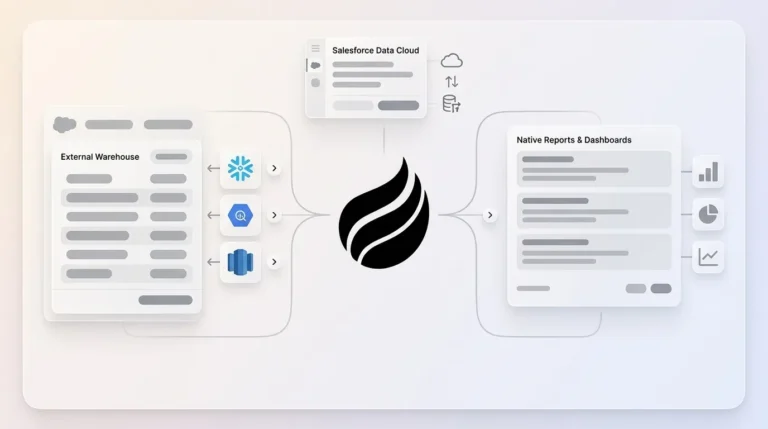
On Salesforce or HubSpot, Coffee deploys as a Companion App, and the agent writes MEDDPICC data back to the existing Opportunity object after every call, keeping required fields current without rep effort. For teams on Coffee’s Standalone CRM, the agent manages the system of record entirely, with MEDDPICC scoring built into the pipeline view natively. In both cases, the agent removes the manual CRM tax that causes adoption to collapse within six months of initial training.
How to Measure MEDDPICC Success
Three objective signals confirm that MEDDPICC functions as an operating system rather than a compliance exercise:
- Forecast accuracy lift: Full MEDDPICC adoption can move forecast accuracy from a low baseline to 85% or higher. Measure the delta between Commit forecast and actual closed revenue each quarter.
- Reduction in manual data-entry time: Track hours per week spent on CRM updates before and after deploying the Coffee Agent. The target is 8 to 12 hours recovered per rep per week, redirected to selling activity.
- Consistent Mutual Close Plan usage: Teams that score Paper Process and Champion on every deal can reduce quarter-end slippage. Measure MCP attachment rate on all deals above $100K ACV as a leading indicator of close-rate improvement.
Frequently Asked Questions
Who owns MEDDPICC updates?
The quota-carrying AE owns the accuracy of every MEDDPICC field on their deals. The first-line manager owns the coaching cadence that keeps those fields honest. RevOps owns the CRM architecture, including field definitions, picklist values, and stage-gate rules, which makes consistent updates possible. When an AI agent like Coffee is in place, the agent handles the mechanical logging after each call, but the AE remains accountable for verifying that the captured data reflects ground truth. No agent replaces the judgment call of whether a contact is a true Champion or merely a friendly Coach.
When should each MEDDPICC element be validated?
Metrics and Identify Pain should be surfaced and quantified on the first discovery call. The Economic Buyer should be named and a meeting requested by the second call. Decision Criteria and Decision Process should be mapped mid-cycle, after a demo or proof of concept. Paper Process should be documented before a proposal is submitted, not after a verbal yes. Champion validation is ongoing, so test the champion with a small ask at every stage, because a champion confirmed in week 2 may have changed roles or lost internal support by week 8. Competition should be surfaced as early as the prospect will share it, ideally before they have been briefed by competing vendors.
What changes as deal complexity increases?
As ACV and stakeholder count grow, each MEDDPICC element requires more evidence and more frequent re-validation. For deals above $100K ACV, a named procurement contact and a realistic Paper Process timeline are non-negotiable before the deal enters Commit. The Economic Buyer is rarely the person attending demos at this level, so Champion access to that buyer becomes a hard qualification gate. Mutual Close Plans shift from optional to required, with named owners and dates on both sides for every Paper Process milestone. The MEDDPICC scorecard minimum score for Commit status typically rises from 70% to 75% or higher as deal size increases, reflecting the higher cost of a late-stage slip.
How does MEDDPICC interact with forecast review cadence?
The most effective cadence runs on a weekly cycle. AEs score each deal against the eight elements at the start of the week, managers conduct 1:1 deal reviews focused on Red elements mid-week, and the updated scorecard drives the Friday forecast call. Deals that regress, such as a champion who goes dark or a Paper Process step that stalls, are caught in the weekly cycle rather than discovered at quarter-end. The Coffee Agent’s Pipeline Compare feature automates the week-over-week delta view, so managers enter the review already knowing which deals have moved and which have stalled, without requiring reps to prepare status slides.
Can MEDDPICC work without a dedicated CRM agent handling data entry?
Technically yes, practically no, at least not at scale. The framework requires eight fields updated after every meaningful interaction across a full pipeline of active deals. Without an agent handling that logging automatically, reps face a choice between selling time and CRM compliance. Most choose selling time, which explains why adoption often collapses within six months of initial training. An agent that captures call transcripts, maps statements to MEDDPICC fields, and writes updates back to the CRM removes that tradeoff entirely, so consistent qualification becomes the path of least resistance rather than an additional burden.
Conclusion
MEDDPICC becomes an operating system when five sequential steps replace the one-time checklist. Reps start with pre-call prep that identifies Red elements before the conversation, run discovery with clear question phrasing for each pillar, and rely on an agent for post-meeting CRM updates instead of manual typing. Managers then run mid-cycle deal reviews on a Red/Yellow/Green scorecard and align both sides on Mutual Close Plans with named owners and Paper Process milestones locked before proposal submission.
The data is consistent across implementations, and teams achieve the win-rate and deal-size improvements mentioned earlier when they remove the manual CRM tax. When an agent handles the data entry, reps run MEDDPICC because it helps them close deals, not because a manager is checking fields.