Written by: Doug Camplejohn, CEO & Co-Founder, Coffee | Last updated: August 22, 2026
Key Takeaways for Startup Sales Leaders
- Manual CRM data entry consumes nearly six hours per rep weekly, leaving only 35% of their time for actual selling.
- Startup CRM automation works best with four core capabilities: automatic data capture, pipeline triggers, native sequences, and intelligent lead scoring.
- Agent-native platforms like Coffee ingest emails, calendars, and transcripts automatically so reps stop acting as data entry clerks.
- Legacy CRMs such as Attio, Close, HubSpot, and Pipedrive still rely on reps for data entry and need separate tools for enrichment and sequencing.
- See Coffee’s pricing to consolidate your entire sales stack into one agent-native CRM and reclaim hours of selling time every week.
Core CRM Automation Capabilities Startups Actually Use
Startup CRM automation must deliver four non-negotiable capabilities. Automatic data capture ingests emails, calendars, and call transcripts without rep input. Pipeline triggers advance deal stages, flag stale opportunities, and fire alerts based on observed behavior. Native sequences run multi-step outreach from the rep’s own mailbox with reply-aware stop logic. Lead scoring ranks prospects by engagement and firmographic fit so reps contact the right accounts first.
Any tool missing one of these four forces the team to bolt on a point solution. That choice adds cost, integration overhead, and data fragmentation.
1. Coffee: Agent-Native CRM for Lean Startup Teams
Overview: Coffee is an agent-native CRM built on the principle that software should do the work, not just store it. The Coffee Agent ingests structured and unstructured data from Google Workspace or Microsoft 365, assembles clean contact and company records automatically, and writes enriched insights back to the pipeline in real time. Coffee operates as a standalone CRM for teams of 1–20 or as a Companion App layered on top of existing Salesforce or HubSpot instances.

Strengths:
- Auto-creates contacts and companies from email and calendar signals, which removes manual record creation entirely.
- Meeting Briefings surface attendee history, deal stage, and past context before every call. Post-call summaries, action items, and follow-up drafts are generated automatically and structured to BANT, MEDDIC, or SPICED.
- Pipeline Compare visualizes week-over-week deal movement, including progressed, stalled, and new deals, without spreadsheet exports.
- Visitor Identification converts anonymous site traffic into named prospects with title, email, and LinkedIn profile, then surfaces Suggested Leads matching the buyer persona for immediate outreach.
- Lead Finder builds targeted prospect lists via natural language search and replaces standalone databases like ZoomInfo or Apollo.
- Campaigns runs AI-generated, multi-step email sequences natively from the rep’s own mailbox with stop-on-reply logic, replacing Outreach or Salesloft.
- Enterprise-grade security (see FAQ for compliance details).
- Simple seat-based pricing with no metered LLM usage fees.

Limitations: Third-party integrations currently route through Zapier, and deeper native connectors are on the roadmap. Coffee is not suited for large enterprises with complex custom objects or heavily regulated industries that require multi-year security reviews.
Ideal fit: Founder-led and early sales teams of 1–20 running inbound, outbound, or blended motions who want one agent to replace CRM, enrichment, sequencing, and prospecting tools.

Pricing overview: Seat-based pricing where the agent’s labor is included at no additional metered cost.
Implementation & integrations: Coffee connects to Google Workspace or Microsoft 365 via OAuth, and the agent begins populating records immediately. Visitor Identification uses a single tracking pixel in the site’s <head> tag. Zapier handles additional tool connections today.

Try Coffee’s agent-native approach and eliminate manual data entry for your startup sales team.
2. Attio: Flexible CRM for Technical Founders
Overview: Attio is a modern, flexible CRM with a spreadsheet-like UI that appeals to technical founders. It offers strong data modeling and customizable pipelines.
Strengths:
- Highly customizable data objects and views.
- Clean, modern interface with low onboarding friction.
- Email and calendar sync for basic activity logging.
Limitations: Attio operates on a passive database architecture. Legacy and newer-UI CRMs alike were designed when the bottleneck was manual data capture by reps, and Attio does not deploy an autonomous agent to handle enrichment, sequencing, or pipeline triggers natively. Prospecting, sequencing, and visitor identification require separate tools.
Ideal fit: Technical founders who prioritize data flexibility over automation depth and feel comfortable assembling a multi-tool stack.
Pricing overview: Free tier available, with paid plans that scale per seat.
Implementation & integrations: API-first with Zapier and native integrations, but it still requires additional tools for sequencing and enrichment.
3. Close: Outbound-First CRM With Native Dialer
Overview: Close is an outbound-native CRM built for high-velocity calling and email cadences. It includes a built-in power dialer and native sequencing.
Strengths:
- Built-in power dialer, native sequencing with reliable reply detection, and smart views for cohorting prospects.
- Fast setup, and 10-person teams can run campaigns in under a week.
- Strong activity-based reporting for outbound teams.
Limitations: Close does not offer agent-native data capture, so reps still manually update records. Enrichment, visitor identification, and lead finding require separate subscriptions. Close starts at $19/user/month (Solo, monthly) or $9/user/month (Solo, annually).
Ideal fit: Outbound-heavy teams of 5–15 reps that prioritize dialer volume and cadence speed over automated data capture.
Pricing overview: Starts at $19/user/month (Solo, monthly) or $9/user/month (Solo, annually).
Implementation & integrations: API and Zapier support, with Clay and Make integrations for list imports.
4. HubSpot: Marketing-Led CRM for Inbound Teams
Overview: HubSpot Sales Hub is a widely adopted platform that bolted a CRM onto a marketing automation tool. It offers broad functionality but carries significant per-seat cost at higher tiers.
Strengths:
- Deep marketing-to-sales alignment with shared contact records across hubs.
- Extensive native integrations and a large app marketplace.
- Lead scoring, sequences, and reporting available at the Professional tier.
Limitations: HubSpot was not built as a unified intelligence system and cannot handle unstructured data effectively. Sales Hub Professional costs $90 per user per month when billed monthly (or $100 when billed annually), sequencing volumes are modest, and the dialer is a metered add-on. Data quality still depends on rep input without an agent layer.
Ideal fit: Marketing-aligned teams where inbound lead volume justifies the platform cost and a RevOps resource manages the instance.
Pricing overview: Free CRM, with Sales Hub Professional at $90 per user per month when billed monthly (or $100 when billed annually).
Implementation & integrations: Implementations commonly take 60–90 days. Separate sequencing purchases add $125–$150/seat/month for outbound-heavy teams.
5. Pipedrive: Simple Visual CRM for Small Teams
Overview: Pipedrive is a visual, pipeline-first CRM designed for simplicity. It is a practical entry point for founder-led teams replacing spreadsheets.
Strengths:
- Ideal for sales teams of 1–10 people; native automations, visual pipeline, and low learning curve enable minimal setup time.
- Affordable entry pricing.
- Drag-and-drop pipeline with deal aging indicators.
Limitations: Pipedrive does not provide agent-native capture and requires a dedicated sequencer for high-volume cadences. Enrichment, visitor identification, and prospecting are not native. Automation depth remains limited compared to agent-native platforms.
Ideal fit: Founder-led teams of 1–10 who need a structured pipeline view and basic automation without complex setup.
Pricing overview: Lite at $14 and Premium at $59 per user/month, billed annually, with updated plan names since 2025.
Implementation & integrations: Setup is fast, with Zapier and native integrations available. Sequencing and enrichment tools must be added separately.
The following table summarizes how each platform compares across pricing structure, automation capabilities, and stack consolidation, which directly shape total cost of ownership for startup sales teams.
Side-by-Side Comparison Matrix
| Tool | Price Model | Automation Depth | Stack Consolidation |
|---|---|---|---|
| Coffee | Seat-based; agent labor included | Agent-native: auto capture, enrichment, sequences, lead finder, visitor ID, pipeline compare | Replaces CRM, enrichment, sequencing, prospecting, and visitor ID tools in one platform |
| Attio | Per seat; free tier available | Passive database, basic email/calendar sync, no native sequencing or enrichment agent | Requires separate sequencing, enrichment, and prospecting tools |
| Close | Starts at $19/user/month (Solo, monthly) or $9/user/month (Solo, annually) | Native dialer and sequencing, but no agent-driven data capture or enrichment | Consolidates dialer and sequences, while enrichment and prospecting remain separate |
| HubSpot | Costs $90 per user per month when billed monthly (or $100 when billed annually) | Broad marketing automation, limited sequences, and no agent-native capture | Strong for inbound marketing alignment, while outbound requires paid add-ons |
| Pipedrive | Lite: $14/user/mo; Premium: $59/user/mo (annual billing) | Basic pipeline automation, no native sequencing, enrichment, or agent capture | Minimal consolidation, with most capabilities handled by third-party tools |
Coffee is the only platform in this comparison that removes the need for separate enrichment, sequencing, prospecting, and visitor identification subscriptions. Close consolidates the dialer and cadence layer effectively but leaves data capture and enrichment to the rep or additional tools. HubSpot delivers the broadest marketing-to-sales alignment but at the highest total cost of ownership for outbound-heavy teams. Pipedrive and Attio serve teams that prioritize simplicity and pipeline visibility over automation depth and accept that the stack will require additional point solutions as volume grows.
Choosing CRM Automation by Sales Motion and Team Size
By motion:
- Inbound-led teams need lead capture, scoring, and routing automation. Coffee handles all three natively and also enriches inbound records automatically. HubSpot works as the alternative when deep marketing-channel integration is the primary requirement.
- Outbound-led teams need sequencing, reply detection, and prospect list building. Coffee’s Campaigns and Lead Finder cover both natively. Close works as the alternative for teams whose primary workflow is high-volume dialing.
- Blended motions benefit most from Coffee’s consolidated agent, which handles inbound enrichment, outbound sequences, and visitor identification without a separate tool for each motion.
By team size:
- 1–5 people (founder-led): Coffee or Pipedrive both fit. Coffee removes the need to hire a RevOps resource to maintain data quality. Pipedrive remains viable if the team only needs a visual pipeline and can tolerate manual entry for a short period.
- 6–15 people: Coffee or Close both work. At this size, a 20-person team loses approximately 5,000 hours of selling time annually to manual CRM admin. Coffee’s agent recovers that time across the full workflow. Close works as the alternative for outbound-dominant teams that already have enrichment covered.
- 16–20 people: Coffee’s Companion App fits teams committed to Salesforce or HubSpot, since the agent handles data quality without replacing the system of record. For teams open to switching, Coffee’s standalone CRM scales to this size without the implementation overhead of HubSpot or Salesforce.
Implementation Checklist for Coffee
- Connect Google Workspace or Microsoft 365 to begin automatic contact and activity capture.
- Install the Visitor Identification pixel in the site’s
<head>tag to begin converting anonymous traffic into named prospects. - Define your buyer persona inside Coffee so Lead Finder and Suggested Leads surface the right contacts.
- Build your first prospect list using Lead Finder’s natural language search and review the agent’s targeting interpretation before committing.
- Launch a Campaigns sequence to the list, confirm stop-on-reply is enabled, and verify that send throttling is configured.
- Run the first Pipeline Compare review after week one to validate that deal movement is being captured automatically.
- Set up Slack notifications for high-fit visitor alerts so inbound intent is actioned in real time.
- Review AI-generated meeting summaries and BANT, MEDDIC, or SPICED notes after the first call cycle to confirm field accuracy.
Start your free trial and eliminate manual CRM data entry for your startup sales team.
Frequently Asked Questions
What is the difference between an agent-native CRM and a traditional CRM?
A traditional CRM is a passive database that stores data entered by humans. It relies on sales reps to log calls, update deal stages, and maintain contact records manually. An agent-native CRM deploys an autonomous AI agent as the primary operator of the system. The agent ingests emails, calendar events, call transcripts, and web visits, then assembles and enriches records automatically without rep input.
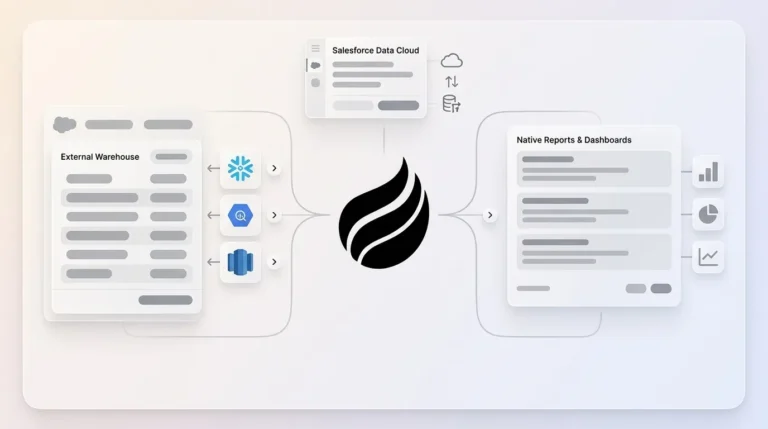
The practical result is that data quality no longer depends on rep discipline. The CRM produces accurate forecasts and pipeline intelligence because the underlying data is complete and current. Coffee is built on this agent-native architecture and handles both structured data, such as fields and stages, and unstructured data, such as email text and call transcripts, in a built-in data warehouse.
How much time can a startup sales team realistically save with CRM automation?
Multiple 2025–2026 studies report a range of 4–12 hours saved per rep per week, depending on how much of the workflow is automated. The largest single category of time recovery is CRM logging and note-taking. At the high end, AI applied across the full sales workflow, including capture, enrichment, meeting prep, follow-up drafting, and pipeline review, recovers approximately 10 hours per rep per week.
For a 10-person team, that recovery equals roughly 100 hours of selling capacity returned every week without adding headcount. Coffee’s agent targets this full-workflow recovery by handling data entry, meeting management, sequencing, and pipeline intelligence inside one platform.
Is Coffee suitable for teams already using Salesforce or HubSpot?
Coffee supports teams that already use Salesforce or HubSpot through a dedicated Companion App. The Standalone CRM replaces legacy platforms entirely for teams of 1–20. The Companion App deploys the Coffee Agent as an intelligent layer on top of an existing Salesforce or HubSpot instance and handles the data-in process so the system of record stays accurate without human effort.
The Companion App serves teams that have invested in Salesforce or HubSpot and need to solve data quality and adoption problems without migrating. Coffee has deep knowledge of Salesforce and HubSpot integrations, including quotas, forecasting, and required fields, which is an area where newer AI-native alternatives often fall short.
How does Coffee handle outbound prospecting without a separate tool like ZoomInfo or Apollo?
Coffee’s Lead Finder is a built-in prospecting database that allows users to search for people and companies matching their ideal customer profile using natural language commands. The agent interprets the query, shows a preview of matching results before the list is generated, and builds the list directly inside Coffee.
Those records become immediately available for enrichment and enrollment into Campaigns for automated outreach, with no CSV exports and no switching between tools. For teams currently paying separate subscriptions for a prospecting database and a sequencing platform, Coffee consolidates both functions into the agent at no additional metered cost.
What security and compliance standards does Coffee meet?
Coffee is SOC 2 Type 2 and GDPR compliant. Customer data is not used to train public AI models. For startups in the evaluation stage, SOC 2 Type 2 certification means Coffee has undergone an independent audit of its security controls over a defined period, which is a higher bar than SOC 2 Type 1 that only verifies that controls exist at a point in time.
GDPR compliance matters for any US startup with European customers or prospects. Teams in heavily regulated industries such as healthcare or finance that require multi-year security reviews remain outside Coffee’s current ideal customer profile.
Conclusion: Matching CRM Automation to Lean Startup Needs
For startup sales teams of 1–20, the 2026 CRM automation choice is a decision between passive databases that require human maintenance and an agent-native platform that handles the work autonomously. Close and Pipedrive serve specific motion-based needs effectively. HubSpot and Attio offer flexibility at the cost of stack complexity and manual data dependency.
Coffee is the only platform in this comparison that deploys an autonomous agent to handle data capture, enrichment, meeting intelligence, pipeline tracking, prospecting, and outreach sequencing inside a single system, with SOC 2 Type 2 compliance and seat-based pricing that scales without hidden costs.
See how Coffee works and discover how the agent-native CRM eliminates manual data entry for your startup sales team.