Written by: Doug Camplejohn, CEO & Co-Founder, Coffee | Last updated: September 3, 2026
What You’ll Learn in This Guide
- How call recording and conversation intelligence work and where each one fits for sales teams.
- When basic call recording is enough and when conversation intelligence becomes a practical requirement.
- How these tools affect coaching, CRM data quality, forecasting, and overall sales performance.
- What to look for when you compare vendors across pricing, features, and integrations.
- How Coffee’s agent-led CRM brings call recording, conversation intelligence, and automation into one platform.
What Is Call Recording?
Call recording captures and stores audio of sales calls for later playback. It is a passive tool that records and stores audio without analyzing, transcribing, or structuring the conversation. A manager who wants to know what happened on a call must listen to the entire recording manually.
Primary use cases for call recording include compliance documentation, dispute resolution, and basic quality assurance. Because it requires no AI processing, call recording is typically a low-cost add-on bundled with existing phone systems or CRM platforms. For teams with minimal coaching infrastructure or tight budgets, it represents the basic level of call capture capability.
What Is Conversation Intelligence?
Conversation intelligence is AI-powered software that records, transcribes, and analyzes sales calls to extract insights such as talk-to-listen ratio, keyword usage, sentiment, and compliance flags. Where call recording produces an audio file, conversation intelligence produces structured, searchable, and actionable data.
Modern conversation intelligence platforms integrate directly with CRMs to automate activity logging, surface coaching workflows, and feed pipeline forecasting with accurate call data. The shift from call recording to conversation intelligence is a shift from passive capture to active analysis. It feels like the difference between a filing cabinet full of tapes and an analyst who has already reviewed every call and flagged what matters.
See Coffee’s pricing and plans for conversation intelligence.
Key Differences Between Conversation Intelligence and Call Recording
The table below compares call recording and conversation intelligence across five functional dimensions.
| Attribute | Call Recording | Conversation Intelligence |
|---|---|---|
| Primary Function | Capture and store audio | Record, transcribe, and analyze |
| Data Output | Audio files | Transcripts, summaries, and insights |
| User Value | Compliance and dispute resolution | Coaching and pipeline intelligence |
| CRM Integration | Manual logging | Automatic sync |
| Cost | Low-cost add-on | Premium subscription |
The table captures the functional gap, but the practical gap is wider. Call recording requires a human to extract value from every recording: they must listen, take notes, and manually update the CRM. Conversation intelligence automates that entire workflow. A sales manager reviewing ten calls per week manually may spend four or more hours on that task alone. Conversation intelligence compresses that time to minutes by surfacing only the moments that require attention, such as objection-handling patterns, competitor mentions, stalled deals, and coaching opportunities.
The CRM integration row deserves particular emphasis. Manual logging is slow and unreliable. 71% of sales reps say they spend too much time on data entry, and only 35% of their time is spent actually selling. Conversation intelligence closes that gap by writing structured call data directly into the CRM without human intervention. In the next sections, those differences translate into guidance on when each approach makes sense.
When Call Recording Is Enough for Your Team
Basic call recording is a reasonable choice in specific circumstances.
- Teams under five reps, where a manager has the bandwidth to listen to most calls personally.
- Compliance-only requirements in regulated industries where a stored record of conversations is the primary obligation.
- Early-stage companies with tight budgets where a premium subscription cannot yet be justified.
A practical example helps. A founder running a three-person sales team may review a handful of calls per week for quality assurance. At that scale, manual review is feasible. The ROI of a full conversation intelligence platform may not yet materialize. Call recording is the right tool for that moment.
When Conversation Intelligence Becomes Essential
Conversation intelligence becomes a practical necessity under several conditions.
- Teams exceeding roughly ten reps, where managers can no longer listen to every call without sacrificing other responsibilities.
- Coaching and onboarding become priorities when you need to replicate top-performer language patterns across the team in a consistent way.
- Deal win rates stagnate and managers require visibility into objection-handling patterns across the entire pipeline, across more than the calls they happened to review.
- Pipeline forecasting requires accurate, structured data from calls instead of rep-reported updates of variable quality.
A sales manager with fifteen reps cannot manually review 60 calls per week. Conversation intelligence surfaces the few calls that need attention, such as the stalled deal, the rep who is talking 80% of the time, or the prospect who mentioned a competitor three times. That selectivity makes coaching scalable.
Bring conversation intelligence and CRM automation into one Coffee agent.
Legal and Compliance Considerations for Recording Calls
Call recording carries legal obligations that vary by jurisdiction. Both call recording and conversation intelligence tools must operate within these requirements.
Consent Requirements for Recorded Sales Calls
The answer depends on the state. The United States operates under a patchwork of one-party and two-party (all-party) consent laws. In one-party consent states, only one participant in the conversation needs to consent to recording, which means the person doing the recording satisfies the requirement. In two-party consent states such as California, Florida, and Illinois, all parties must consent before a call is recorded. For sales teams calling across state lines, the safest practice is to apply two-party consent standards universally.
Sample Script for Call Recording Disclosure
A simple, effective disclosure delivered at the start of every call satisfies most consent requirements: “This call may be recorded for quality and training purposes.” Silence after this statement, combined with the prospect’s continued participation, typically constitutes implied consent in one-party states. For two-party states, explicit verbal acknowledgment is the safer standard.
Conversation intelligence platforms, including Coffee’s AI meeting bot, handle recording and transcription while maintaining compliance standards. They can also include automated disclosure prompts at the start of every session.
Cost and ROI Considerations for Each Approach
Call recording is typically priced as a low-cost add-on to an existing phone system or CRM, often included in base-tier plans. Conversation intelligence is a premium subscription, with leading platforms priced per seat per month at a meaningful step up from basic recording.
The ROI case for conversation intelligence rests on time recaptured and revenue protected. As noted earlier, reps spend only a fraction of their time selling because of administrative work. Conversation intelligence reduces the time spent on manual note-taking and CRM updates, returning those hours to selling activity. For a team of fifteen reps, recovering even two hours per rep per week represents thirty hours of additional selling capacity weekly.
Coaching efficiency compounds the ROI. Managers who previously spent hours reviewing recordings can redirect that time to deal strategy and rep development. The cost of a conversation intelligence subscription is typically recovered through measurable improvement in win rates and a reduction in onboarding time for new reps.
How to Evaluate Conversation Intelligence and Call Recording Vendors
Sales leaders and RevOps managers should use a consistent set of evaluation criteria when assessing tools.
- Integration with your CRM or ability to replace it entirely.
- Transcription accuracy across different accents and industry-specific terminology.
- Depth of analytics and insights provided beyond raw transcripts.
- Data security and compliance posture, including SOC 2 and GDPR.
- Scalability as your team grows without requiring separate point solutions for each new capability.
Coffee offers a unified solution that combines call recording and conversation intelligence with full CRM automation. This approach removes the need to stitch together separate tools for recording, transcription, coaching, and pipeline management.
Decision Framework: Matching the Tool to Your Team
The right tool depends on team size, coaching priorities, and budget. Use this simple framework.
- Under 5 reps: Call recording may suffice if managers have the bandwidth to review calls manually and compliance is the primary driver.
- 5–10 reps: Conversation intelligence is worth evaluating if coaching consistency and pipeline visibility are priorities and manual call review is already consuming meaningful manager time.
- Over 10 reps: Conversation intelligence is the recommended choice. Manual call review does not scale, and the cost of weak coaching compounds with every rep added to the team.
For teams already using Salesforce or HubSpot, the evaluation should also include whether a companion agent can deliver the same insights while also solving the broader data quality problem. Coffee’s agent-led CRM provides conversation intelligence natively as part of a unified platform, which removes the need to manage a separate subscription and integration.
How Coffee Combines Call Recording and Conversation Intelligence
For teams that want to avoid managing separate tools, a unified platform like Coffee’s agent-led CRM can combine both capabilities. The Coffee Agent handles call recording and conversation intelligence as part of a single CRM environment.
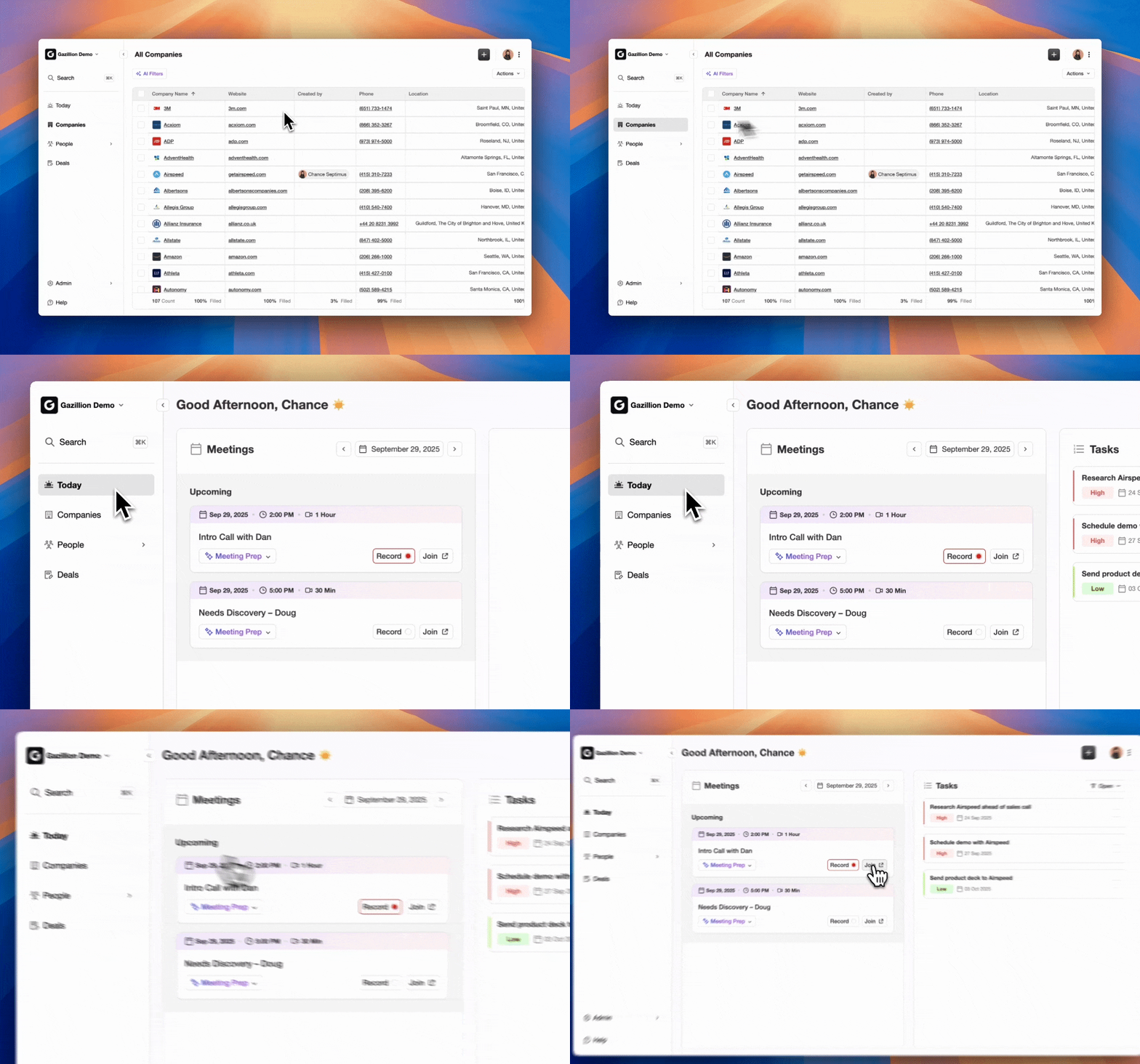
- Automatic call capture and transcription: The AI meeting bot joins calls on Zoom, Teams, or Meet to record and transcribe every conversation without manual setup.
- Automated summaries and follow-ups: After each call, the agent generates summaries, identifies next steps, and drafts follow-up emails for rep review, which removes the need for manual note-taking.
- CRM automation: Calls, contacts, and activities are logged automatically. Records stay complete and up to date.
- Pipeline intelligence: Accurate call data feeds accurate forecasts. The Pipeline Compare feature surfaces week-over-week changes without spreadsheets or manual exports.
Coffee can operate as a standalone CRM for growing teams or as a companion agent layered on top of existing Salesforce or HubSpot installations. It is SOC 2 Type 2 and GDPR compliant.

Explore Coffee’s pricing and see how its agent improves sales performance.
Conclusion: Choosing Between Call Recording and Conversation Intelligence
Call recording functions as a baseline compliance tool. Conversation intelligence drives measurable improvement in sales performance. For most growing sales teams, particularly those with more than ten reps, conversation intelligence becomes the clear choice, and the ROI case strengthens with every rep added to the team.
The decision comes down to team size, coaching ambition, and whether manual call review remains a viable use of management time. Teams ready to move beyond passive recording can use Coffee to bring conversation intelligence, CRM automation, and pipeline intelligence into a single agent.
Start a Coffee plan and let the agent handle call capture, analysis, and CRM updates automatically.
Frequently Asked Questions
What is the difference between call recording and conversation intelligence?
Call recording captures and stores audio of sales calls for later playback. It is a passive tool that produces an audio file and nothing more. Conversation intelligence records, transcribes, and analyzes calls to extract structured insights including talk-to-listen ratio, sentiment, keyword usage, and objection patterns. Call recording requires a human to extract value from every recording manually. Conversation intelligence automates that analysis and surfaces only what requires attention.
Is conversation intelligence worth the cost?
For teams with more than ten reps, the ROI case is strong. Conversation intelligence automates coaching workflows, eliminates manual note-taking and CRM data entry, and gives managers visibility into call patterns across the entire team instead of the handful of calls they can personally review. The cost is often recovered through improved win rates, faster onboarding for new reps, and the hours of selling time recaptured from administrative tasks. For very small teams where managers can still review most calls personally, the premium may not yet be justified.
Do I need conversation intelligence for a small sales team?
Teams with fewer than five reps and a manager who has the bandwidth to listen to most calls can usually rely on basic call recording. The value of conversation intelligence scales with team size. As the number of reps grows past ten, manual call review becomes impractical, and the coaching and pipeline visibility benefits of conversation intelligence become essential rather than optional. Teams in the five-to-ten rep range should evaluate based on whether coaching consistency and pipeline accuracy are already causing problems.
How does conversation intelligence improve coaching?
Conversation intelligence identifies the language patterns used by top-performing reps, such as the questions they ask, the objections they handle effectively, and the moments where deals accelerate. It makes those patterns visible and replicable across the team. It measures talk-to-listen ratios, flags competitor mentions, and surfaces specific call moments that warrant coaching attention. Managers receive data-backed coaching points instead of relying on memory, selective call sampling, or rep self-reporting. Coaching becomes systematic rather than anecdotal.
What are the legal requirements for recording sales calls?
Requirements vary by state. One-party consent states require only one participant’s consent to record a call, which means the person initiating the recording satisfies the requirement. Two-party (all-party) consent states, including California, Florida, and Illinois, require all parties to consent before recording begins. For sales teams calling across state lines, applying two-party consent standards universally is the safest approach. A standard disclosure script delivered at the start of every call, such as “This call may be recorded for quality and training purposes,” satisfies most consent requirements and should be treated as a non-negotiable part of every sales call opening.