Written by: Doug Camplejohn, CEO & Co-Founder, Coffee | Last updated: August 3, 2026
Key Takeaways
- HubSpot’s per-contact pricing and Professional-tier requirements quickly become expensive administrative burdens for 5–20 person sales teams.
- Seven evaluation criteria in 2026 data automation, implementation effort, workflow fit, adoption, integrations, reporting, and long-term admin burden determine which CRM serves sales-first teams.
- Among eight alternatives, only Coffee operates as an AI agent that can function as a standalone CRM or as a companion layer writing clean data back into HubSpot or Salesforce.
- Coffee’s agent auto-captures contacts, enriches records, and logs every activity, saving reps 8–12 hours per week while eliminating manual data entry.
- Teams ready to replace manual CRM chores can get started with Coffee today.
How We Evaluated Contact-Management CRMs in 2026
Seven criteria define what a sales-first contact-management platform must deliver in 2026. These criteria come from the Brightfield 2026 CRM Software Market Benchmark and the Rework 2026 CRM Buyer's Guide, which both highlight the shift toward automation, AI agents, and lower admin overhead.
- Data quality and automation depth: The platform must capture contacts, activities, and enrichment automatically instead of relying on manual input.
- Implementation effort: A non-technical team should own setup without a paid consultant or dedicated admin.
- Workflow fit for outbound sales: The pipeline model needs to match prospecting-led motions, not only inbound lead routing.
- User adoption: Frontline reps should open it daily so shadow spreadsheets do not re-emerge within 90 days.
- Integration requirements: Critical connections should be native rather than dependent on Zapier and constant maintenance.
- Reporting visibility: Managers must review pipeline health without CSV exports or manual prep.
- Long-term administrative burden: The platform should scale from 10 to 50 users without adding a CRM administrator headcount.
See how Coffee's agent handles these seven criteria automatically
Side-by-Side Vendor Comparison
| Vendor | Data Automation & Quality | Implementation & Adoption | Reporting & Scalability |
|---|---|---|---|
| Pipedrive | Visual pipeline with AI Sales Assistant, limited native enrichment, manual activity logging remains standard | Fast rep onboarding, Pipedrive's Lite plan (the successor to the former Essential plan) costs $14/user/month when billed annually, add-ons required for lead capture | Basic forecasting on higher tiers, LeadBooster add-on starts at $32.50/month, scales with manual hygiene effort |
| Zoho CRM | Zia AI scoring available, broad automation, data quality depends on manual field discipline | High configurability increases setup time, Zoho CRM Professional plan costs $23/user/month when billed annually | Strong reporting suite, scales to mid-market, admin overhead grows with customization depth |
| Freshsales | Freddy AI for scoring and deal insights, Freshsales Pro plan, priced at $39/user/month billed annually ($47 monthly), includes Freddy AI Insights and other advanced AI features, enrichment is limited on Growth tier | Clean drag-and-drop pipeline, free tier for up to 3 users, marketing automation requires separate Freshmarketer add-on | Single pipeline on Growth tier, multiple pipelines and forecasting require Pro, scales with upgrade pressure |
| Close | Built-in power dialer and call coaching, limited contact enrichment, activity logging is largely manual | Close Essentials plan costs $49/user/month billed monthly, optimized for inside sales, thin marketing automation | Strong call-activity reporting, limited complex pipeline support, best for linear outbound motions |
| Attio | Agentic automations capture signals from emails and calls, flexible data model requires upfront configuration | Significant setup investment, targets scaling B2B teams and founders post-founder-led sales | Flexible reporting tied to custom data model, scales well once configured, not plug-and-play |
| Day.ai | Focuses on unstructured data and productivity capture, limited structured pipeline automation | Low setup friction, narrow workflow scope limits fit for complex outbound teams | Lightweight reporting, not designed for quota-based forecasting or Salesforce/HubSpot integration depth |
| Clarify | Clarify's autonomous CRM features deliver up to 90% reduction in CRM admin time for some customers, limited integration depth with established CRMs | Modern UI, fast onboarding for small teams, integration gaps with Salesforce/HubSpot required fields and forecasting | Emerging reporting capabilities, not yet validated for mid-market quota and forecasting workflows |
| Coffee | Agent auto-creates contacts from email/calendar, enriches records, logs all activity, handles structured and unstructured data, saves reps 8–12 hours/week | Connect Google Workspace or Microsoft 365, agent begins populating records immediately, no dedicated admin required | Pipeline Compare visualizes week-over-week changes automatically, operates as standalone CRM or companion to HubSpot/Salesforce, seat-based pricing with no per-contact fees |
Setup and Onboarding Speed for 2026 Teams
The table above shows what each platform delivers, and implementation speed now matters as much as feature depth. Time-to-productivity is the most underweighted criterion in CRM evaluations. The Brightfield 2026 benchmark identifies implementation ownership, meaning whether a team can deploy without a paid consultant, as a primary buying criterion. Zoho and Attio offer deep customization but require significant configuration before a rep can log a single deal. Pipedrive and Close onboard faster but leave data quality entirely to the rep.
Coffee uses an authentication-first onboarding path. Teams connect a Google Workspace or Microsoft 365 account, and the agent immediately scans emails and calendars to auto-populate contacts, companies, and activity history. There are no import templates to clean, no field-mapping sessions, and no administrator required. For teams that have been running on spreadsheets or a lightly used HubSpot instance, this approach creates a populated, accurate CRM within hours rather than weeks.
Automatic Contact Capture, Enrichment, and Data Decay
Sales reps often spend up to 13 hours per week on manual data entry, which can represent a significant portion of a full working week. An estimated 79% of opportunity-related data gathered during sales calls is never entered into the CRM at all, because the friction of manual logging is too high. The downstream effect is predictable, and 91% of CRM data is incomplete, outdated, or duplicated annually. B2B contact data also decays at roughly 22.5% per year on average, reaching 30–70% in high-turnover industries such as tech startups, so stale records accumulate quickly without automation.
Among the vendors in this comparison, automatic contact capture ranges from partial to absent. Pipedrive and Close rely on reps to log activities. Freshsales and Zoho offer automation rules but require manual trigger setup. Attio and Clarify move closer to autonomous capture but carry configuration overhead or integration limitations.
Coffee ingests email threads, calendar invites, and call transcripts to auto-create and enrich every contact and company record. Records gain job titles, funding data, and LinkedIn profiles via licensed data partners, which removes the need for a separate ZoomInfo or Apollo subscription for most SMB and mid-market teams. Nucleus Research reported an ROI of $8.71 in revenue per $1 invested in CRM automation, and separate sources note up to 50% reduction in data entry time via automation with completeness rising from below 40% to above 80%.

Usability for Reps and Real-Time Manager Visibility
Automatic capture solves the data entry problem, but it only delivers value when reps actually use the system. The most common reason CRM implementations fail is that sales teams find the system too work-intensive, which turns the 13-hour weekly burden mentioned earlier into the reason reps abandon the platform entirely. Sales leaders often report that their CRM hurts rather than helps sales opportunities, primarily due to friction in contact data logging and retrieval.
For managers, the problem compounds when pipeline reviews become interrogation sessions because the data reps are supposed to enter is missing or stale. A Gartner survey of 303 sales leaders found that 84% said sales analytics has had less influence on performance, which often reflects weak underlying data rather than weak analysis tools.
Coffee's Pipeline Compare feature addresses both sides of this problem. Every interaction is captured automatically, so the pipeline reflects ground truth rather than rep memory. Week-over-week changes, including progressed deals, stalled opportunities, and new additions, appear visually without a spreadsheet or a pre-meeting data-cleaning session.
Try Pipeline Compare and see your team's real activity without manual reporting
Integration Complexity and Future Flexibility
Mid-market B2B sales teams use between 8 and 12 separate tools on average, which creates field-mismatch problems that accelerate CRM data staleness. Integration depth, not just the number of listed connections, determines whether a CRM reduces or multiplies administrative burden over time.
Pipedrive and Close connect to common tools via Zapier but lack native enrichment or intelligence layers. Freshsales requires Freshmarketer as a separate purchase for broadcast email. Clarify and Day.ai have limited depth when connecting to Salesforce or HubSpot's required fields, quota objects, and forecasting hierarchies, which creates a meaningful gap for teams that need a companion layer rather than a full replacement.
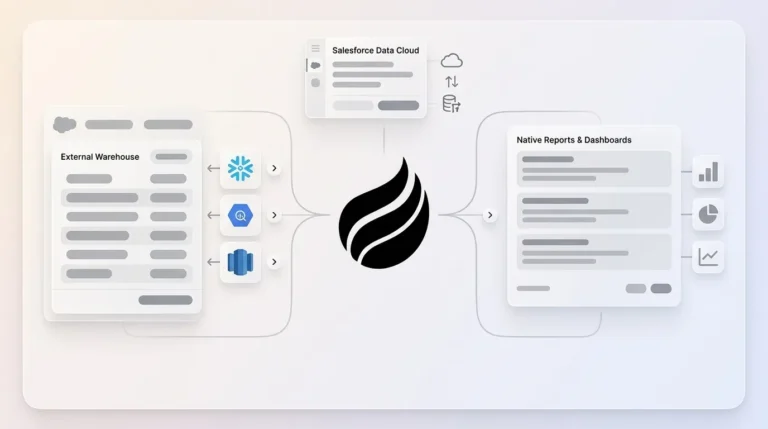
Coffee currently integrates with third-party tools via Zapier, and deeper native integrations sit on the roadmap. Its companion model is engineered for the complexity of Salesforce and HubSpot. The agent authenticates, syncs data, enriches records, and writes insights back to the primary CRM without disrupting existing required fields, quota structures, or forecasting configurations. For teams scaling from 5–20 to 50+ users, seat-based pricing with no per-contact fees removes the cost cliff that HubSpot's contact-tier model creates.
Best-Fit Scenarios by Team Size and Workflow
The right platform depends on team size, existing stack, and sales motion. Three scenarios cover the majority of buyers evaluating this list.
Early-stage standalone (1–10 employees): Teams that have outgrown spreadsheets but find HubSpot or Pipedrive to be expensive manual chores fit best with Coffee's standalone CRM. The agent handles all data entry from day one, no administrator is required, and pricing scales by seat without per-contact penalties.
Mid-market companion for HubSpot or Salesforce (11–50 employees): Teams committed to an existing CRM that suffers from low adoption and dirty data benefit from Coffee's companion model. The agent runs as an intelligence layer on top of the existing instance, writing clean, enriched data back without requiring a platform migration. Clarify and Day.ai target this scenario but lack the integration depth for quota-based forecasting and required-field compliance.
Outbound-focused teams: Teams running prospecting-led motions benefit from Coffee's Lead Finder for natural-language prospect list building, Campaigns for AI-generated multi-step email sequences sent from the rep's own mailbox, and Visitor Identification that converts anonymous website traffic to named leads with suggested outreach targets. Pipedrive and Close support outbound pipelines but require separate tools for enrichment, sequencing, and visitor intelligence.

Operational and Long-Term Considerations
CRM selection is a cross-functional decision with consequences beyond the initial rollout. Over 60% of CRM implementation failures trace back to people and process issues such as low adoption and poor data governance rather than technical problems. Change management, training, and ongoing data hygiene are operational costs that rarely appear in vendor pricing pages.
Platforms that rely on rep discipline for data entry, such as Pipedrive, Close, and Zoho, transfer the administrative burden to the team permanently. Every headcount addition multiplies the hygiene problem because each new rep inherits the same manual logging requirement. That burden compounds over time, and the 22.5% annual decay rate discussed earlier means stale data grows even when teams work hard to maintain records. Coffee's agent-led architecture shifts data quality ownership from humans to software, so the system improves as usage grows rather than degrading.
Risks and Limitations Across These Platforms
No platform eliminates all operational risk. The following limitations apply across this comparison and should factor into any final decision.
- Hidden maintenance costs: Zoho and Attio's configurability creates long-term admin dependencies. Freshsales' add-on model, including Freshmarketer and Pro-tier AI, can push total cost above initial estimates for teams needing full functionality.
- Incomplete automation: Even agent-led platforms like Coffee require a connected email and calendar to function. Teams without Google Workspace or Microsoft 365 will see reduced auto-capture coverage.
- Integration gaps: Coffee's third-party integrations currently run through Zapier. Teams with complex native integration requirements should verify specific connector availability before committing.
- Process dependency: 44% of companies lose over 10% of annual revenue due to inaccurate CRM data. Software automates process, but it does not replace the need for defined sales stages, qualification criteria, and pipeline review cadences.
- Scale ceiling: Coffee is designed for small to mid-sized teams. Large enterprises with complex custom workflows, multi-region compliance requirements, or heavily regulated data environments sit outside the current ideal customer profile.
Decision Checklist for Choosing a HubSpot Alternative
Match your primary constraint to the platform category that fits.
| Primary Constraint | Best-Fit Option | Avoid |
|---|---|---|
| Manual data entry consuming 10+ hours/week per rep | Coffee (standalone or companion) | Pipedrive, Close, Zoho without automation investment |
| Existing HubSpot/Salesforce with dirty data and low adoption | Coffee companion model | Clarify, Day.ai (limited integration depth for quota/forecasting) |
| Outbound prospecting with enrichment and sequencing in one tool | Coffee (Lead Finder + Campaigns) | Pipedrive + ZoomInfo + Outreach (three separate subscriptions) |
| Lowest possible entry price with visual pipeline | Pipedrive Lite ($14/user/month when billed annually) | HubSpot Sales Hub Professional ($100/seat/month) |
| Inside sales team with high call volume | Close (built-in dialer) | Attio (no native dialer) |
| Deep customization for complex B2B data models | Attio or Zoho CRM | Coffee (agent-first, not configuration-first) |
Frequently Asked Questions
How long does it take to get Coffee up and running for a 10-person sales team?
Most teams see the Coffee agent populating contact and company records within hours of connecting a Google Workspace or Microsoft 365 account. There is no import template to prepare, no field-mapping session, and no dedicated administrator required. The agent scans existing email and calendar history to auto-create records, so the CRM arrives pre-populated rather than empty. Teams that have been operating from spreadsheets or a lightly used HubSpot instance typically reach a working system of record on day one. Full adoption, including meeting briefings, automated summaries, and pipeline reviews, usually stabilizes within the first two weeks as reps see the agent handling tasks they previously did manually.

Can Coffee work alongside an existing HubSpot or Salesforce instance, or does it require a full migration?
Coffee offers a companion model specifically designed for teams that are committed to HubSpot or Salesforce but are experiencing low adoption and poor data quality. A simple authentication allows the Coffee agent to sync data, enrich records, and write insights back to the primary CRM without disrupting existing required fields, quota structures, or forecasting configurations. This approach means a RevOps leader does not need to choose between replacing a platform and fixing its data quality problem. The agent handles the data-in process so the existing system of record becomes accurate without human effort. Teams that want a full replacement can use Coffee's standalone CRM instead, and both models run on the same agent.
How does Coffee handle data security and compliance?
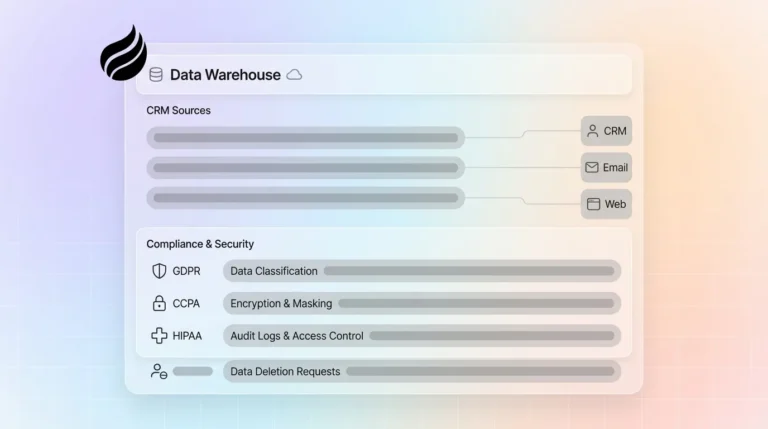
Coffee is SOC 2 Type 2 certified and GDPR compliant. Data ingested by the agent, including emails, calendar events, and call transcripts, is not used to train public AI models. For sales teams in regulated-adjacent industries, customer communication data stays within the boundaries of the Coffee environment. Teams in heavily regulated industries such as healthcare or finance that require multi-year security reviews or custom data residency agreements are outside Coffee's current design scope and should evaluate enterprise-grade platforms accordingly.
What happens to pipeline reporting accuracy when the agent handles data entry instead of reps?
Pipeline reporting accuracy rises when data completeness improves. When reps manually log activities, a significant share of interactions goes unrecorded, so pipeline reports reflect what reps remembered to enter, not what actually happened. Coffee's agent logs every email, meeting, and call automatically, so the pipeline reflects ground truth. The Pipeline Compare feature then visualizes week-over-week changes, including progressed deals, stalled opportunities, and new additions, without requiring a manager to run a report or a rep to prep a spreadsheet before a review call. For teams currently running pipeline reviews from exported CSVs or memory, the shift to agent-maintained records typically surfaces both more risk and more opportunity than the manual process revealed.
Is Coffee's built-in enrichment and prospecting data comparable to a dedicated tool like ZoomInfo or Apollo?
Coffee's enrichment data, including job titles, funding information, and LinkedIn profiles, is sourced via licensed data partners and is broadly comparable for most SMB and mid-market use cases. It is not positioned as a replacement for enterprise-grade data providers that offer intent signals, technographic depth, or compliance-grade data for regulated industries. For the majority of 5–20 person sales teams evaluating this comparison, Coffee's built-in Lead Finder and enrichment eliminate the need for a separate prospecting database subscription, which reduces cost and the tool-switching friction that causes data to fragment across systems. Teams with highly specialized data requirements, such as specific verticals, international markets, or intent-signal workflows, should test Coffee's data coverage against their target accounts before fully retiring a dedicated enrichment tool.
Conclusion: Why Agent-Led CRMs Win in 2026
The core problem with legacy CRMs is architectural, because they were built to store data that humans enter, not to capture data autonomously. According to Validity's 2025 State of CRM Data Management report, 90% of organizations recognize CRM data as the cornerstone of their operations, yet 76% said less than half of their organization’s CRM data is accurate and complete. The gap between those two numbers is the manual data entry problem, and UI improvements or new features cannot close it without an agent that handles the work.
Among the eight platforms evaluated here, Coffee is the only one that operates as an autonomous agent across both a standalone CRM and a companion layer for HubSpot and Salesforce. For teams replacing HubSpot because it has become bloated and expensive, the standalone model delivers a populated, accurate CRM from day one. For teams that need to fix data quality inside an existing instance without a migration, the companion model deploys the agent without disrupting the current system of record.
Every other platform in this comparison requires reps to serve the software. Coffee is built so the software serves the rep.
Deploy an agent that captures data autonomously, with no manual entry required