Written by: Doug Camplejohn, CEO & Co-Founder, Coffee | Last updated: August 9, 2026
Key Takeaways for B2B Sales Leaders
- Lead enrichment appends verified firmographic, technographic, and contact data to raw leads, which improves reachability, qualification, and conversion rates for B2B outbound teams.
- Enrichment can raise contact coverage from 60% to 78% on a 5,000-record list and cut customer-acquisition cost in half by doubling conversion rates from the same spend.
- Key evaluation criteria include match-rate freshness, native CRM automation depth, integration effort, total cost per usable lead, GDPR compliance, and long-term scalability without added RevOps overhead.
- Among Apollo, ZoomInfo, Clay, Cognism, and Coffee, only Coffee combines real-time agent enrichment with autonomous CRM logging, sequencing, and pipeline intelligence in a single seat-based subscription.
- Teams ready to replace multiple enrichment, sequencing, and recording tools with one autonomous platform can get started with Coffee today.
How to Evaluate Lead Enrichment Tools
Sales and RevOps leaders at 10–50-person B2B SaaS companies should define their requirements across six clear dimensions before comparing vendors.
- Match rate and freshness. B2B contact data decays at 2.1% per month, or roughly 22.5% per year, so a tool’s stated database size matters less than its verified match rate against your specific ICP.
- Workflow fit and automation depth. Enrichment tools should integrate with CRM sync, routing rules, and scoring triggers so data flows automatically downstream without manual intervention.
- Salesforce/HubSpot integration effort. Native connectors remove the middleware tax. Tools that rely on Zapier or CSV exports add operational overhead that compounds at scale.
- Total cost per usable lead. Subscription price divided by enriched, deliverable records is the metric that matters. ZoomInfo Professional contracts start at approximately $15,000/year, while enterprise contracts routinely exceed $100,000/year, which makes it cost-prohibitive for teams under 20 reps.
- EU/global compliance. GDPR fines for data processing violations can reach up to 4% of global annual revenue, so every enrichment vendor must provide a signed Data Processing Agreement and support deletion requests.
- Long-term scalability. Seventy percent of companies struggle to integrate their sales plays into CRM and revenue technologies, so a tool that adds administrative complexity will erode ROI as headcount grows.
Side-by-Side Comparison of Apollo, ZoomInfo, Clay, Cognism, and Coffee
The table below compares five common options for 10–50-person B2B SaaS sales teams in 2026. Match rate figures reflect published vendor claims and independent benchmarks, and automation depth reflects native capability without custom engineering.
| Vendor | Match Rate & Freshness | Automation Depth | Integration & Cost |
|---|---|---|---|
| Apollo.io | Apollo.io maintains a 230M+ (sources vary up to 275M+) contact database built from multiple sources and a contributor network rather than single-source coverage. | Native sequences, basic routing triggers, and CRM sync. Enrichment and outreach in one platform but limited agent-level automation. | Native HubSpot and Salesforce connectors. Free tier available, with paid plans from $49/user/month. Separate subscription required. |
| ZoomInfo | Large proprietary database with human researcher oversight. Smartsheet increased MQLs by 84% and opportunity rates by 26% after improving lead data quality with ZoomInfo. | Workflow automation via ZoomInfo Engage and intent signals via Streaming Intent. Strong for enterprise, with heavier setup for small teams. | Native Salesforce and HubSpot connectors. Enterprise pricing, typically $15,000+ annually. Separate subscription required. |
| Clay | Waterfall enrichment across 150+ sources that avoids single-vendor lock-in by selecting the best match automatically. High coverage for custom ICP builds. | Highly flexible workflow builder. Steeper learning curve than simpler tools like Lusha. Requires a RevOps or technical operator to configure. | CRM sync via native connectors and Zapier. Clay’s Launch plan costs $185 per month on monthly billing or $167 per month on annual billing. Separate subscription required, and engineering time is often needed. |
| Cognism | Strong EU phone and email coverage. Commonly used as a secondary waterfall source for EU phone data alongside Apollo as primary. GDPR-compliant data collection. | Enrichment and prospecting with limited native sequencing. Typically paired with a separate sales engagement tool. | Native Salesforce and HubSpot connectors. Enterprise pricing starting at $15,000 per year. Separate subscription required. |
| Coffee | Agent enriches records in real time from emails, calendars, call transcripts, and licensed data partners. Captures unstructured data that static databases cannot index. Match rate on par with Apollo for most ICP use cases per Coffee’s published benchmarks. | Autonomous agent handles contact creation, activity logging, meeting briefings, post-call summaries, pipeline tracking, visitor identification, lead finding, and multi-step email campaigns natively, with no separate tools required. | Native Salesforce and HubSpot Companion App, also available as a standalone CRM. Seat-based pricing with no per-enrichment metering that eliminates separate enrichment, sequencing, and recording subscriptions. |
See Coffee’s pricing and consolidate your enrichment stack
Setup Speed and Onboarding Trade-offs
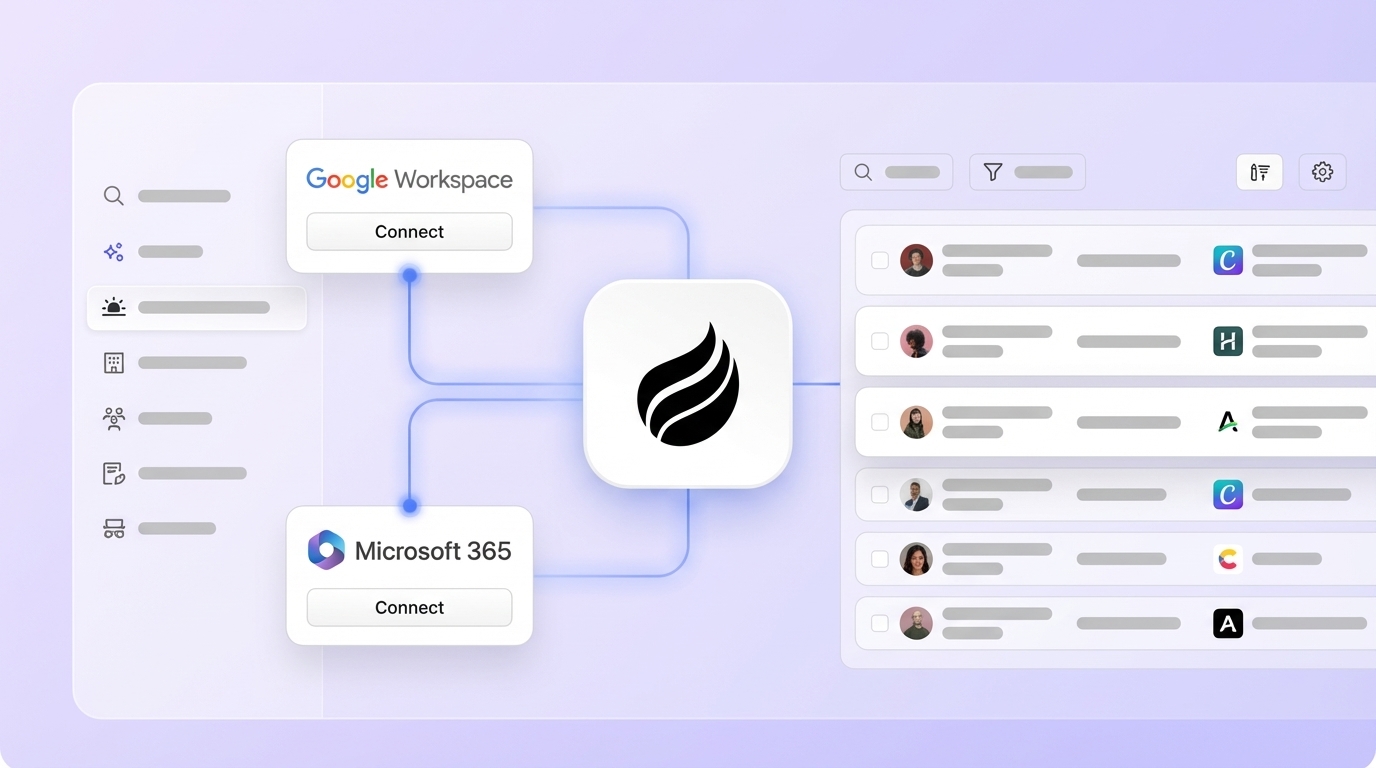
Time-to-value varies significantly across these five options, especially for smaller teams. Apollo and Coffee offer the fastest onboarding for small teams: Apollo through a self-serve signup and Coffee through a simple authentication to Google Workspace or Microsoft 365 that immediately begins populating the CRM.
ZoomInfo and Cognism require contract negotiation and implementation calls before data flows, which slows the first value moment. Clay requires a technically proficient RevOps operator to build and maintain waterfall workflows. A best-practice enrichment setup maps enriched fields to CRM properties, sets automation triggers, and defines validation and overwrite rules before enrichment is turned on, which often takes days to weeks without dedicated resources.
Administrative burden after onboarding becomes the hidden cost most comparisons omit. Most outbound B2B sales teams run effectively on three to four tools, and adding more typically creates data fragmentation and lowers rep adoption. Every standalone enrichment subscription adds a renewal cycle, a field-mapping audit, and a compliance review to the RevOps calendar.
Data Capture Models and Match Rate Performance
Traditional enrichment databases operate on periodic batch appends, where a vendor updates its database on a rolling schedule and teams pull from that snapshot. The structural problem is data decay, as noted earlier, because contact records degrade at roughly 2.1% each month. Batch-refresh architectures fall behind quickly, since part of each refreshed dataset is already stale by the time the next update arrives.
Agent-led capture takes a different approach. Coffee’s agent ingests emails, calendar events, and call transcripts continuously, so every interaction updates the record in real time instead of waiting for the next batch refresh. The biggest disruption in lead enrichment for 2026 is AI agents that search the internet in real time rather than querying static databases. This architecture keeps the CRM aligned with the current state of each relationship.

Waterfall enrichment across multiple providers returns verified contact data for 85–95% of contacts, compared to 60–70% from single-source lookups. Coffee’s agent combines licensed data partners with real-time signal capture to approach waterfall-level coverage without requiring teams to manage multiple vendor relationships.
Day-to-Day Usability for Reps and Managers
Sales reps spend 9–14% of their week on account and prospect research, or roughly 3–6 hours per week. Enrichment tools reduce that burden, and the impact depends on how deeply the tool fits into the rep’s daily workflow.
Apollo and Clay require reps to initiate enrichment actions or wait for automated triggers. ZoomInfo and Cognism surface data inside their own interfaces, which forces a context switch from the CRM. Coffee’s agent removes the context switch by preparing meeting briefings, logging activities, drafting follow-up emails, and updating pipeline records without rep input. Automated lead enrichment completes in seconds, often under 30 seconds per lead, compared to 8–30 minutes of manual research.

For managers, pipeline visibility depends on data completeness. When reps skip manual CRM updates, pipeline reviews turn into interrogation sessions instead of strategic discussions. Coffee’s Pipeline Compare feature visualizes week-over-week changes automatically and surfaces progressed deals, stalled opportunities, and new additions without a CSV export.
Integration Complexity and Admin Overhead
Native CRM connectors form the baseline requirement for any enrichment tool. Apollo, ZoomInfo, and Cognism all offer native Salesforce and HubSpot connectors. Clay relies on a mix of native connectors and Zapier for more complex routing, which introduces a third dependency and more points of failure.
Native CRM connectors for Salesforce, HubSpot, and Dynamics plus a documented API enable real-time enrichment on new lead creation and batch enrichment without custom middleware. The hidden cost appears when field mappings change.
Every time a CRM schema changes, such as new required fields or updated picklist values, enrichment integrations must be audited and updated. For teams running Salesforce with custom objects, this becomes a recurring engineering task. Coffee’s Companion App is built with deep knowledge of Salesforce and HubSpot architecture, including quotas, forecasting, and required fields, which reduces the maintenance surface compared to point-solution integrations.
Recommended Enrichment Stacks by Company Stage
The right configuration depends on team size, existing infrastructure, and operational capacity, so recommendations vary by stage.
Early-stage teams (1–10 reps, no existing CRM)
- Coffee Standalone CRM as the system of record, enrichment, sequencing, and pipeline intelligence layer.
- Removes the need for Apollo, a separate CRM, and a sales engagement tool.
- Works well for founders and early hires who have outgrown spreadsheets but cannot absorb the administrative overhead of Salesforce or HubSpot.
Growing sales orgs (10–50 reps, evaluating first enrichment stack)
- Apollo Pro ($49/user/month) as a prospecting database plus Coffee Companion App for agent-led CRM enrichment, activity logging, and pipeline intelligence on top of HubSpot Sales Hub.
- Coffee as the sole platform when the team is not yet committed to HubSpot or Salesforce.
- HubSpot Sales Hub is recommended for SMB to mid-market teams of 2–100 reps because of its generous free tier and clean UI.
Teams already committed to Salesforce or HubSpot
- Coffee Companion App authenticates directly to the existing instance and begins enriching, logging, and writing insights back without a migration.
- Replaces standalone enrichment (Apollo or ZoomInfo), recording (Gong or Fathom), and pipeline reporting add-ons in a single seat-based subscription.
Risks, Limitations, and Common Misconceptions
Several misconceptions cause teams to overbuy or misconfigure their enrichment stack, which reduces ROI.
- Database size is not match rate. A 300M-record database with 30% annual decay may return fewer usable contacts against a specific ICP than a smaller, continuously verified source.
- Automation depth requires configuration. Automation improves data freshness and reduces manual research time, but only when field mapping and overwrite rules are managed carefully to avoid overwriting verified data.
- Enrichment does not create compliance. Enrichment adds context but does not create consent or a lawful basis for contacting leads under GDPR or CCPA, so teams must document acquisition source, legal basis, and geographic location for each contact.
- Waterfall stacks multiply vendor risk. The main tradeoff of waterfall enrichment for small B2B SaaS teams is improved record fill rates at the expense of managing more vendors and added operational complexity.
- Agent-led models require trust in automation. Coffee’s agent writes directly to CRM records, so teams that prefer manual review of every data point will experience a shift in operating philosophy.
Decision Framework for Matching Tools to Constraints
The right enrichment approach depends on three constraints: budget, technical capacity, and existing infrastructure. Teams should weigh coverage gains against the operational work required to maintain each option.
Teams with limited RevOps capacity and no existing CRM commitment gain the most from a consolidated agent that handles enrichment, logging, sequencing, and pipeline intelligence in one layer. Teams with an established Salesforce or HubSpot instance and a dedicated RevOps function have the bandwidth to layer a waterfall enrichment stack on top, as long as they account for the ongoing maintenance cost of managing multiple vendor relationships, field-mapping audits, and compliance reviews.
Waterfall enrichment across multiple providers can improve coverage compared to single-source lookups, but that advantage disappears when the stack falls out of maintenance. An agent that captures real-time interaction data alongside licensed enrichment can close the coverage gap while avoiding the operational overhead of a multi-vendor waterfall.
Test Coffee against your pipeline and see the difference
Frequently Asked Questions
How long does implementation take for a 10–50-person B2B sales team?
Implementation time varies by tool and existing infrastructure, and smaller teams feel this most. Apollo and Coffee offer the fastest time-to-value: Apollo through self-serve signup and Coffee through a single authentication to Google Workspace or Microsoft 365 that immediately begins populating records.
ZoomInfo and Cognism typically require a contract process and implementation calls before data flows, which often takes two to four weeks. Clay requires a technically proficient RevOps operator to build waterfall workflows and configure field-mapping rules, which can take several weeks depending on ICP complexity. Coffee’s Companion App for Salesforce or HubSpot authenticates directly to the existing instance and begins enriching and logging data without a migration or schema rebuild.
What internal expertise is needed to manage a lead enrichment stack?
The required expertise depends on the architecture chosen and the number of tools involved. A single-platform approach like Coffee requires minimal ongoing technical management because the agent handles enrichment, activity logging, and CRM writes autonomously.
A multi-vendor waterfall stack, such as Apollo as primary, Cognism as secondary, and Clay as the orchestration layer, requires a RevOps operator who can manage field-mapping rules, overwrite logic, compliance documentation, and vendor renewals. For teams without a dedicated RevOps function, the administrative overhead of a fragmented stack often exceeds the productivity gains from higher match rates, so the practical recommendation for teams under 20 reps is to consolidate before chasing marginal coverage gains.
How does Coffee handle EU and global compliance for outbound enrichment?
Coffee is SOC 2 Type 2 and GDPR compliant, and data processed by the Coffee agent is not used to train public models. For EU outbound motions, legitimate interest under GDPR Article 6.1.f permits B2B prospecting without prior consent, provided teams inform prospects on first contact about data source and purpose, include a clear opt-out in every message, and limit retention appropriately.
Coffee supports deletion requests and provides a Data Processing Agreement. Teams running international outbound should document acquisition source, legal basis, and geographic location for each contact and enforce deletion across every tool in the stack when a rights request is received.
Can Coffee replace an existing enrichment subscription like Apollo or ZoomInfo?
For most 10–50-person B2B SaaS teams, Coffee’s built-in Lead Finder, real-time agent enrichment from emails and calendars, and licensed data partner integrations cover the primary use cases served by Apollo or ZoomInfo. These use cases include contact discovery, firmographic enrichment, and activity logging.

Coffee also replaces standalone recording tools, sales engagement platforms, and pipeline reporting add-ons in a single seat-based subscription. Teams with highly specialized ICP requirements, such as deep EU phone coverage or niche technographic signals, may keep a secondary enrichment source alongside Coffee. The decision should rely on a match rate test against a sample of your actual ICP, not vendor database size claims.
How does Coffee’s pipeline intelligence compare to dedicated forecasting tools?
Coffee’s Pipeline Compare feature visualizes week-over-week changes automatically and highlights progressed deals, stalled opportunities, and new additions without manual CSV exports or a separate forecasting add-on. Because the Coffee agent captures every interaction, including emails, calls, and calendar events, the pipeline data reflects actual deal activity rather than rep-entered stage updates.
This approach addresses the core failure mode of legacy CRM forecasting, where incomplete data produces unreliable forecasts. For teams already on Salesforce, Coffee’s Companion App writes enriched activity data back to the native Salesforce forecasting module, which improves accuracy without replacing the existing workflow. Dedicated enterprise forecasting tools like Clari still fit large organizations with complex multi-product forecast hierarchies, but for 10–50-person teams, Coffee’s built-in pipeline intelligence usually removes the need for a separate subscription.
Conclusion: Choosing a Lead Enrichment Approach That Matches Reality
The most useful lead enrichment comparison for B2B sales teams in 2026 focuses on fit, not database size rankings. Teams need a framework that matches data freshness, automation depth, integration effort, and total cost to their operational reality.
Standalone databases such as Apollo, ZoomInfo, Clay, and Cognism deliver measurable match rate improvements when configured and maintained correctly. The tradeoff comes from a separate subscription, a separate integration, and a separate compliance surface that compounds as the team grows. Gartner predicts that 40% of enterprise applications will feature embedded task-specific AI agents by 2026, up from less than 5% in 2025, and the market is moving toward consolidation into agent-led platforms rather than expansion of point-solution stacks.
Coffee’s agent-led model captures, enriches, and feeds CRM data in real time, which removes the manual stitching between enrichment databases, recording tools, sequencing platforms, and pipeline reporting add-ons that currently consumes rep time and RevOps bandwidth. For 10–50-person B2B SaaS teams running outbound motions, that consolidation often becomes the highest-leverage change available in 2026.
Start your Coffee trial and see real-time enrichment in action