Written by: Doug Camplejohn, CEO & Co-Founder, Coffee | Last updated: September 7, 2026
Key Takeaways
- Leadinfo identifies companies, not individuals. B2B sales teams that run outbound need person-level identification to reach decision-makers.
- Person-level tools deliver named contacts (name, title, email, LinkedIn) but typically match only 5–15% of US traffic and focus on US visitors for GDPR compliance.
- Company-level identification remains the safest, most scalable option for EU traffic, while US-heavy sites gain more from person-level tools like RB2B and Coffee.
- Traffic thresholds matter. Under 5,000 monthly visitors usually yields limited results. Around 10,000+ visitors unlocks meaningful named-lead volume from person-level tools.
- For US-focused teams that want AI-suggested leads plus native outreach automation, Coffee is the only platform here that connects pixel hit to personalized campaign in one workflow.
How AI Leadinfo Alternatives Go Beyond Company-Level Data
An AI Leadinfo alternative is a website visitor identification tool that uses artificial intelligence to identify anonymous B2B website visitors and convert them into actionable leads. These tools extend Leadinfo’s company-level-only identification by surfacing named decision-makers, recommending who to contact, and automating personalized outreach.
Person-Level vs. Company-Level Identification For B2B Teams
The core decision with visitor identification tools is whether you need to know which company visited or which person visited. Each option has different match rates, compliance implications, and downstream workflows.
Company-level identification uses reverse-IP lookup to resolve a visit to the organization behind the IP address. Leadfeeder identifies up to 45% of B2B website visitors at the company level, and Tomba’s 2026 B2B playbook puts company-level match rates at 30–60% on B2B sessions. The output is firmographic: company name, industry, size, and pages visited. Leadinfo, Leadfeeder, Albacross, and Snitcher all follow this approach.
Person-level identification uses identity graphs, cookie networks, and probabilistic matching to name the specific individual behind a visit. Match rates for person-level identification are significantly lower, typically 5–15% of total traffic for US visitors, and often below 5% for EU traffic because of GDPR limits on cookie-based tracking. The output is directly actionable: name, title, email, and LinkedIn profile.
The compliance dimension is decisive for EU-focused teams. Company-level identification is generally defensible under GDPR when implemented with cookieless collection and a documented legitimate-interest basis under Article 6(1)(f). Person-level identification of EU visitors without consent is not defensible under GDPR, so credible vendors like RB2B restrict person-level resolution to US traffic only. For most B2B teams, reverse-IP company reveal plus enrichment is the safe, scalable default, while person-level identity graphs make more sense when deal sizes justify the cost and traffic skews US-heavy.
Traffic Requirements For Visitor Identification Tools
Roughly 98% of website visitors leave without filling out a form. Visitor identification tools help you recover that invisible demand, but they need enough traffic to create real pipeline.
For company-level visitor identification tools, a baseline of roughly 500–1,000 monthly B2B visitors is the practical minimum to surface enough accounts for a sales team. For person-level visitor identification tools, actionable named-lead volume typically begins around 1,000 to 5,000 monthly visitors, not only at 10,000+ monthly visitors. A site with 10,000 monthly visitors and a 1% baseline conversion rate could generate 200–400 additional leads per month if conversion rises to 3–5% with effective identification and outreach.
Teams with fewer than 5,000 monthly visitors usually see limited returns from any identification tool and gain more by improving traffic first. With that traffic threshold in mind, the comparison below helps you match each tool to your volume and market.
Top AI Leadinfo Alternatives Compared
The table below summarizes each tool’s positioning, person-level capability, and pricing model so you can quickly shortlist options by traffic level, geography, and budget.
| Tool | Best For | Person-Level? | Pricing Model |
|---|---|---|---|
| Leadfeeder | EU-based teams needing GDPR-compliant company data | No | From €79/month, scales by identified companies |
| RB2B | US-based teams wanting person-level ID via Slack | Yes (US only) | Free tier (150 resolutions/month); paid from $79/month |
| Warmly | AI-driven engagement with live chat (HubSpot required post-acquisition) | Yes (US only) | From $10,000/year (sales-gated) |
| ZoomInfo | Enterprise GTM platforms needing full data suite | Yes (US-focused) | Custom, from ~$15,000/year |
| Albacross | Nordic/EU company-level identification | No | From €59/month (annual) |
| Snitcher | EU company-level ID with API access on every plan | No | From $49/month |
| Coffee | US-focused teams wanting AI-suggested leads + automation | Yes (US + EU company-level) | Seat-based, transparent pricing |
After you shortlist from the table, the profiles below dig into workflow differences, especially how each tool moves from identification to outreach.
Leadfeeder vs. RB2B vs. Warmly vs. Coffee: Detailed Comparison
This section focuses on the four tools most relevant to US-focused teams. ZoomInfo, Albacross, and Snitcher remain covered at a high level in the table above.
Leadfeeder (Dealfront): Best For EU Company-Level Tracking
On 24 March 2026, Dealfront rebranded back to Leadfeeder, returning to its original identity after the Echobot merger. The platform offers company-level identification with strong European coverage, GDPR-compliant EU data hosting, and 50+ native integrations including Salesforce, HubSpot, and Pipedrive. Leadfeeder is trusted by 15,000+ B2B teams, and most teams see their first identified companies within minutes of installing the tracker.
Leadfeeder does not offer person-level identification. Its value is strongest for EU-based teams running account-based marketing that need GDPR-defensible company intelligence rather than named contacts. A European SaaS company tracking which DACH-region companies visit its pricing pages is a typical use case. US-focused teams that need named individuals usually need a different tool.
RB2B: Best For US Person-Level Identification Via Slack
RB2B’s pricing is month-to-month and resolution-based: a free plan at $0/month for 150 resolutions (company-level only since January 22, 2026), Starter at $79/month for 300 resolutions with LinkedIn URLs but no emails, and Pro at $149/month with business emails and all integrations. But even the paid tiers stop at identification. There are no AI recommendations on which contacts to prioritize, no native outreach automation, and no CRM sync beyond Slack delivery. Teams still need to research each lead, find the right contact within the account, and build outreach sequences in separate tools.
Warmly: Best For AI-Driven Real-Time Engagement (HubSpot Teams Only)
Warmly combines person-level de-anonymization with AI chatbots and live engagement triggers. Warmly was acquired by HubSpot on June 30, 2026 and is no longer a standalone product. It now requires HubSpot as a hard dependency, which structurally excludes teams on Salesforce, Marketo, or other CRMs.
Warmly’s pricing has three sales-gated paid plans (annual or quarterly, no monthly): AI Web-Deanonymization at $10,000/year, Inbound Chat at $20,000/year, and AI Inbound Autopilot at $30,000/year. Given that price point and the HubSpot dependency, Warmly makes sense mainly for teams with live sales coverage and a HubSpot-native stack, where its real-time chat triggers are compelling. Salesforce teams or those without live coverage usually find the dependency and pricing misaligned with their needs.
Coffee: Best For AI-Suggested Leads With Automated Outreach
Coffee stands out in this category through its Suggested Leads feature. RB2B delivers raw people lists to Slack and Warmly surfaces undifferentiated visitor profiles, while Coffee uses your defined buyer persona to recommend the two or three individuals inside each visiting company you should contact and surfaces their LinkedIn profiles for instant outbound action.

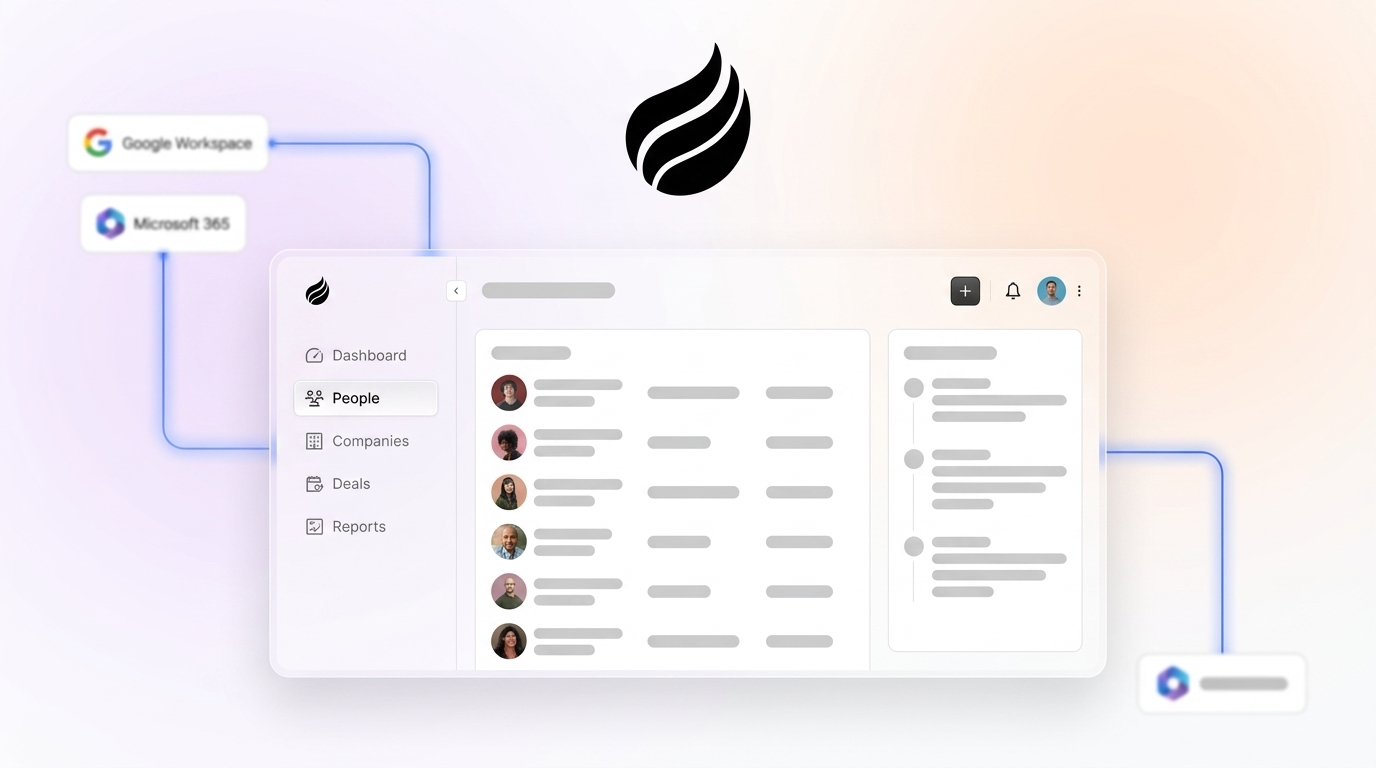
The workflow is closed-loop. A single tracking pixel identifies visitors by name, title, email, and LinkedIn profile alongside company firmographics and behavioral data such as pages visited, time on site, and visit frequency. With one click, the prospect is added to Coffee with all enrichment pre-filled and can be enrolled directly into a multi-step email campaign that sends from the rep’s own mailbox with stop-on-reply logic. Coffee natively integrates with both Salesforce and HubSpot as a Companion App, or operates as a Standalone CRM. The agent handles data entry, enrichment, and activity logging automatically, and pricing uses a simple seat-based model with no per-lead fees.

Get started with Coffee to see Suggested Leads in action.
How To Choose Based On Traffic Volume And Target Market
This framework helps you connect your traffic, geography, and budget to the right tool.
- Traffic threshold: Under 5,000 monthly visits, focus on company-level tools or traffic growth first. At 5,000–10,000 visits, combine company-level tools with selective person-level coverage. At 10,000+ visits, person-level tools generate meaningful named-lead volume.
- Geographic focus: US-heavy traffic points to person-level tools such as RB2B and Coffee. EU-heavy traffic points to company-level tools like Leadfeeder, Snitcher, and Albacross, or to Coffee’s EU company-level coverage.
- Budget: Under $200/month, consider Snitcher, RB2B Starter, or Coffee entry tiers. At $200–$500/month, tools like Leadfeeder and Albacross fit. At $500+/month, Warmly, ZoomInfo, and Coffee scale tiers become realistic.
- Integration needs: Teams that require Salesforce or HubSpot native integration can use Coffee, which integrates with both. RB2B delivers to Slack. Warmly now requires HubSpot following its June 2026 acquisition.
- AI requirements: Teams that want recommendations on who to contact instead of raw lists can use Coffee’s Suggested Leads, which is unique in this category.
RB2B vs. Leadinfo For US Traffic
For US-focused teams, RB2B’s person-level identification is a real upgrade over Leadinfo’s company-level-only data. RB2B resolves individual visitors to their name, email address, and LinkedIn profile, a person-level resolution that Leadinfo does not provide. Instead of seeing only that a company visited, you see the name and title of the person who was on your site.
The limitation is that RB2B stops at identification. Leadinfo does not bundle contact data, outbound sending, or email waterfall verification, and RB2B follows the same pattern. Both tools leave research, contact selection, and outreach sequencing to the rep. Coffee matches RB2B’s person-level identification for US traffic and adds AI-suggested leads based on your buyer persona plus native campaign automation, which closes the loop that RB2B leaves open.
Integration Considerations For Salesforce And HubSpot Teams
Integration approach often decides whether a tool fits your stack. Leadfeeder offers 50+ native integrations including Salesforce, HubSpot, and Pipedrive. Snitcher offers native two-way CRM sync with HubSpot, Salesforce, and Pipedrive, with every feature and integration available on every plan. Albacross includes email and LinkedIn outreach automation in its standard pricing with no per-user fees.
RB2B delivers identified persons to Slack natively, which requires manual CRM entry or middleware for downstream systems. Warmly’s HubSpot acquisition makes HubSpot a hard dependency and excludes Salesforce teams. Leadinfo states that no public API is available, which limits integration options to native connectors and Zapier or Make middleware.
Coffee natively integrates with both Salesforce and HubSpot as a Companion App or serves as a Standalone CRM. The agent handles data entry, enrichment, and activity logging automatically. This removes the need for separate enrichment tools, manual CRM updates, or middleware to connect visitor identification to outreach sequences.
Frequently Asked Questions
What Is The Difference Between Person-Level And Company-Level Visitor Identification?
As covered earlier, company-level identification typically matches 30–60% of B2B traffic, while person-level identification matches only 5–15% of US traffic and below 5% for EU traffic. The key difference is the output. Company-level tools return firmographic data such as company name, industry, size, and pages visited. Person-level tools return named individuals with contact details, which raises stricter GDPR considerations for EU visitors.
How Much Traffic Do I Need For Visitor ID Tools?
Most B2B sites convert fewer than 2% of visitors into leads, so identification tools help reveal the remaining interest. As noted in the traffic section, company-level tools start to make sense at around 5,000 monthly visitors, while person-level tools become viable at roughly 10,000+ monthly visitors. The same 200–400 additional leads example for a 10,000-visitor site still applies when identification and outreach improve conversion.
Which Tool Integrates With Both Salesforce And HubSpot?
Coffee natively integrates with both Salesforce and HubSpot as a Companion App and automatically syncs identified visitors, enriched records, and activity logs. Leadfeeder, Snitcher, and Albacross also offer native CRM sync with both platforms. RB2B delivers identified persons to Slack, which requires manual entry or middleware for CRM sync. Warmly now requires HubSpot as a hard dependency after its June 2026 acquisition by HubSpot, which excludes Salesforce teams. Leadinfo offers 70+ native integrations but has no public API, which limits custom workflow options.
Is Person-Level Identification GDPR-Compliant?
Person-level identification of EU residents without explicit consent is not defensible under GDPR. The lawful basis is difficult to establish, and identifying a named EU person without their knowledge usually tilts the legitimate-interest balance against the controller. This is why credible vendors like RB2B and Warmly restrict person-level resolution to US traffic only. Company-level identification is generally permissible under GDPR’s legitimate-interest basis (Article 6(1)(f)) because it processes business firmographic data rather than personal data. Coffee provides person-level identification for US traffic and GDPR-compliant company-level identification for EU visitors, following the recommended pattern of company-level identification everywhere and person-level identification US-only.
What Makes Coffee Different From Other Visitor Identification Tools?
Most visitor identification tools, including RB2B and Warmly, surface either a company name or a raw list of people who visited. Coffee adds a layer that other tools in this category do not provide: Suggested Leads. Using your defined buyer persona, Coffee’s AI agent recommends the two or three individuals inside each visiting company you should contact and surfaces their LinkedIn profiles for immediate outreach.
Coffee also closes the full loop natively. The tracking pixel identifies visitors, the agent enriches records automatically, logs all activities, and runs multi-step email campaigns from the rep’s own mailbox with stop-on-reply logic. All of this happens inside one platform, so you do not need a separate enrichment tool, sequencer, or CRM middleware.
Conclusion: Pick The AI Leadinfo Alternative That Names Your Buyers
Leadinfo tells you which companies visited, while the right AI alternative tells you which specific people to contact and automates the outreach. For EU-focused teams with strict compliance requirements, Leadfeeder and Snitcher offer strong company-level identification with GDPR-native data handling. For US outbound teams that need named contacts quickly, RB2B provides person-level identification at an accessible price point.
Teams that need the full loop closed, including person-level identification, AI-driven contact recommendations based on buyer persona fit, and native multi-step campaign automation integrated with Salesforce or HubSpot, can use Coffee. It is the only platform in this comparison that delivers all three capabilities without a separate stack of point solutions.