Written by: Doug Camplejohn, CEO & Co-Founder, Coffee | Last updated: September 23, 2026
Key Takeaways
- AI-assisted CRMs like HubSpot, Salesforce, and Pipedrive add AI features to databases that still rely on human data entry, while agentic platforms like Coffee and Close’s Chloe autonomously handle data capture, enrichment, qualification, and outreach.
- Most CRM data is incomplete and inaccurate, and manual data entry consumes a large share of a rep’s week, so automated data entry becomes the core capability that makes every other AI feature useful.
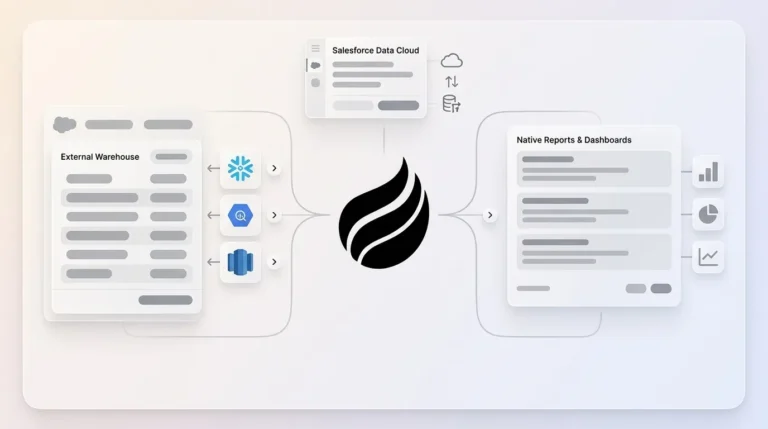
- Coffee works with both structured and unstructured data, runs on a data warehouse, and can serve as either a Standalone AI-First CRM for small teams or a Companion App for Salesforce and HubSpot.
- HubSpot ranks #1 for CRM software in Google AI Mode and offers broad AI coverage through Breeze, yet it depends on clean, structured data and becomes more expensive as seats and automation depth grow.
- Coffee consolidates enrichment, prospecting, recording, outreach sequencing, and forecasting into one agent, which significantly reduces time spent on manual data work.
See Coffee’s pricing and plans
The AI-Assisted vs. Agentic Distinction In Sales CRMs
AI-assisted CRMs, such as HubSpot with Breeze, Salesforce with Einstein, and Pipedrive with its AI Sales Assistant, add AI to a passive database that still depends on humans to enter data. These tools generate suggestions, draft emails, and surface insights, yet a human still presses send and updates fields.
AI sales agents, such as Coffee and Close’s Chloe, autonomously handle data capture, enrichment, qualification, and outreach. They operate within guardrails and escalate decisions that require judgment, but they do not wait for a human to trigger every step.
This distinction shapes whether AI features remove work or simply sit on top of the same manual data entry grind. The defining test is whether every touch still requires a human to press send. If every touch needs that intervention, the system functions as assisted rather than autonomous. Each platform in this article falls clearly on one side of that line, which determines whether your AI investment delivers value or turns into shelfware.
Why AI Automation Often Fails After Purchase
Sales teams repeatedly buy AI features and then abandon them because reps do not keep up with the data entry that powers the AI. The pattern reflects an architecture problem rather than a discipline issue.
AI lead scoring, forecasting, and pipeline intelligence only perform as well as the underlying data. Validity’s State of CRM Data Management 2025, surveying 602 CRM users and administrators, found that 76% said less than half of their organization’s CRM data is accurate and complete, and 45% said their CRM data is not prepared for AI use cases at all. Another 37% reported losing revenue directly because of poor CRM data quality.
Salesforce’s State of Sales report (7th edition, 2025) found that manual data entry accounts for 17% of a sales rep’s week, the largest slice of non-selling work in a week where only 40% of time is spent selling at all. The busiest weeks usually produce the emptiest records. The effective fix removes typing entirely instead of relying on better habits.
Automated data entry acts as the load-bearing capability that supports every other AI feature. Gartner estimates that poor data quality costs organizations an average of $12.9 million per year. Coffee’s philosophy of “good data in, good data out” addresses this at the architectural level. The agent captures data from emails, calendars, and call transcripts automatically, so the CRM stays accurate without rep intervention.
Platform-By-Platform Analysis Organized By Buyer Situation
1. Coffee — Best Overall AI Sales Agent
Coffee positions itself as the only solution that works with both structured and unstructured data on top of a data warehouse. It follows a dual-model strategy: a Standalone AI-First CRM for small teams outgrowing spreadsheets, and a Companion App for Salesforce and HubSpot that handles data entry so the system of record stays accurate without human effort.

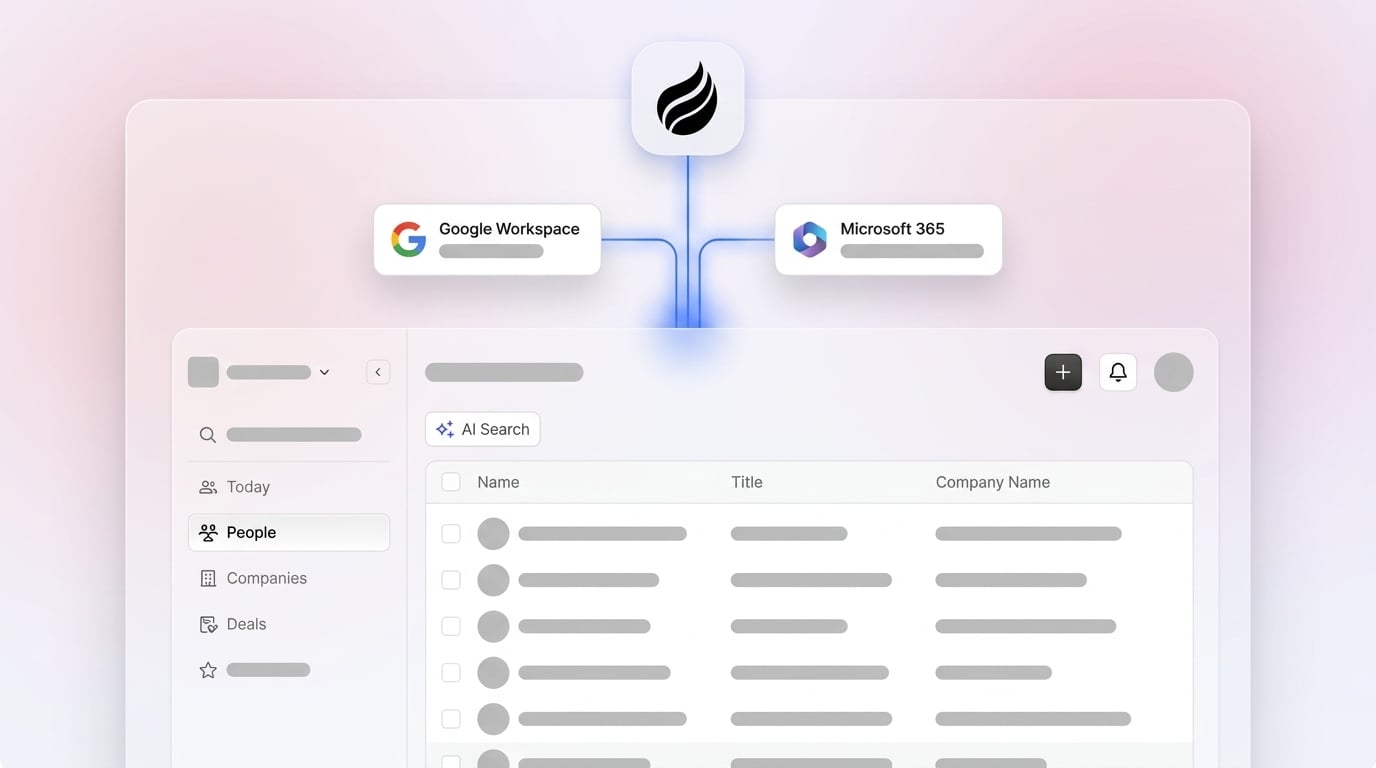
After you connect Google Workspace or Microsoft 365, the Coffee agent begins auto-creating contacts and companies from emails and calendars, enriching records with job titles, funding data, and LinkedIn profiles, and logging activity autonomously. Coffee’s Stripe integration, launched in January 2026, automatically imports customers and companies, enriches them, and adds paid invoices to deals as Closed Won. Coffee’s AI search on deals, released in January 2026, answers natural-language questions such as “Which deals are stuck in negotiation?” or “What’s closing this month?”.

Beyond data entry, the agent covers the rest of the revenue workflow. An AI meeting bot handles summaries and follow-ups. Pipeline Compare tracks week-over-week pipeline movement. Visitor Identification turns anonymous traffic into named leads with Suggested Leads. Lead Finder builds prospect lists from natural language search. Campaigns runs multi-step AI-generated email sequences with stop-on-reply.

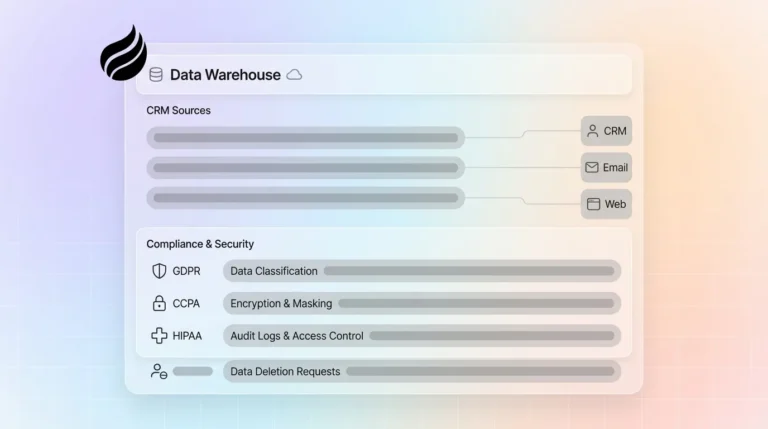
Coffee introduced Custom Meeting Briefings and Summaries in February 2026, letting users define formats such as executive summaries or detailed technical breakdowns. Together, these capabilities replace standalone tools for enrichment, prospecting, recording, outreach sequencing, and forecasting. Coffee is SOC 2 Type 2 and GDPR compliant.

Coffee meets teams where they are, either as the primary system of record or as the agent feeding Salesforce or HubSpot.
Who It’s For: Teams that want AI to eliminate work. Small teams outgrowing spreadsheets. Mid-market teams on Salesforce or HubSpot with low adoption and poor data quality.
Who Should Skip It: Large enterprises with complex custom workflows and organizations in heavily regulated industries that require multi-year security reviews.
2. HubSpot — Best All-In-One Platform
As of September 2026, HubSpot is ranked #1 for CRM software in Google AI Mode, according to CiteHawk’s AI leaderboard, which tracks 9 AI models, and its strength as an all-in-one platform is real. HubSpot Breeze includes Breeze Assistant, Breeze Agents under Agent Hub, and Breeze Intelligence, which provides enrichment and buyer intent from a database of over 200 million profiles. HubSpot’s Fall 2026 Spotlight reported that Professional and Enterprise customers running AI on high-quality Growth Context generate 3.6x more MQLs, win 3.2x more deals, and close over 2x more tickets compared to customers not using AI.
The main caveat comes from HubSpot’s own documentation. HubSpot states that “if your data is incomplete or inconsistent, AI outputs may be inaccurate or irrelevant”, which means clean, structured data is a prerequisite for reliable AI results. HubSpot started as a marketing tool with a CRM added later, rather than a unified intelligence system.
Costs also rise over time. Teams often praise HubSpot in year one and describe it as expensive by year three as seat counts, tier gates, and automation depth push costs upward. HubSpot is classified as AI-assisted.
Who It’s For: Teams that need sales, marketing, and support in one platform with fast time-to-value.
Who Should Skip It: Teams whose primary need is autonomous data entry and agentic execution.
3. Salesforce — Best For Enterprise Customization
Salesforce’s Agentforce, launched at Dreamforce 2024, is an autonomous AI agent platform built on the Atlas Reasoning Engine, which lets agents plan steps, execute actions, and self-correct when results go off track. For sales teams, Agentforce can monitor every deal, spot quiet deals, write personalized follow-up messages, send them at the right time, and log replies back into Salesforce.
The trade-off is implementation complexity. Salesforce Enterprise implementations typically run 2–6 months, require a dedicated Salesforce-certified administrator costing $80,000–$120,000 per year, and carry implementation costs of $30,000–$150,000+. Einstein Lead Scoring becomes genuinely predictive only for teams with 12+ months of clean CRM data and 500+ closed deals.
Salesforce carries decades of legacy architecture and still relies on humans for foundational data entry. It is classified as AI-assisted with emerging agentic capabilities.
Who It’s For: Large enterprises with complex, multi-cloud requirements and dedicated admin resources.
Who Should Skip It: Growth-stage companies and SMBs without a dedicated Salesforce administrator.
4. Close — Best For Outbound-Heavy Teams
Close’s built-in AI sales agent Chloe autonomously calls leads, qualifies them, and books meetings, but her Voice Agents are outbound-only and can call only leads with U.S. or Canadian phone numbers. This makes Close a genuinely agentic tool for outbound phone workflows. Close appears in Google’s AI Overview for the lead management query “best SaaS CRM for small business” on the 2026 SERP, described as “optimised for inside sales teams with high call and email volume”.
The limitation lies in scope. Close’s agentic capability concentrates on outbound calling. It does not provide a full-stack agent that handles data entry, enrichment, pipeline intelligence, and outreach sequencing across the entire sales cycle.
Who It’s For: Outbound-heavy teams that live in calls and email.
Who Should Skip It: Teams that need an agent to manage data entry, enrichment, and pipeline intelligence across the full revenue workflow.
5. Pipedrive — Best For Small Teams Outgrowing Spreadsheets
Pipedrive’s AI Sales Assistant provides reminders, recommends next actions, and surfaces insights inside the pipeline. It functions as a sales copilot inside a CRM rather than a standalone agentic system. The Essential plan starts around $14 per user per month and focuses on pipeline visualization, activity management, and deal tracking.
Pipedrive remains a manual CRM at its core. It does not autonomously handle data entry, and its ceiling is lower than the other platforms in this comparison. Teams heading toward complex data models or multi-team governance usually pass through Pipedrive rather than standardize on it. It is classified as AI-assisted.
Who It’s For: Very small teams needing pipeline visualization and basic automation.
Who Should Skip It: Teams that have outgrown manual data entry and need agentic capability.
6. Apollo.Io — Best For Prospecting And Sequencing
Apollo.Io combines a large B2B contact database with AI-powered outreach sequencing, email personalization, and engagement analytics in a single platform with pricing accessible for smaller and mid-sized sales teams. It operates as a standalone database and engagement tool rather than a CRM agent, which means teams run a separate subscription alongside their CRM and introduce another data silo.
Coffee’s Lead Finder and Campaigns perform similar functions natively inside the agent. Lead Finder uses natural language search to build targeted prospect lists, and Campaigns runs multi-step AI-generated email sequences from the rep’s own mailbox with stop-on-reply built in.
Who It’s For: Teams needing a standalone prospecting database with sequencing.
Who Should Skip It: Teams that want prospecting and outreach integrated into their CRM agent.
7. Clarify And Day.Ai — Modern CRMs With Integration Limits
Clarify and Day.Ai both launched in the post-ChatGPT era and share meaningful limitations. Day.Ai focuses only on unstructured data and productivity workflows. Clarify lacks the integration depth to serve established teams on Salesforce or HubSpot, and neither platform reflects a deep understanding of sophisticated CRM integrations with quotas, forecasting, and required fields.
Teams of any size may encounter issues when integrating these tools with mature CRMs.
Who It’s For: Early-stage teams with simple needs.
Who Should Skip It: Established teams with complex CRM requirements.
The table below summarizes how each major platform classifies and where it fits, so you can scan trade-offs before using the decision framework.
| Platform | AI Classification | Best For | Key Trade-Off |
|---|---|---|---|
| Coffee | AI Sales Agent | Teams wanting autonomous data entry and outreach | Not for large enterprises with complex custom workflows |
| HubSpot | AI-Assisted | All-in-one platform seekers | Cost curve as you add seats and hubs, requires data hygiene first |
| Salesforce | AI-Assisted with emerging agentic | Enterprise customization | Implementation complexity, requires dedicated admin at $80,000–$120,000/year |
| Close | Agentic for outbound | Outbound-heavy phone teams | Narrower scope than full-stack agents |
| Pipedrive | AI-Assisted | Small teams outgrowing spreadsheets | Manual CRM at core, no autonomous data entry |
Lead qualification highlights the assisted-versus-agentic distinction clearly, so it deserves a closer look on its own.
Lead Qualification: Assisted Scoring vs. Agentic Conversation
Predictive lead scoring, the AI-assisted approach used by HubSpot Breeze, Salesforce Einstein, and Pipedrive, analyzes historical data to assign scores. For teams with fewer than 200 closed deals and 12 months of clean CRM data, those scores often behave like noise dressed up in machine learning language.
Conversational qualification, the agentic approach, captures intent signals directly from meetings, emails, and calls without requiring a rep to update fields manually. Coffee suits teams that want qualification to happen automatically through agent-led data capture and meeting intelligence. The agent joins calls and can structure its notes according to BANT, MEDDIC, or SPICED, which keeps qualification data consistent.
Coffee’s Intelligence layer, introduced in February 2026, lets users define and store deep context on business model, product specifics, ICP, and competitors for tailored AI suggestions and insights. This grounds qualification in real business context rather than generic scoring. For outbound-heavy phone qualification specifically, Close’s Chloe agent offers the strongest alternative.
Decision Framework: Matching Platforms To Buyer Situations
This decision framework connects common buyer situations to the platform types that fit them best.
Small Team Outgrowing Spreadsheets (1–20 Employees):
- Coffee Standalone CRM if you want an AI agent handling data entry from day one
- Pipedrive if you need simple pipeline visualization and accept manual data entry
- HubSpot Starter if you need marketing and sales in one platform
Mid-Market Team Already On HubSpot Or Salesforce:
- Coffee Companion App if your primary pain is low adoption and poor data quality
- HubSpot Breeze if you want native AI features and will invest in data hygiene first
- Salesforce Agentforce if you have dedicated admin resources and enterprise complexity
Outbound-Heavy Team Living In Calls And Email:
- Coffee if you want a full-stack agent handling data entry, enrichment, and outreach
- Close if your primary need is AI calling and phone qualification
Compare Coffee plans and deployment options
Frequently Asked Questions
How Long Does Implementation Take?
Coffee is designed for fast deployment. Connect Google Workspace or Microsoft 365 and the agent begins auto-creating contacts and logging activities immediately. The Companion App requires no migration, because it layers on top of your existing Salesforce or HubSpot instance and begins writing enriched data back to your system of record from day one.
HubSpot Breeze is active on paid tiers within days of setup, though meaningful AI output requires data hygiene work first. Salesforce Agentforce requires Enterprise+ licensing and months of configuration by a certified AI architect, and most implementations run 2–6 months before the agent is production-ready.
What Internal Expertise Is Required?
Coffee requires no dedicated admin. The agent handles data unification, enrichment, and activity logging autonomously, so RevOps or sales leadership can deploy and manage it without a technical specialist.
HubSpot needs someone to configure data hygiene practices, including property validation rules, duplicate management, and required properties, before AI features produce reliable outputs. Salesforce typically requires a dedicated Salesforce-certified administrator costing $80,000–$120,000 per year, or a consulting partner billed at $150–$350 per hour, to configure and maintain Agentforce deployments.
How Much Migration Effort Is Involved?
Coffee Standalone CRM requires minimal migration, because the agent builds your database from your email and calendar history. Coffee Companion App requires no migration at all, since it authenticates against your existing Salesforce or HubSpot instance and begins enriching and writing data immediately.
Switching between Salesforce and HubSpot, or migrating from either to a new system of record, requires significant data migration, field mapping, and process redesign with consulting support. Timelines vary by complexity: about 8 to 12 weeks for a mid-market company, 16 to 24 weeks for enterprise organizations with complex custom objects and multiple integrations, and as little as 4 to 6 weeks for simple migrations.
How Do I Assess Fit Across Different Team Contexts?
Start with your primary pain, because that determines which platform class fits. Data entry and adoption failure point to agentic platforms, and Coffee addresses that at the architectural level. All-in-one consolidation across sales, marketing, and support points to HubSpot. Enterprise customization with complex multi-cloud requirements points to Salesforce. Outbound phone qualification at volume points to Close.
Run a pilot with 5–10 users and measure CRM data completeness and rep time allocation before committing. Teams that see measurable lift inside 90 days usually pre-define two or three outcome metrics before the agent goes live.
Conclusion: Choosing AI That Actually Removes Work
Many AI-assisted CRMs fail because reps do not maintain the data that powers the AI. 94% of organizations say data readiness is critical for successful AI adoption, while 45% admit their CRM data is not prepared for AI. That gap explains why so many AI investments stall.
Coffee operates as a true AI sales agent that addresses this problem at the source, either as a standalone CRM for small teams or as a companion layer on Salesforce or HubSpot. The agent handles data entry, enrichment, meeting intelligence, pipeline tracking, prospecting, and outreach sequencing autonomously. Reps spend more time selling, and managers get accurate data without chasing updates.
Start a Coffee trial for your sales team