Written by: Doug Camplejohn, CEO & Co-Founder, Coffee | Last updated: July 28, 2026
Key Takeaways for ABM Buyers
- ABM platforms perform best with accurate, complete, and current CRM data, and poor data quality remains the leading cause of program failure.
- Legacy CRMs often suffer from 30% annual contact decay, 10–25% duplicate rates, and incomplete buying-committee records because reps must enter data manually.
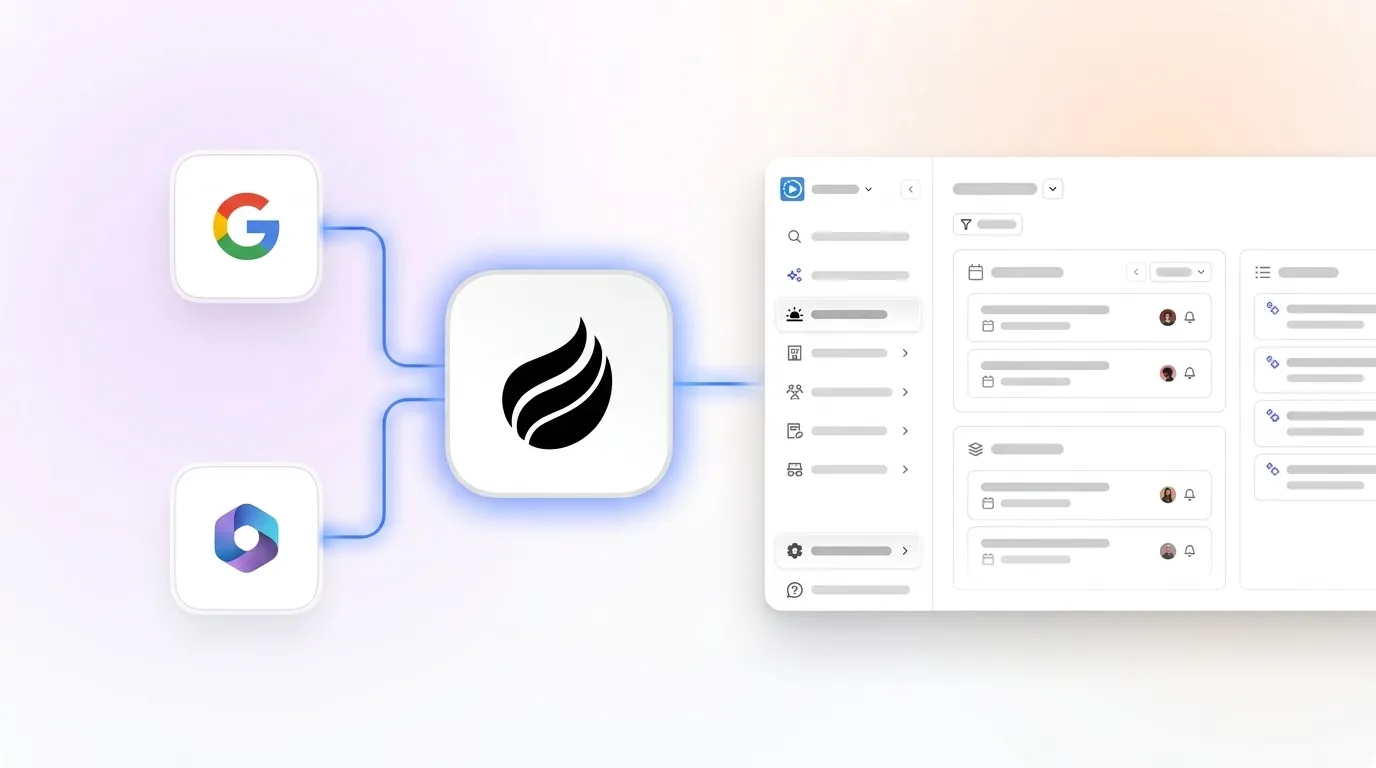
- Coffee’s autonomous agent removes manual entry by auto-creating contacts, enriching firmographics, and logging every email and calendar activity directly into Salesforce or HubSpot.
- Mid-market teams can pair Coffee Companion App with RollWorks, Terminus, Demandbase, or 6sense to shorten implementation timelines and improve intent-signal accuracy.
- Start your Coffee trial to resolve CRM data quality before your ABM platform evaluation begins.
The CRM Data-Quality Problem That Kills Most ABM Programs
Only 26% of companies describe their ABM program as truly successful, according to N.Rich’s State of Account Based Marketing 2025 report. Approximately 80% fail to deliver expected results. Data quality, not strategy or platform selection, explains most of that gap.
No evidence indicates that Gartner cites poor data quality as the top reason ABM programs underperform, yet many ABM practitioners still flag inaccurate or incomplete CRM data as a major execution challenge. Legacy CRM architecture creates this problem. Systems like Salesforce and HubSpot rely on sales reps to enter data manually, and many companies report accuracy issues in their CRM.
The downstream effects compound quickly. B2B contact data decays at approximately 30% per year due to job changes and company restructuring, so nearly one-third of records become outdated annually. This decay combines with duplication. Most CRMs without deduplication governance accumulate a 10–25% duplicate rate, which further distorts account data. Even accounts that appear current often lack full buying-committee coverage, so critical decision-makers never enter your ABM universe. Every ABM platform in this guide ingests whatever the CRM contains. When that foundation includes stale contacts, duplicate records, and incomplete buying committees, intent scoring, ad targeting, and personalization all inherit those flaws.
The manual entry burden sits at the root of this problem. 71% of sales reps say they spend too much time on data entry, leaving only 35% of their time for selling. Coffee’s agent layer removes that burden by automatically capturing contacts, enriching firmographics, and logging every interaction from email and calendar, so the CRM stays clean without human effort.

With this data foundation in place, the right ABM platform choice depends primarily on company size and existing infrastructure. The following recommendations match each growth stage to the platform combination that delivers the fastest time-to-value.
Size-Based Platform Recommendations
Under 100 Employees: Coffee as Your Standalone CRM
Smaller teams at this stage have outgrown spreadsheets but cannot justify the implementation overhead of enterprise ABM platforms. Coffee’s Standalone CRM deploys the agent as the system of record and handles data entry, enrichment, meeting management, and pipeline tracking without a separate CRM license. Integration work stays light because there is no legacy stack to reconcile. Time-to-value lands inside the first 90 days, as the agent starts populating the CRM from email and calendar on day one.

100–500 Employees: Coffee Companion App With RollWorks or Terminus
Companies in this tier usually run Salesforce or HubSpot and need ABM advertising and intent signals without enterprise-level complexity. RollWorks starts at approximately $12,000 per year and typically reaches operational status within several weeks. Terminus starts at approximately $24,000 per year on a similar timeline. CRM data quality becomes the hidden cost at this tier, because both platforms grade and score accounts based on existing CRM records.
Coffee’s Companion App runs as an agent on top of the current Salesforce or HubSpot instance and keeps the records RollWorks or Terminus read accurate, deduplicated, and enriched. Mid-market ABM programs typically cost $40k–$120k per year for a complete program. Coffee reduces that burden by consolidating enrichment, recording, and CRM maintenance into one agent.
500–1,000 Employees: Coffee Companion App With Demandbase or 6sense
Larger mid-market teams gain more value from deeper intent data and buying-stage prediction, which justifies higher platform investment. Demandbase mid-market deployments incur one-time implementation and other costs. Demandbase implementation and hidden costs typically push year-one total costs 58% or more above the advertised annual license price. 6sense buying-stage predictions also rely on CRM data ingestion before they become reliable.
Both platforms ramp faster when the CRM data feeding them starts clean. Coffee’s Companion App keeps Demandbase and 6sense supplied with accurate account hierarchies, complete buying-committee contacts, and current activity logs. These inputs determine whether the ramp produces usable signals or noise.
Platform Matchups: Performance With Clean vs Dirty CRM Data
Demandbase processes more than 18 billion intent signals per day (over 500 billion per month) and supports 133 languages and writes account intelligence back to Salesforce and HubSpot. A structural limitation remains. Demandbase cannot sync to or from Salesforce custom objects. When Salesforce account records contain duplicates or missing firmographics, Demandbase account identification and segmentation inherit those errors. Coffee’s agent resolves duplicates and fills firmographic gaps before Demandbase reads the data, which shortens the platform’s ramp.
6sense combines first- and third-party signals with AI-driven buying-stage prediction and offers deep native integrations with Salesforce and HubSpot. Buying-stage predictions depend heavily on CRM data ingestion. Feeding 6sense a CRM with 30% annual contact decay and 10–25% duplicate rates trains the model on corrupted signals. Coffee’s continuous enrichment and activity logging give 6sense a clean, current dataset from the first day of ingestion.
RollWorks pushes account data and intent information to Salesforce account records and surfaces Hot Contacts inside the Salesforce Sales Insights widget. The platform’s machine-learning model grades accounts against the user’s ICP using existing CRM data as training input. Stale contacts and incomplete accounts produce lower-confidence grades. Coffee’s agent keeps the contact and account records RollWorks reads current, which improves ICP model accuracy without extra manual work.
Terminus provides multi-channel orchestration across display, email, chat, and web personalization. Following its acquisition by DemandScience in 2024, the platform now targets mid-market demand gen teams with $50K–$150K ABM budgets. Terminus orchestration sequences depend on accurate account and contact data to route the right message to the right stakeholder. Missing buying-committee contacts, which many enterprise accounts lack, leave Terminus sequences reaching only a fraction of the intended audience. Coffee’s agent fills those gaps automatically.
HubSpot ABM offers the lowest-friction entry point for teams already on HubSpot, with native CRM-based ABM views and a Data Hub added in 2025 for data unification. HubSpot’s native ABM still has limitations with certain configurations. For HubSpot users who have outgrown basic ABM views but are not ready for Demandbase or 6sense pricing, Coffee’s Companion App adds an agent layer that keeps HubSpot records clean and structured for ABM execution.
Buyer-Persona Matrix: Matching Leaders to the Right Stack
The right platform combination depends on who owns the ABM program and which constraint matters most.
- Head of Marketing (100–500 employees): Campaign targeting accuracy usually sits at the top of the list. A strong fit stack pairs Coffee Companion App to clean HubSpot or Salesforce records with RollWorks or Terminus for ABM advertising. Coffee’s visitor identification feature converts anonymous website traffic into named prospects, which closes the loop between ad exposure and inbound intent.
- RevOps Leader (500–1,000 employees): CRM data integrity and pipeline attribution often matter most. A strong fit stack uses Coffee Companion App to feed clean data into Demandbase or 6sense, with Coffee’s Pipeline Compare feature replacing manual CSV exports for weekly reviews. RevOps ownership of ABM programs varies, yet RevOps still controls the data layer that determines whether any platform produces reliable attribution.
- Sales Leadership (any size): Rep adoption and deal visibility usually drive decisions. Coffee’s agent handles the data entry burden that causes low CRM adoption, so the records sales reps see in Salesforce or HubSpot reflect actual deal state. Paired with RollWorks in-CRM Sales Insights or Demandbase account intelligence cards, sales leaders get intent signals surfaced inside the tools reps already use.
Addressing Common Objections About Coffee
Security (SOC 2 / GDPR): Coffee is SOC 2 Type 2 and GDPR compliant, and data is not used to train public models. For teams evaluating intent data providers, bidstream-derived intent data rests on shaky privacy footing under GDPR because real-time bidding collection often occurs without meaningful consent. Coffee’s enrichment relies on established data partners.
Data parity with ZoomInfo: Coffee’s agent provides enrichment data roughly on par with ZoomInfo for most mid-market use cases and includes this enrichment at no additional per-record cost. The agent augments records with job titles, funding data, and LinkedIn profiles via licensed partners, which removes the need for a separate enrichment contract.
Zapier vs native integrations: Coffee currently connects to third-party tools through Zapier, and deeper native integrations sit on the product roadmap. For Salesforce and HubSpot specifically, Coffee’s Companion App uses direct authentication to sync data, enrich records, and write insights back to the primary CRM. The app also handles complex field mappings, required fields, quotas, and forecasting logic that generic middleware often fails to manage reliably.
90-Day Decision Checklist for ABM Platform Selection
Teams should score their organization against the following criteria before selecting an ABM platform to identify the highest-impact starting point.
- CRM data cleanliness: Estimate what percentage of account records have complete firmographics such as industry, headcount, and revenue. Assess the likely duplicate rate. If either answer remains unknown, a data audit comes before platform selection.
- Integration constraints: Review whether your Salesforce or HubSpot instance uses custom objects, non-standard deal stages, or complex lifecycle properties. If so, confirm whether the ABM platform’s integration handles those structures natively or requires middleware.
- Pipeline goal and timeline: Clarify whether the 90-day target focuses on pipeline coverage, opportunity creation, or closed revenue. Platforms that need several months of CRM ingestion before producing reliable signals cannot support a 90-day pipeline goal without a clean data foundation already in place.
- Budget allocation: Mid-market ABM programs typically cost $40k–$120k per year for a complete program. Factor in the annual range discussed earlier plus one-time implementation fees, which can be substantial for platforms like Demandbase.
- Team ownership: Confirm which team owns the ABM program and whether sales leadership has committed to working from the same account list. Effective marketing and sales collaboration varies widely, so clear ownership keeps execution on track.
Audit your CRM data quality with Coffee before selecting an ABM platform.
Frequently Asked Questions
How long does it take to implement Coffee alongside an existing ABM platform?
Coffee’s Companion App connects to Salesforce or HubSpot through a simple authentication step. After authentication, the agent immediately begins scanning emails and calendars to auto-create contacts, enrich records, and log activity. Most teams become operational quickly. This timeline runs materially faster than the multi-month ramp common with enterprise ABM platforms like Demandbase and 6sense, which depend on CRM data ingestion before producing reliable intent signals. Coffee addresses the data quality problem that often stretches those ramp timelines.
Can Coffee replace spreadsheet-based CRM workflows before an ABM platform is added?
Yes. Coffee’s Standalone CRM serves teams that have outgrown spreadsheets and Notion but view legacy CRMs like HubSpot or Pipedrive as expensive and manual. The agent handles contact creation, enrichment, meeting management, and pipeline tracking without human data entry. Teams can run Coffee as their system of record and later add an ABM advertising platform, such as RollWorks or Terminus, once the account data foundation is clean and structured for ABM execution.

Is Coffee compliant with SOC 2 and GDPR requirements?
Coffee is SOC 2 Type 2 certified and GDPR compliant. Data processed by the Coffee agent does not train public AI models. Enrichment data comes from partners that follow privacy-compliant practices rather than certain real-time bidding sources, which carry greater privacy risk under GDPR. Teams in regulated industries or those with formal security reviews can request Coffee’s compliance documentation.
How does Coffee’s pricing model work compared to ABM platform licensing?
Coffee uses seat-based pricing. The agent’s work, including data entry, enrichment, meeting management, pipeline tracking, and visitor identification, is included in the seat cost with no extra metering on AI usage or automated processes. ABM platforms typically combine implementation fees, per-seat costs, and module-based add-ons. Demandbase, for example, adds per-seat costs and one-time implementation fees. Coffee’s all-inclusive seat model keeps total cost of ownership predictable from the first invoice.
Does Coffee work if the team is already committed to Salesforce or HubSpot?
Coffee’s Companion App is built for teams committed to Salesforce or HubSpot. The agent runs on top of the existing system of record and handles data ingestion so the CRM stays accurate without human effort. Coffee has deep knowledge of Salesforce and HubSpot architecture, including quotas, forecasting, required fields, and custom configurations that generic AI CRM alternatives often mishandle. The result is a Salesforce or HubSpot instance that produces the clean, unified account data every ABM platform in this guide needs to perform effectively.
Conclusion: Anchor Your ABM Stack on Clean Data
Every ABM platform in this guide, including Demandbase, 6sense, RollWorks, Terminus, and HubSpot ABM, delivers stronger results when it receives accurate, complete, and current account data. These platforms do not solve the data quality problem; they amplify whatever the CRM already contains. With the contact decay and data accuracy challenges outlined earlier, the ABM platform decision becomes secondary to the data foundation decision.
Coffee’s agent layer provides the missing automation that delivers clean, unified account data into any ABM platform. Teams under 100 employees can deploy Coffee as a Standalone CRM, while mid-market organizations can run Coffee as a Companion App on top of Salesforce or HubSpot. In both cases, Coffee keeps the records every ABM platform reads accurate, enriched, and current from day one, without manual effort.
Deploy Coffee’s agent layer and give your ABM investment the clean data foundation it needs to deliver pipeline impact within 90 days.