Written by: Doug Camplejohn, CEO & Co-Founder, Coffee | Last updated: July 30, 2026
Key Takeaways for Mid-Market SaaS Teams
- MEDDIC cuts wasted time on unqualified deals by surfacing missing Economic Buyer or Champion early in the sales process.
- Forecast accuracy improves when MEDDIC data comes from transcripts instead of rep gut-feel or stale CRM entries.
- Targeted coaching becomes possible when managers see exactly which MEDDIC element is weak on each deal without manual reconstruction.
- Late-stage surprises decrease when Paper Process and Competition are captured automatically before deals reach the commit stage.
- Teams can get started with Coffee to automate MEDDIC data capture and remove manual entry from day one.
The Problem: Manual MEDDIC Breaks Under Real-World Pressure
Enterprise MEDDIC training programs from providers such as Force Management or Winning by Design require substantial investment for full rollouts, yet adherence often decays within six months without ongoing reinforcement. The root cause is not rep knowledge. The real issue is the data-entry burden that follows every call.
By the end of a typical quarter, roughly half of all MEDDIC fields across a B2B sales pipeline are either empty, unchanged since deal creation, or filled with placeholder text that passes validation without conveying deal health. Required-field enforcement often makes this worse. Mandatory stage-gate enforcement leads reps to enter placeholder data such as “TBD” or copy-pasted names to clear the gate, producing data that appears complete but provides no improvement in true pipeline quality or coaching insight. This data quality problem creates measurable downstream costs for the business.
The downstream cost is measurable. Manual, self-reported MEDDIC data can lead to substantial forecast errors in the absence of automation. This data quality problem also creates a time cost. Manual MEDDIC administrative work can cost AEs significant selling time each year. The combination of poor forecast accuracy and lost selling time explains why forum complaints describe MEDDIC as “just a CRM exercise”. The framework is sound, but the execution infrastructure is broken.
The Solution: AI-Driven MEDDIC Data Capture That Reps Actually Use
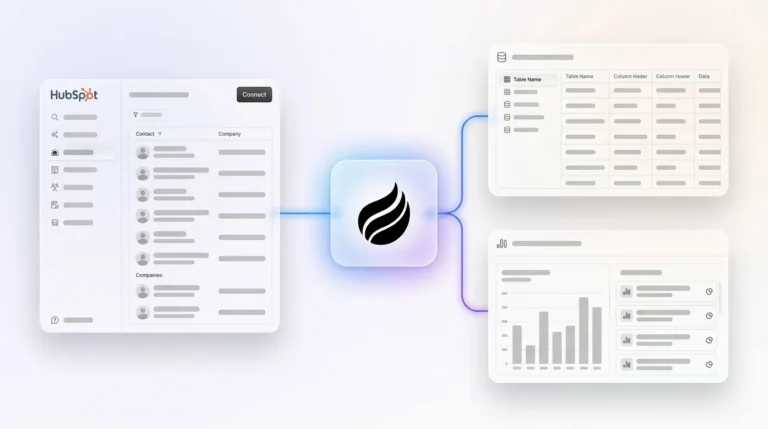
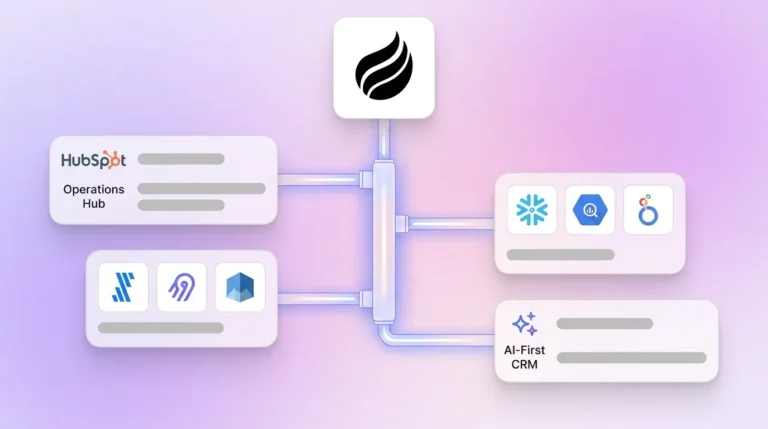
Coffee's agent operates as a Companion App on top of existing Salesforce or HubSpot instances. After you connect Google Workspace or Microsoft 365, the agent begins ingesting emails, calendar events, and call transcripts. It structures that unstructured data against MEDDIC fields, including Metrics, Economic Buyer, Decision Criteria, Decision Process, Identify Pain, and Champion, and writes the outputs directly to the opportunity record. No rep action is required after the call ends.

This approach removes the 8–12 hours per week of manual entry that previously caused fields to go stale, recovering 5–8 hours per week for customer-facing work. AEs shift from data entry to data verification and strategy. The qualification record becomes a live document grounded in conversation evidence rather than a static checkbox.

Get started with Coffee and automate MEDDIC data capture from day one.
Benefit 1: Early Disqualification Protects AE Time
MEDDIC's primary function is disqualification. When Economic Buyer access and Champion strength are captured automatically from transcripts, managers can see within hours of a discovery call whether a deal has the structural requirements to close.

Early economic buyer involvement can boost win rates, while delayed engagement can reduce win rates.
When Coffee's agent flags that the Economic Buyer field remains empty after two discovery calls, the signal is immediate and objective, not dependent on a rep's self-assessment. Reps stop investing multi-stop territory visits and custom proposals in deals that were never real.
Benefit 2: Objective MEDDIC Scores Improve Forecast Accuracy
Sales teams using the MEDDIC sales qualification framework consistently see more accurate forecasting, and deals with strong MEDDIC qualification achieve high forecast accuracy. The mechanism is straightforward. A deal scoring strong on all six MEDDIC dimensions is more likely to close at a high rate, while a deal strong on two or fewer is a forecast risk rather than a qualified opportunity.
That accuracy lift only appears when the underlying data is trustworthy. High-functioning MEDDIC implementations improve forecast accuracy by 25–35 percentage points within two quarters because reps surface deal risk earlier. Coffee's agent grounds every field in transcript evidence, so the forecast model reflects what buyers actually said, not what reps estimated under end-of-quarter pressure.
Benefit 3: Deal-Level MEDDIC Views Enable Targeted Coaching
Coffee's Pipeline Compare feature makes this coaching language operational. Because the agent captures every MEDDIC element from calls and emails, managers see a deal-level view showing exactly which element is weak, such as Champion not yet confirmed, Decision Process unmapped, or Metrics vague, without spending 15–20 minutes per rep reconstructing the story from memory. When MEDDIC data is current, pipeline reviews shift from status checks to targeted coaching questions such as “Acme has Metrics and Pain confirmed, no Champion yet — what do you need to unblock those two?”
Benefit 4: Paper Process and Competition Data Reduce Surprises
The two elements that MEDDPICC adds to the core MEDDIC framework, Paper Process and Competition, exist specifically to prevent forecast slippage caused by procurement delays and underestimated alternatives. Organizations that enforce MEDDPICC with evidence standards, not just field completion, see 31% fewer late-stage deal losses than those applying it as a checkbox exercise.
Teams that track Paper Process can see improvements in forecast accuracy. Coffee's agent captures procurement and competitive mentions from call transcripts and email threads, surfacing Paper Process and Competition signals before the commit stage rather than after a deal slips.
Benefit 5: Current MEDDIC Fields Shorten Enterprise Sales Cycles
Companies using MEDDIC report that it can shrink their sales cycle by 20% to 30%. The mechanism is early confirmation of Decision Process and Champion, which prevents deals from stalling in unmapped procurement or legal stages.
A B2B SaaS company in construction shortened its sales cycle from 6 months to 2.5 months after implementing go-to-market infrastructure changes. Automation is the enabling condition. Cycle compression requires that Decision Process and Champion fields stay current across every deal, not just the ones a rep remembered to update before the weekly review.
Benefit 6: AI Agents Keep All Six MEDDIC Elements Up to Date
Coffee's implementation follows a straightforward three-step playbook: connect your workspace, define MEDDIC scoring thresholds, and enable real-time field writes. See the Implementation Playbook section below for detailed steps.
Get started with Coffee and run your first AI-scored MEDDIC call today.
MEDDIC vs MEDDPICC: Picking the Right Framework for Your Pipeline
| Framework | Best For | Added Elements vs. Core MEDDIC | Forecast Accuracy Lift |
|---|---|---|---|
| MEDDIC | Teams new to structured selling, sales cycles under 90 days, or average deal sizes under $50K | None, six core elements: Metrics, Economic Buyer, Decision Criteria, Decision Process, Identify Pain, Champion | As noted earlier, teams typically see 25–35 percentage point improvements in forecast accuracy within two quarters |
| MEDDPICC | Deals that regularly stall in procurement, competitive markets with 3+ alternatives, buying committees of 5+ stakeholders, or deal sizes exceeding $100K | Paper Process (legal, security, and procurement steps after the buyer says yes) and Competition (rivals plus status quo or no decision) | Improvements in forecast accuracy when tracking Paper Process |
New AE ramp time for MEDDIC can be relatively short, while full MEDDPICC competence typically requires more time for an experienced AE. For most 50-person SaaS teams running deals between $50K and $150K ACV with 60–120 day cycles, MEDDIC is the right starting point, with MEDDPICC adopted as deal complexity increases.
Is MEDDIC Still Relevant in 2026?
The case for continued relevance is structural. In 2026, the typical B2B buying decision includes 13 internal stakeholders (plus external influencers) according to Forrester, making single-decision-maker qualification less realistic. This complexity is why multi-stakeholder frameworks like MEDDIC remain essential.
A 2024 Gartner survey states that B2B sellers who effectively partner with AI tools are 3.7 times more likely to meet their sales quotas than those who do not. This finding suggests that MEDDIC's continued relevance depends on pairing the framework with automation that can handle stakeholder complexity at scale.
MEDDIC is overkill for high-volume, low-ACV inbound triage where BANT suffices as an early-stage filter. MEDDIC delivers its strongest results in complex enterprise deals, high-value solutions, and long sales cycles involving multiple stakeholders and touchpoints. For mid-market SaaS teams running deals above $30K ACV with multi-stakeholder buying committees, the framework remains a defensible qualification standard in 2026.
Concise Implementation Playbook for Coffee + MEDDIC
Three automation tactics convert MEDDIC from a training investment into a live revenue process.
- Connect your workspace to Coffee. A single authentication against Google Workspace or Microsoft 365 gives the agent access to emails, calendars, and meeting transcripts. The agent begins auto-creating contacts, logging activity, and writing MEDDIC fields to Salesforce or HubSpot opportunity records immediately, with no CSV imports and no manual mapping.
- Define MEDDIC scoring thresholds per deal stage. Enterprise sales organizations in 2026 commonly score each MEDDIC element on a 1–10 scale, requiring thresholds such as Metrics ≥ 7, Economic Buyer ≥ 7, and Champion ≥ 7 before a deal can enter commit. Without these thresholds, weak deals can advance to commit stage and inflate your forecast. Configure these thresholds in Coffee so the agent flags deals that fall below the threshold before they reach commit.
- Enable real-time field writes and pipeline dashboards. Coffee's Pipeline Compare feature visualizes week-over-week changes, highlighting stalled opportunities and surfacing which MEDDIC element is blocking progression. Enable real-time field writes so Pipeline Compare reflects current transcript-backed data, and pipeline reviews become coaching sessions rather than interrogations.
Frequently Asked Questions
What does MEDDIC stand for and what does each element do?
MEDDIC is a six-element sales qualification framework: Metrics (the quantified business impact the buyer expects), Economic Buyer (the person with final budget authority), Decision Criteria (the formal and informal standards the buyer uses to evaluate vendors), Decision Process (the steps, stakeholders, and timeline the buyer follows to reach a decision), Identify Pain (the specific business problem driving urgency), and Champion (the internal advocate who will spend political capital to advance the deal). Each element functions as a qualification gate. A deal missing a confirmed Economic Buyer or Champion is a forecast risk, not a committed opportunity.
How long does it take to implement MEDDIC with Coffee?
Most teams complete the core setup in under two hours. Connecting Google Workspace or Microsoft 365 takes minutes. Defining MEDDIC scoring thresholds and mapping fields to Salesforce or HubSpot opportunity records is a configuration step, not a development project. Coffee supports MEDDIC, MEDDPICC, BANT, and SPICED natively, so teams can switch qualification frameworks through settings rather than engineering work. The first AI-scored calls are available the same day setup begins.
Does Coffee work with existing Salesforce or HubSpot instances?
Yes. Coffee operates as a Companion App that deploys an intelligent agent on top of an existing Salesforce or HubSpot installation. The agent handles the data-in process, capturing MEDDIC fields from emails, calendars, and call transcripts, and writes structured outputs directly to the opportunity record. The system of record remains Salesforce or HubSpot. Coffee ensures the data inside it is current and grounded in conversation evidence rather than manual rep entry. Coffee is SOC 2 Type 2 and GDPR compliant, and data is not used to train public models.
Is MEDDIC suitable for deals under $50K ACV?
MEDDIC delivers its strongest return on investment for deals above $50K ACV with sales cycles of 60 days or more and buying committees of three or more stakeholders. For simpler, high-velocity deals below that threshold, a lighter framework such as BANT is sufficient for early-stage filtering. Teams running a mixed portfolio, some transactional and some enterprise, typically apply MEDDIC selectively to opportunities above a defined ACV threshold, using Coffee's scoring thresholds to enforce that boundary automatically rather than relying on rep judgment.
What is the difference between MEDDIC and MEDDPICC, and which should a 50-person SaaS team use?
MEDDPICC adds two elements to the six-element MEDDIC core: Paper Process (the legal, security, and procurement steps that occur after the buyer says yes) and Competition (rival vendors and the status quo). For a 50-person SaaS team running deals between $50K and $150K ACV with 60–120 day cycles, MEDDIC is the right starting framework. MEDDPICC becomes the better choice when deals regularly stall in procurement, when buying committees exceed five stakeholders, or when three or more competitive alternatives are consistently present. Most organizations start with MEDDIC and graduate to MEDDPICC as deal complexity increases, with Coffee's agent capturing both Paper Process and Competition signals from transcripts and emails without requiring a separate implementation project.
Conclusion: Turn MEDDIC from Theory into a Live Revenue System
The benefits of using the MEDDIC sales qualification framework are real and quantified, including higher win rates, more accurate forecasts, shorter cycles, and better coaching. The barrier is not the framework itself. The real obstacle is the manual data-entry requirement that causes fields to go stale, forecasts to drift, and coaching to remain generic.
For mid-market SaaS teams at the 50-person stage, the operational fix is an AI agent that captures Metrics, Economic Buyer, Champion, and every other MEDDIC element directly from calls, emails, and calendars, then writes that data to Salesforce or HubSpot without rep involvement. Coffee's agent removes the data-entry barrier that turns MEDDIC into a checkbox exercise and replaces it with a live qualification record that managers can trust for forecasting and coaching.
Get started with Coffee and turn MEDDIC into a reliable revenue process.