Written by: Doug Camplejohn, CEO & Co-Founder, Coffee | Last updated: August 6, 2026
Key Takeaways
- Inconsistent discovery calls create poor CRM data, inaccurate forecasts, and missed revenue targets.
- SPICED is a five-step discovery framework (Situation, Pain, Impact, Critical Event, Decision) that structures buyer conversations for repeatable qualification.
- Each SPICED step builds on the previous one and helps reps quantify pain, identify buyer-driven deadlines, and map decision processes before recommending solutions.
- AI agents like Coffee can transcribe calls, extract SPICED elements, populate CRM fields, and enforce stage gates without manual data entry.
- Teams that adopt SPICED with Coffee see more accurate forecasts and more reliable pipeline. Get started with Coffee to automate SPICED capture on every call.
What SPICED Means in Everyday Sales Conversations
SPICED is a five-step sales discovery and qualification framework developed by Winning by Design for B2B SaaS and recurring-revenue teams. The acronym stands for Situation, Pain, Impact, Critical Event, and Decision. It functions as an ordered diagnostic sequence, where each step earns the right to the next, so reps understand the buyer’s full context before recommending any solution.
1. Situation: Map the Buyer’s Current Setup Quickly
Situation captures the buyer’s current environment, including tech stack, team structure, market position, and the triggers that prompted the conversation. This stage builds a factual foundation before you probe for problems. Keep Situation to two or three focused questions, then move on.
Sample discovery questions:
- “Walk me through how your sales team is structured today, including segments, regions, and reporting lines.”
- “What tools does your team use for pipeline management and forecasting right now?”
- “What has changed in the last six to twelve months that made this conversation relevant?”
- “What is your main focus for this quarter in terms of business goals?”
Quantified example: A RevOps leader at a 60-person SaaS company shares that the team recently migrated from Pipedrive to Salesforce but has no enforcement on required fields. Reps log deals inconsistently across three stages. That single Situation answer shows the pain is structural, not behavioral.
2. Pain: Surface the Concrete Problem
Pain is the gap between where the buyer is and where they want to be, described in concrete terms rather than vague categories. Effective Pain discovery surfaces both emotional friction, such as career anxieties and team frustrations, and rational friction, such as measurable inefficiencies.
Sample discovery questions:
- “What is the most significant bottleneck your team faces right now?”
- “When you pull a forecast report today, how confident are you in the numbers?”
- “How much time do reps spend on CRM data entry each week?”
- “What is the biggest gap between what your CRM shows and what is actually happening in deals?”
Quantified example: The same RevOps leader says reps spend roughly four hours per week updating Salesforce manually. The Head of Sales still exports a CSV every Friday to build the forecast in a spreadsheet. That is a named, measurable pain.
3. Impact: Put a Real Business Cost on the Pain
Impact is the commercial cost of the identified pain, expressed in the buyer’s own numbers. This step often has the most influence on the deal. Strong Impact discovery helps reps build a clear case for change.
Sample discovery questions:
- “What did inaccurate forecasting cost the business last quarter, in revenue, credibility, or both?”
- “How is this affecting your ability to hit your goals this year?”
- “What is the cost of inaction, and what happens if you do nothing for another quarter?”
- “How does this problem affect your team personally, including your time and your credibility with leadership?”
Quantified example: The RevOps leader estimates the team missed a $200K pipeline call last quarter because two deals were logged at the wrong stage. The CRO presented indefensible numbers to the board. That is both a rational impact, in missed revenue, and an emotional impact, in executive credibility.
4. Critical Event: Anchor the Buyer-Driven Deadline
A deal without a genuine Critical Event has no real reason to close in the current quarter and often dies in indecision due to buyer status-quo bias. The Critical Event is a real, dated deadline on the buyer’s side, not a seller-imposed quarter-end push. The test question is “What happens if you miss this date?”
Sample discovery questions:
- “Is there a specific date or event driving the timeline for this decision?”
- “When does your current contract renew, and have you started the evaluation process?”
- “Is this tied to a board commitment, a funding round, or a go-live date?”
- “What happens if this does not get resolved before your fiscal year end?”
Quantified example: The RevOps leader confirms the company’s annual board review is in eleven weeks and the CEO has committed to presenting a clean pipeline dashboard. Without a solution in place before that date, the initiative stalls for another quarter. That is a genuine Critical Event.
5. Decision: Map How the Buyer Will Choose
Decision covers three sub-elements: the decision process, the decision committee, and the decision criteria. The process describes what happens between “we like this” and “contract signed.” The committee includes the economic buyer, champion, technical evaluators, and potential blockers. The criteria list covers must-have requirements such as Salesforce-native integration or SOC 2 Type II compliance.
Sample discovery questions:
- “Walk me through what happens between ‘we like this’ and ‘contract signed’ at your company.”
- “Who needs to be involved, and what does each person care about?”
- “What are the three or four must-have criteria that will drive your final choice?”
- “What would make this an easy yes or a definitive no?”
Quantified example: The RevOps leader confirms the Head of Sales owns the budget, IT must approve data security, and legal requires a DPA before any contract is signed. Knowing this in discovery prevents a surprise veto at the finish line.
SPICED Steps and Goals at a Glance
| Step | Goal | Key Question | Typical Output | Coffee Agent Action |
|---|---|---|---|---|
| Situation | Map the buyer’s current context | “Walk me through how your team is structured today.” | Tech stack, team size, recent changes | Auto-populates Situation field from call transcript |
| Pain | Surface the concrete problem | “What is the biggest gap between your CRM and reality?” | Named friction point with emotional and rational dimensions | Extracts Pain statement and tags pain type in CRM record |
| Impact | Quantify the business cost | “What did inaccurate forecasting cost last quarter?” | Dollar figure, time lost, or credibility risk | Logs quantified Impact and flags deals missing a number |
| Critical Event | Identify the buyer-driven deadline | “What happens if this is not solved before your board review?” | Named date or milestone with consequence | Sets Critical Event date field and triggers stage-gate alert |
| Decision | Map the buying process | “Who needs to sign, and what are their must-haves?” | Stakeholder map, criteria list, approval timeline | Populates Decision Process, Committee, and Criteria fields |
To see how these five steps show up in real conversations, review the two annotated discovery calls below. Each one highlights SPICED in action with a different type of buyer.
Two Annotated Live-Call Transcripts Mapped to SPICED
Transcript 1 – Mid-Market SaaS, RevOps Buyer
Rep: “Walk me through how your sales team is structured today.” [Situation]
Buyer: “We have twelve AEs split across two segments. We moved to Salesforce eight months ago but adoption is low, maybe 60%.”
Rep: “What is the biggest gap between what Salesforce shows and what is actually happening in deals?” [Pain]
Buyer: “Reps log deals late or not at all. My forecast is basically a guess every week.”
Rep: “What did that cost you last quarter, in revenue or credibility?” [Impact]
Buyer: “We missed a $200K call. My CRO had to walk back a board commitment. That was a bad week.”
Rep: “Is there a specific date forcing this decision?” [Critical Event]
Buyer: “Board review is in eleven weeks. I need a clean dashboard before then.”
Rep: “Who else needs to be involved, and what are their must-haves?” [Decision]
Buyer: “Head of Sales owns budget. IT needs to approve security. Legal will want a DPA.”
Transcript 2 – Early-Stage Founder, Standalone CRM Buyer
Rep: “What does your current sales setup look like?” [Situation]
Buyer: “It is me and two AEs. We are in a Notion doc and a spreadsheet. It is a mess.”
Rep: “Where are you losing the most time or opportunities right now?” [Pain]
Buyer: “I have no idea which deals are real. I cannot tell my investors what is in the pipeline with any confidence.”
Rep: “What does that uncertainty cost you, in time and in investor conversations?” [Impact]
Buyer: “I spend three hours every Sunday manually building a pipeline update. I still get questions I cannot answer.”
Rep: “Is there a deadline making this urgent?” [Critical Event]
Buyer: “We close our Series A in four months. I need clean data before that process starts.”
Rep: “Who else is involved in this decision?” [Decision]
Buyer: “Just me. I can move fast if it solves the problem.”
Memory Aids and Objection Handling for Live Calls
The simplest mnemonic for SPICED is the phrase “Situations Produce Impacts; Crises Decide.” Each word maps to a letter and reinforces the causal logic. A Situation produces a Pain that has an Impact. A Crisis, or Critical Event, forces a Decision.
Common live-call objections and responses:
- “We do not have a specific deadline.” Ask: “If this problem is not solved in six months, what does that mean for your team?” A clear consequence often reveals a hidden deadline.
- “I am not sure who else is involved.” Ask: “Who would need to sign off if you decided to move forward today?” This question surfaces the economic buyer without confrontation.
- “We have not quantified the impact.” Offer a range: “Other teams in your position typically see X. Does that feel directionally right for your situation?” This anchor invites the buyer to correct you with their own number.
Live-call tips:
- Keep Situation brief, with two to three questions, then move to Pain. Spending too long on context-gathering makes discovery feel like an intake form, and buyers disengage.
- Before moving from Pain to Impact, restate the pain in one sentence and ask the buyer to confirm. This confirmation step prevents misalignment later in the deal cycle.
- Document urgency honestly and avoid inventing deadlines. If no Critical Event exists, record that clearly, treat the deal as a pipeline risk rather than a commit, and adjust your forecast accordingly.
SPICED vs MEDDIC: Picking the Right Tool for the Deal
MEDDIC tells you what information to capture, and SPICED tells you how to have the conversation that surfaces it. The two frameworks are structurally different and functionally complementary rather than direct substitutes.
SPICED and MEDDIC combine effectively when SPICED guides early discovery to highlight value and urgency, and MEDDIC supports later approvals and organizational buy-in. For most mid-market B2B SaaS teams, SPICED is the recommended default methodology for deal sizes from $20K to $250K ACV with a mix of junior and senior sellers.
SPICED has replaced BANT as the default discovery framework over the past three years because BANT focuses on qualifying out prospects without an existing budget line item, while modern B2B buying often allocates budget only after pain is acknowledged. SPICED starts with the buyer’s Situation, and BANT starts with the seller’s need to confirm Budget. That difference in opening posture changes the entire tone of a discovery call.
Regardless of which framework you choose, consistent execution requires consistent data capture, and automation becomes critical at that point.
SPICED + AI Agent: How Coffee Automates Every Step
AI-powered conversation intelligence tools can record and transcribe sales calls, extract SPICED elements from buyer statements, and populate corresponding CRM fields. This approach usually produces higher CRM field completion rates than manual processes.
Coffee’s AI Agent joins every call via its meeting bot, transcribes the conversation in real time, and structures its notes according to SPICED automatically. Each of the five elements comes from the buyer’s own words and flows into the corresponding CRM field, whether that field lives in Coffee’s standalone CRM or inside an existing Salesforce or HubSpot instance via the Companion App.

The Agent also enforces stage gates. A deal cannot advance past a defined pipeline stage unless the required SPICED fields are populated. Teams that tie SPICED directly to forecasting rules, so a deal cannot enter commit without all five fields and cannot enter best-case without at least four, see material improvements in forecast accuracy within one quarter.
The result is a CRM that reps trust because they did not have to build it manually, and a forecast that leadership trusts because the data came from the call, not from memory.
Get started with Coffee and automate SPICED capture across every discovery call your team runs.
How to Use SPICED in CRM: From Call to Forecast
With Coffee’s AI Agent, the capture process described earlier happens automatically. Once the Agent has populated the core SPICED fields, it adds two additional layers of enforcement and visibility.
- The Agent flags any field left empty and surfaces it in the rep’s post-call summary as an open question to address in the next touchpoint.
- Stage-gate validation prevents the deal from advancing until required fields are complete, with Situation and Pain required before Stage 2 and all five elements required before a proposal is sent.
- The Pipeline Compare feature surfaces week-over-week changes, showing which deals progressed, stalled, or lost a Critical Event date, and turns pipeline reviews from interrogation sessions into strategic discussions.
Frequently Asked Questions
Does Coffee integrate with Salesforce and HubSpot?
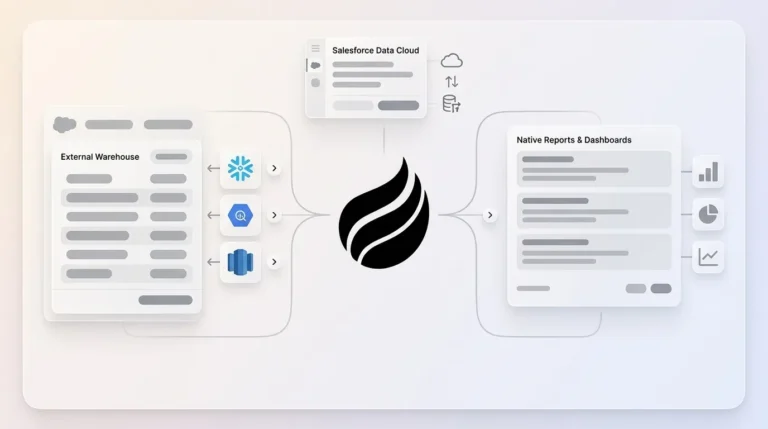
Coffee integrates with both Salesforce and HubSpot. Coffee operates in two modes: as a standalone AI-first CRM for small teams and as a Companion App that layers the Coffee Agent on top of an existing Salesforce or HubSpot instance. A simple authentication allows the Agent to sync data, enrich records, and write SPICED-structured notes back to the primary CRM. Broader integrations beyond Salesforce and HubSpot are available via Zapier, with deeper native integrations on the product roadmap.
Is the data captured by Coffee’s AI Agent secure?
Coffee is SOC 2 Type II and GDPR compliant. Call transcripts and CRM data are not used to train public AI models. For teams in regulated industries that require multi-year security reviews, Coffee recommends evaluating whether its current compliance posture meets those specific requirements before onboarding.
How long does it take to implement SPICED with Coffee?
Teams using Coffee’s standalone CRM can have the Agent capturing and structuring SPICED data immediately after connecting Google Workspace or Microsoft 365, typically within a single session. For Salesforce or HubSpot Companion App deployments, the integration requires authentication and field mapping, which most RevOps teams complete in under a day. No custom development is required for standard SPICED field configurations.
How long does it take for a new AE to learn SPICED?
Most new account executives can internalize the five-step sequence and the associated question patterns within one to two weeks of active use. The framework’s diagnostic logic, where each step earns the right to the next, becomes intuitive once reps see that SPICED is a conversation structure, not a checklist. Teams that standardize on a single SPICED-aligned discovery template report shorter sales training time because there is no ambiguity about what “good discovery” looks like.
Can SPICED be used alongside MEDDIC or BANT?
SPICED works alongside MEDDIC and BANT. A common pattern is to run SPICED for early discovery conversations to surface Situation, Pain, and Impact, then layer MEDDIC elements, particularly champion development and metrics validation, for mid-to-late-stage deal inspection in complex enterprise cycles. BANT can serve as a lightweight initial screen for simple, fast deals before you deepen discovery with SPICED for qualified opportunities.
Conclusion: Turn Every Discovery Call into Reliable Pipeline
Inconsistent discovery creates a data quality problem before it shows up as a revenue problem. When reps run calls without a repeatable structure, the CRM fills with incomplete records, forecasts become guesswork, and pipeline reviews feel like interrogations. Teams that run SPICED with real-time call capture see forecast accuracy improve to ±12%, win rates rise 19%, and average deal size grow 17% compared to unqualified pipelines.
SPICED gives every rep, from a first-week AE to a founding CEO running their own sales motion, a diagnostic sequence that produces consistent discovery data regardless of experience level. Impact, Critical Event, and Decision details stay clear and repeatable across the team.
Coffee’s AI Agent makes SPICED operationally effortless. It joins every call, extracts each element from the buyer’s own words, populates the CRM automatically, enforces stage gates, and feeds accurate qualification data into forecasting without a single manual entry from a rep. Good data in leads to good data out, on every deal.
Get started with Coffee and turn every discovery call into a reliable, structured pipeline record from day one.