Written by: Doug Camplejohn, CEO & Co-Founder, Coffee | Last updated: August 10, 2026
Key Takeaways for 2026 LinkedIn Prospecting
- 2026 LinkedIn cold outreach reply rates sit at 3–8%, and generic connection requests are accepted less than 20% of the time, so manual prospecting wastes hours.
- Signal stacking, which combines funding rounds, new VP hires, hiring spikes, tech-stack changes, and pricing-page visits, can lift reply rates to 25–40% when three or more signals fire together.
- Pre-connection micro-engagement through substantive comments, reactions, and mutual connections nearly doubles acceptance rates, while staying within LinkedIn’s safe daily limits of 15–20 connection requests protects account health.
- A 60-minute daily routine that reviews signals, approves micro-engagements, sends compliant requests, and lets an agent handle enrichment and logging replaces 3–4 hours of manual work.
- Coffee’s Lead Finder, Visitor Identification, and Campaigns connect anonymous visitors to qualified conversations; get started with Coffee to replace manual drudgery with an agent-powered workflow.
Defining a Precise ICP with Live Buying Signals
A modern 2026 ICP combines a persona floor and a live signal stack so reps focus on buyers who are both qualified and ready. The persona floor covers industry, headcount band, geography, and funding stage, which sets basic eligibility. The signal stack layers hiring, funding, technographic, and intent signals, which determines timing for outreach. Static firmographic lists alone miss this timing, so the signal stack separates a prospect who merely fits from one who is actively evaluating solutions.
The highest-value signals to include in that stack are concrete and time-bound.
- Series A–C funding rounds closed in the last 60 days, which usually indicate new budget and headcount mandates.
- New VP of Sales, CRO, or RevOps hires, where fast outreach after the change often improves outcomes.
- Hiring spikes for relevant roles, such as five SDR postings in 30 days at a 50-person SaaS company, with a 30–45 day decay window.
- Tech stack changes, such as a competitor tool being dropped or installed, detectable via BuiltWith, Datanyze, or Clearbit.
- Pricing and comparison page visits, which act as the highest-reliability first-party signal.
Signal stacking raises single-signal accuracy, which sits below 20%, and reply rates, which sit in the single digits to low teens, to 25–40% reply rates for accounts with three or more stacked signals. Coffee’s Lead Finder ingests these signals through natural-language search. Type “Find me VPs of Sales at SaaS companies with 50–200 employees that raised a Series A in the last 60 days” and the agent builds the list, previews its interpretation, and surfaces matching records ready for enrichment and outreach, with no CSV exports required. Once those prospects are identified, the next step is preparing the profile they will visit.

Turning Your LinkedIn Profile into a Conversion Landing Page
Prospects almost always check the sender’s profile before they reply, so that profile needs to speak directly to ICP pain. A profile tuned for buyer problems converts casual visits into warm signals. The headline should clearly name the problem solved and the buyer served, rather than listing a job title. The About section should open with a one-sentence outcome statement written for the ICP, not a career biography. The Featured section should highlight one or two assets, such as a case study, benchmark report, or short video, that a prospect can consume in under two minutes.
Every profile visit represents a buying signal that can feed the workflow. Coffee’s Visitor Identification pixel turns anonymous website traffic into named, qualified prospects. Drop a single script into the site’s <head> tag and the agent infers name, title, email, and LinkedIn profile, along with pages visited, time on site, and visit frequency. Pricing-page or competitor-page visits represent a very high-strength first-party buying signal with a 24–72 hour decay window. Coffee surfaces those visitors in real-time Slack notifications so outreach happens while the signal remains fresh.
Standalone visitor identification tools usually show only the company or a broad people list, which forces manual research. Coffee’s Suggested Leads feature instead recommends the two or three specific individuals inside that visiting company who match the buyer persona, with LinkedIn profiles ready for immediate outreach.
Using Sales Navigator and Boolean Filters for Tight Targeting
LinkedIn Sales Navigator offers more than 65 filters, job change alerts, and real-time company signals for building targeted account and contact lists, so it has become the standard tool for signal-based prospecting at scale. Effective 2026 targeting relies on account-level filters for recent funding, department-specific headcount growth of 20% or more, and technology stack matches. These filters support focused lists of 100–200 prospects instead of broad lists of thousands.

Sales Navigator’s Spotlights feature surfaces prospects who changed jobs in the last 90 days, posted on LinkedIn in the last 30 days, or already follow the company page. Each of these conditions gives a specific, personal reason to reach out. Boolean strings narrow the list further. For example, (“Head of Sales” OR “VP Sales” OR “Director of Revenue”) AND (“HubSpot” OR “Salesforce”) AND (“SaaS”) isolates the decision-maker profile without wading through irrelevant results.
Coffee enriches and scores these lists automatically. The platform augments records with job titles, funding data, and LinkedIn profiles through licensed data partners, which removes the need for a separate ZoomInfo or Apollo subscription.
Pre-Connection Micro-Engagement That Warms Up Prospects
Prospects who see and engage with content before receiving outreach tend to respond at higher rates than cold contacts. A structured pre-connection cadence over three to five days, built around substantive comments on target posts, reactions to company updates, and engagement through mutual connections, builds name recognition before the connection request arrives.
Prospects who engage with the sender’s content before the request accept at roughly 1.5–2 times the rate of cold contacts, with 41–45% acceptance versus 26–28.5%, based on analyses from Extrovert and Expandi of tens of thousands of requests. Industry estimates suggest comments carry roughly 15 times more algorithmic weight than likes in LinkedIn’s feed-ranking algorithm, so substantive, perspective-adding comments, not generic “great post” reactions, drive reach and recognition.
Coffee’s Visitor Identification layer surfaces prospects already engaging with the sender’s own content. That capability creates a second stream of warm targets who have self-selected into the funnel before any outreach begins.
Connection Requests and DMs That Lead with the Problem
Connection requests must stay under 300 characters, reference a specific post, sector challenge, or mutual connection, and avoid any pitch to maximize acceptance rates. The templates below reflect the problem-first, context-anchored approach that 2026 benchmarks reward.
- Post-reference connection note (under 300 characters): “Saw your post on onboarding drop-off last week. The point about activation timing was sharp. I work with a few SaaS teams on similar problems, so it would be good to have you in my network.”
- Funding trigger note: “Congrats on the Series A. Scaling outbound after a raise is a specific kind of problem, and I have seen a few patterns worth sharing. Happy to connect.”
- Job-change note: “Noticed you just moved into the VP Sales role at [Company]. The first 90 days in that seat usually surface a few recurring challenges, and I work on exactly those. Worth connecting.”
- 48–72 hour follow-up DM after acceptance: “Thanks for connecting. I noticed you have been posting about [topic] recently. The point about [specific thing] stood out. Happy to share what I have seen work in similar situations if that is useful, with no agenda.”
- Value-first DM (Day 4–5): Share one relevant stat or framework tied to a problem the prospect has publicly referenced. Keep the message short and avoid any ask or pitch.
- Soft ask (Day 7–10, only if the prospect has replied or reacted): “I have been thinking about the challenge you are dealing with in [function]. Worth 15 minutes to share how similar teams have approached this?”
Short, specific messages usually achieve higher reply rates in LinkedIn prospecting than long, generic outreach.
The 60-Minute Daily Prospecting Routine with Coffee
A simple daily workflow turns these strategies into a repeatable habit that fits into a one-hour block. The seven-step routine below runs in under 60 minutes when an agent handles enrichment and logging.
- Review signal queue (10 min): Check Coffee’s dashboard for new Visitor Identification alerts, job-change signals, and funding events that fired since the previous session.
- Approve micro-engagements (5 min): Review and approve agent-suggested comments on target prospect posts before the connection request goes out.
- Send 15–20 connection requests (10 min): Use pre-approved, signal-referenced templates. Safe daily limits for AI-assisted LinkedIn prospecting are 15–20 connection requests per day, distributed across working hours with randomized intervals.
- Review and reply to accepted connections (10 min): Send the 48–72 hour follow-up DM to prospects who accepted in the prior window.
- Enrich new contacts via agent (5 min): Coffee auto-creates and enriches contact records from accepted connections, so reps avoid manual data entry. This enrichment supplies the data needed for the next step.
- Enroll qualified prospects in Campaigns (5 min): With enriched contact data in place, move reply-ready prospects into a Coffee Campaign for multichannel follow-up. Stop-on-reply is on by default, so sequences pause when prospects engage.
- Log outcomes and update pipeline (5 min): As conversations progress, Coffee’s agent logs activity automatically. The rep reviews pipeline changes surfaced by the Pipeline Compare feature to see which signals convert.
Manual LinkedIn outreach at real volume requires 3–4 hours per day per SDR, while automation reduces daily prospecting workload to under 30 minutes. The 60-minute routine above recaptures that time for selling and follow-up.
Reply-Aware Multichannel Follow-Up Sequences
Coordinated LinkedIn and email multichannel sequences produce 15–25% reply rates in 2026, which is typically 2–4 times the reply rate of single-channel email outreach. A seven-day sequence that combines both channels, with stop-on-reply logic enforced throughout, works as follows.
- Day 1: LinkedIn connection request with a signal-referenced note.
- Day 3: Value-first LinkedIn DM after acceptance that shares an insight or relevant stat with no ask.
- Day 5: Email touch that references the LinkedIn context and adds one new data point.
- Day 7: LinkedIn soft ask if the prospect has replied or reacted, or a second email with a graceful exit option if they have not.
Coffee Campaigns generates subject lines, body copy, and delays for every step from a plain-English description. The platform sends from the rep’s own connected mailbox with their real signature and pauses the sequence the moment a prospect responds. Built-in send throttling protects sender reputation against spam flags, which matters as Google and Yahoo apply bulk sender rules that require a spam complaint rate under 0.3% for anyone sending more than 5,000 messages a day.
Get started with Coffee to run reply-aware, multichannel sequences from a single agent.
Connecting Visitor Identification to Outreach with an Agent
A single Coffee workflow connects every stage of prospecting so reps avoid manual handoffs and context switching. The Visitor Identification pixel fires on a pricing-page visit, and the agent surfaces the named individual and their LinkedIn profile as a Suggested Lead. The rep adds them to a Lead Finder list with one click, fully enriched. Coffee Campaigns then enrolls the prospect in a signal-referenced sequence. A reply pauses the sequence, and the agent logs the conversation to the CRM record automatically.
The table below compares the manual approach against agent-assisted prospecting with Coffee across four operational metrics.
| Metric | Manual Approach | Agent-Assisted with Coffee | Source |
|---|---|---|---|
| Daily time per 50 prospects | 3–4 hours | The sub-30-minute workflow described above | BearConnect, 2026 |
| Connection acceptance rate | Below 20% (generic) | The 41–45% rate shown earlier for personalized outreach | Leadriver, 2026 |
| First-message reply rate | 3–8% (generic) | Higher for signal-based personalized | LinkedNav, 2026 |
| Data-entry hours per week | 8–12 hours (manual copy/paste) | Significantly reduced, because the agent auto-creates and enriches all records | BearConnect, 2026 |
Common LinkedIn Prospecting Pitfalls to Avoid
The most common failure modes in 2026 LinkedIn prospecting are clear, and teams can avoid them with simple guardrails.
- Generic connection notes: Generic connection requests with no context achieve acceptance rates below 20%, typically 15–29%. Every note should reference a specific post, event, or signal.
- Immediate post-connection pitching: Immediate pitching after a connection usually produces low reply rates. The first DM should deliver value, and the ask should wait until after a reply or reaction.
- Exceeding daily limits: Showing low acceptance rates below 20% risks account restrictions. Coffee’s agent enforces the safe daily limits described earlier, which keeps activity within LinkedIn’s comfort zone.
- Ignoring signal decay: Funding rounds remain actionable for 1–4 weeks, while leadership hires are often actionable for 30–90 days, so decay timelines differ by trigger type rather than expiring uniformly after seven days. Coffee’s signal queue surfaces time-sensitive triggers before the window closes.
- Single-channel sequences: Manual multichannel sequencing breaks at scale because teams lack a single view of each prospect across channels. Coffee Campaigns coordinates LinkedIn and email in one reply-aware workflow.
- AI-generated mass DMs: AI-generated mass DMs that buyers detect and ignore are a saturated 2026 pattern that fails. Coffee’s personalization uses real signal context, not empty merge tags, so outreach reads as human.
Frequently Asked Questions
How does Coffee integrate with existing Salesforce or HubSpot instances?
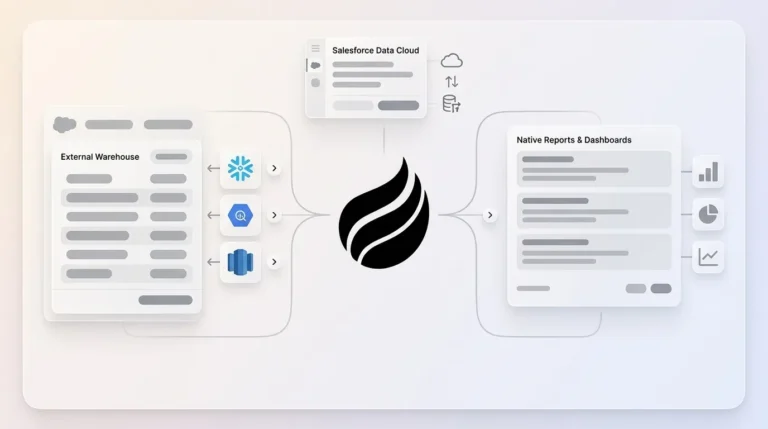
Coffee operates as a Companion App that deploys the Coffee Agent as an intelligent layer on top of an existing Salesforce or HubSpot installation. A simple authentication lets the agent sync data, enrich it, and write valuable insights, including contact records, activity logs, meeting summaries, and pipeline changes, back to the primary CRM automatically. The agent handles the “data in” process so the system of record stays accurate without requiring reps to perform manual entry. Coffee has deep knowledge of Salesforce and HubSpot’s quota structures, forecasting logic, and required fields, which distinguishes it from newer CRM alternatives that lack this integration depth.
Is my LinkedIn account safe when using an agent for prospecting?
Account safety depends on how the agent behaves, and Coffee is designed to mimic a disciplined human rep. The platform enforces the safe daily connection request limits described earlier, distributes actions across working hours with randomized intervals to avoid pattern detection, and uses stop-on-reply logic so no automated message fires after a real conversation begins. These behaviors align with the patterns LinkedIn’s trust-scoring system rewards. Coffee also avoids browser injection and non-compliant session spoofing methods that triggered the wave of account bans seen in Q1 2026.
What 2026 buying signals deliver the highest reply-to-meeting conversion?
The highest-converting signals in 2026 are first-party intent signals, such as pricing-page visits, repeat site sessions, and demo views, because they show direct, time-sensitive intent from a prospect already evaluating solutions. Among third-party signals, new executive hires at the VP or CXO level and Series A–C funding rounds closed in the last 60 days consistently produce strong reply-to-meeting conversion, especially when two or more signals are stacked on the same account. As noted earlier, stacking three or more signals on the same account can lift reply rates to 25–40%, compared to single-digit rates for single-signal outreach. Speed remains the critical variable, because acting within 24–48 hours of a signal firing often separates a 3% reply rate from an 18% reply rate.
How quickly can a small sales team see pipeline impact from agent-assisted prospecting?
Small teams that adopt a structured signal-based workflow usually see pipeline movement within the first two to four weeks. The first week focuses on setup, including pixel installation, ICP configuration in Lead Finder, and Campaign generation. Week two produces the first wave of accepted connections from signal-referenced outreach. By week three, reply-to-meeting conversions from the follow-up sequence begin to appear in the pipeline. The compounding effect of pre-connection micro-engagement means that by week four, warm inbound signals from profile visitors and content engagers supplement the outbound list, which reduces the cost per qualified conversation over time.
Conclusion: Coordinated Agents Turn Visitors into Conversations
The gap between teams that consistently book meetings and teams that burn through lists comes from coordination, not messaging volume. Coordinated workflows keep signals, outreach, and logging in sync. Manual prospecting cannot coordinate signal detection, ICP filtering, pre-connection engagement, reply-aware sequencing, and CRM logging at the speed 2026 buying windows demand. An agent can handle that orchestration.
Coffee’s Lead Finder, Visitor Identification, and Campaigns form a single system that closes the loop from anonymous website visitor to qualified conversation, without turning reps into data-entry clerks. The agent handles the busywork. The rep handles the relationship.
Get started with Coffee and put an agent to work on your LinkedIn prospecting today.