Written by: Doug Camplejohn, CEO & Co-Founder, Coffee | Last updated: August 12, 2026
Key Takeaways for Sales and RevOps Teams
- Manual CRM data entry consumes roughly 25% of each rep’s workweek, about 10–11 hours, which creates incomplete records and shaky forecasts.
- Agent-led CRM automation ingests emails, calls, and calendar events to create, enrich, and log records without human input.
- Full automation delivers clear outcomes: automatic contact creation, enrichment without extra subscriptions, AI summaries written to CRM fields, and week-over-week pipeline comparison without exports.
- Platforms that truly remove manual entry provide native Salesforce or HubSpot Companion Apps, SOC 2 Type 2 and GDPR compliance, and a built-in data warehouse.
- Teams ready to reclaim those hours and trust their pipeline can get started with Coffee today.
The Problem: Manual Data Entry Destroys Data Quality and Forecast Accuracy
Sales reps spend roughly 25% of their workweek, approximately 10–11 hours, on manual CRM data entry, which makes it the single largest category of non-selling work. After every call, reps typically spend 10–15 minutes manually updating contact records, logging activities, noting next steps, and filling custom fields. A rep with 20 meetings per week accumulates 3–5 hours of post-meeting administration.
The downstream damage reaches far beyond wasted hours. Validity’s 2025 State of CRM Data Management report found that 37% of CRM users lost revenue directly due to poor data quality, with companies losing sales opportunities from unreliable records. Forecasts built on manually entered data often have reduced accuracy, and fewer than 20% of sales leaders consistently achieve 75% or better forecast accuracy. The root cause is structural, because every insight the CRM produces is only as accurate as the last manual update a rep remembered to make.
Legacy Tools and Why They Cannot Keep CRM Data Complete
Salesforce research indicates that as much as 91% of CRM data is incomplete, while B2B contact data decays at approximately 22.5% per year. These numbers demand continuous automated input, not occasional cleanup projects. Point solutions like Gong and Chorus partially address this problem. Most conversation intelligence tools record and summarize calls but never write structured values into CRM fields, so the input-layer problem remains unsolved. Spreadsheets and Notion documents then fill the gap as shadow CRMs, which fragments the record of truth across tools that no forecast model can reliably read.
Agent-Led CRM Automation as the New Architecture
Agent-led CRM automation removes the human translation step entirely. An AI agent connects to the communication layer, such as Google Workspace or Microsoft 365, and ingests both structured signals like calendar invites and contact metadata and unstructured signals like email body text and call transcripts. It resolves identity across records, enriches contacts with firmographic data, logs every activity, and writes structured output back to the system of record in real time.
By the end of 2026, 40% of enterprise applications will include task-specific AI agents, up from less than 5% in 2025, according to Gartner. This category is defined by an agent architecture where data quality is guaranteed at the point of ingestion rather than corrected after the fact, not by passive AI features bolted onto legacy databases. AI-powered sales forecasting produces an average accuracy rate of 79% versus 51% for traditional methods. That gap closes only when the underlying data is captured automatically and completely.

What Full CRM Automation Delivers in Daily Workflows
When an agent handles data entry end to end, the operational results show up across every layer of the revenue team.

- Contacts and companies created automatically. The agent scans emails and calendars to populate records without rep intervention. Every interaction attaches to the correct account from the moment it occurs.
- Enrichment without a separate database subscription. Job titles, funding rounds, and LinkedIn profiles are appended through licensed data partners. Many teams can remove Apollo or ZoomInfo as standalone line items.
- AI meeting summaries written to CRM fields. After each call, the agent generates structured summaries aligned to BANT, MEDDIC, or SPICED and drafts follow-up emails for rep review. This workflow removes the usual 10–15 minutes of post-call administration per meeting.
- Week-over-week pipeline comparison without exports. The agent captures history in a built-in data warehouse, so pipeline reviews surface progressed deals, stalled opportunities, and new additions automatically.
Automated data entry can reduce CRM data entry time by up to 55%, and AI and automation tools are estimated to save sales professionals 2 hours and 15 minutes daily by removing routine administrative tasks.

How Coffee’s Agent Runs the Workflow End to End
Coffee’s agent activates through a single authentication to Google Workspace or Microsoft 365. From that connection point, the workflow runs without manual configuration at the rep level.

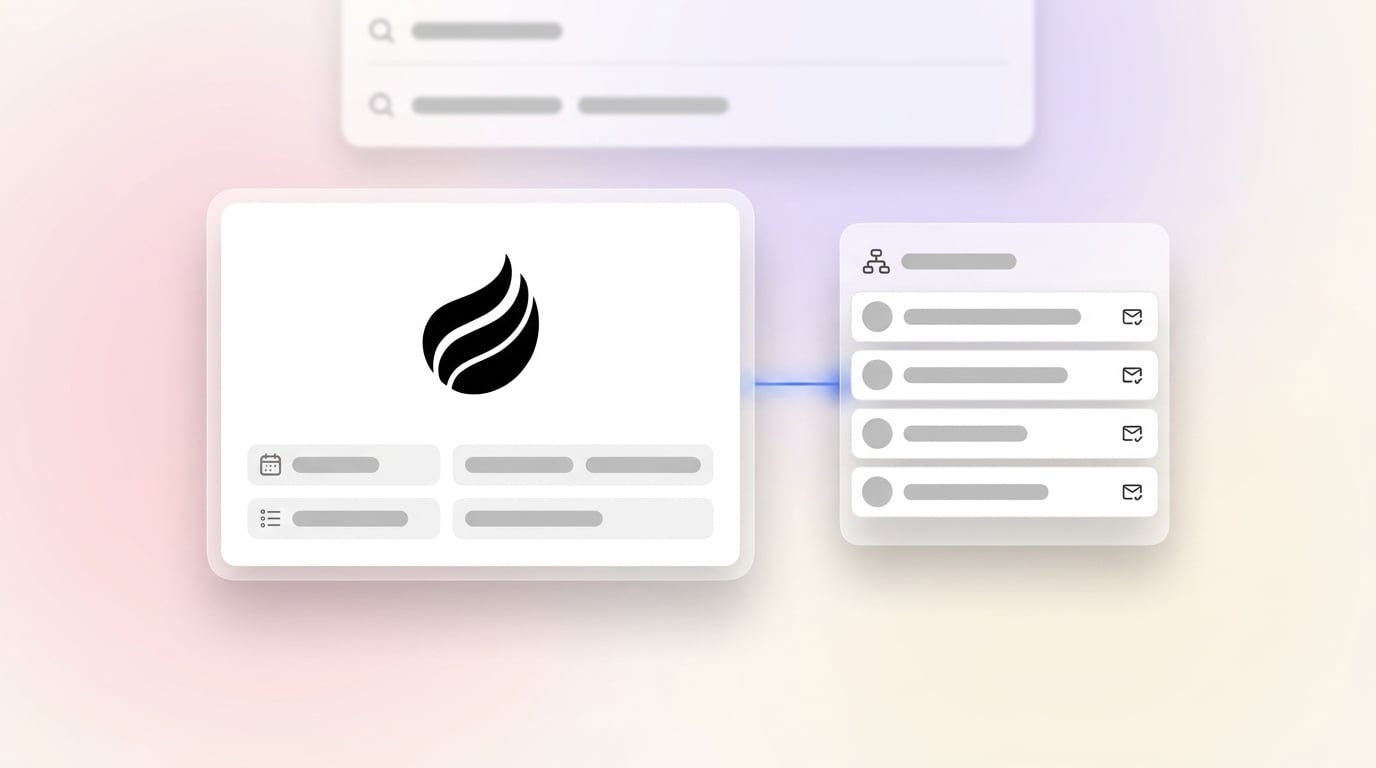
- Auto-capture: The agent scans the inbox and calendar, creates contact and company records, and resolves identity across any existing duplicates.
- Enrichment: Records receive firmographic and professional data from licensed partners in real time.
- Activity logging: Last activity and next activity fields update automatically as emails are sent and meetings are scheduled.
- Meeting bot transcription: The agent joins Zoom, Teams, or Meet calls, records and transcribes the conversation, and generates a structured summary with next steps.
- Pipeline triggers: Deal stages advance based on verified events such as email replies, meetings logged, and contracts signed rather than rep self-reporting.
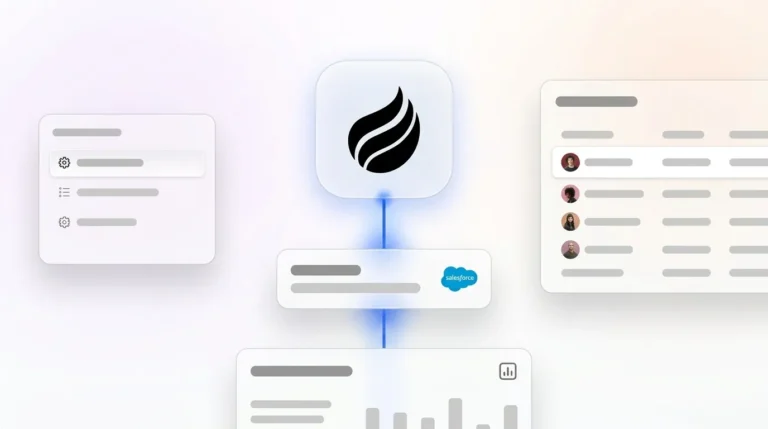
- CRM write-back: For teams on Salesforce or HubSpot, the Companion App writes all enriched, structured data back to the primary system of record and preserves existing workflows, quotas, and required fields.
Get started with Coffee to connect your workspace and activate the full agent workflow today.
2026 Market Landscape and Where Coffee Fits
The lead management software market in 2026 divides into three tiers: legacy CRMs that require human data entry, newer AI-adjacent tools with partial automation, and agent-led platforms that handle the full data lifecycle. CRMs show the pipeline your team reports but do not prove the pipeline is real, because structured fields cannot automatically capture context from interactions. The automation capabilities vary significantly across platforms. Legacy CRMs like Salesforce and HubSpot require manual entry, which leaves 91% of CRM data incomplete without dedicated input effort. Day.ai automates unstructured productivity data but offers limited structured-field write-back. Clarify provides AI-assisted entry but lacks depth for established team workflows. Coffee delivers full agent automation that captures, enriches, logs, and writes structured records without rep input.
The table below compares the four most relevant options across criteria that determine whether a platform can eliminate manual entry entirely.
| Criterion | Legacy CRMs (Salesforce / HubSpot) | Day.ai | Clarify | Coffee |
|---|---|---|---|---|
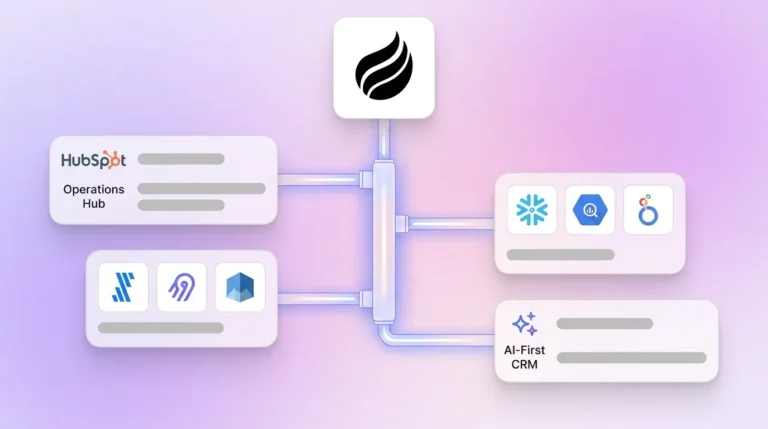
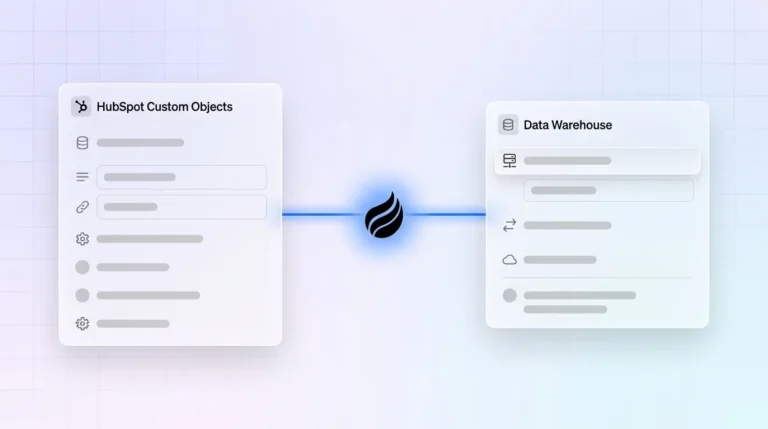
| Data warehouse / history tracking | Relational database only; historical context lost when fields are overwritten | No built-in data warehouse | No built-in data warehouse | Built-in data warehouse preserves full history for week-over-week pipeline compare |
| Unstructured-data handling | Rigid schemas drop behavioral signals from emails, transcripts, and chats | Ingests unstructured data but does not write structured values to CRM fields | Partial; no documented transcript-to-field pipeline | Ingests emails, transcripts, and calendar data; writes structured output to CRM fields automatically |
| Salesforce / HubSpot Companion App | Native system; no agent layer to automate data entry | No Companion App; limited Salesforce/HubSpot integration depth | Integration capabilities insufficient for established teams with quotas and required fields | Dedicated Companion App writes enriched, structured data back to existing Salesforce or HubSpot instance, preserving all custom fields and workflows |
Buyer Checklist for Evaluating Lead Management Platforms
Heads of Sales and RevOps leaders evaluating lead management software can use the following checklist before committing to a platform.
- Integration architecture: Coffee currently connects to third-party tools through Zapier, with deeper native integrations on the product roadmap. This matters because CRM integration quality consistently ranks as a key factor in sales intelligence platform purchase decisions, so buyers should confirm that current Zapier-based connections meet their workflow needs while deeper integrations are developed.
- Security certifications: Confirm SOC 2 Type 2 and GDPR compliance, and verify that customer data is not used to train public AI models. Coffee meets both requirements.
- Data quality parity: The agent’s enrichment data is roughly on par with paid databases for most use cases, which removes the need for a separate ZoomInfo or Apollo subscription for the majority of teams.
- Salesforce or HubSpot compatibility: Teams already committed to either platform should confirm that the vendor offers a true Companion App that respects existing required fields, validation rules, and forecast categories, not a shallow sync that overwrites or ignores them.
- Team-size fit: Coffee is designed for small to mid-sized sales teams. Large enterprises with complex custom workflows or heavily regulated industries that require multi-year security reviews fall outside the intended use case.
Frequently Asked Questions
What is agent-led CRM automation, and how does it differ from a standard CRM?
A standard CRM functions as a passive database that stores whatever a human types into it and returns that data on demand. Agent-led CRM automation replaces the human input step with an AI agent that connects to your communication layer, reads emails, calendar events, and call transcripts, resolves identity across records, enriches contacts with firmographic data, and writes structured output to the correct fields automatically. This distinction matters because passive CRMs produce data quality that is only as good as rep compliance, while an agent-led system guarantees completeness at the point of capture.
How long does it take to implement Coffee, and what does setup require?
Implementation starts with a single authentication to Google Workspace or Microsoft 365. Once connected, the Coffee Agent immediately begins scanning emails and calendars to create contacts, companies, and activity records. For teams using the Companion App on Salesforce or HubSpot, a simple authentication allows the agent to sync data and write enriched records back to the existing instance. There is no lengthy configuration process at the rep level, and no Salesforce developer or custom API build is required to get started.
Can Coffee work alongside an existing Salesforce or HubSpot instance?
Coffee works alongside existing Salesforce or HubSpot instances through a dedicated Companion App model. The agent operates as an intelligent layer on top of the existing system, handling data capture, enrichment, and activity logging, then writing structured records back to the primary CRM. It respects existing required fields, validation rules, quota structures, and forecast categories, so teams keep the workflows they already depend on while removing the manual entry burden.
What security certifications does Coffee hold, and how is customer data handled?
Coffee is SOC 2 Type 2 and GDPR compliant, and customer data is not used to train public AI models. For teams in regulated industries or those with formal vendor security review processes, Coffee’s compliance posture covers the standard requirements for U.S.-based small to mid-market companies. Organizations in heavily regulated sectors such as healthcare or finance that require multi-year security reviews fall outside Coffee’s current target profile.
What time savings can a sales team realistically expect after deploying Coffee?
Coffee’s agent is designed to reclaim the 10–11 hours per week that reps currently spend on manual CRM data entry, post-meeting administration, and pipeline updates. The agent handles contact creation, enrichment, activity logging, meeting transcription, summary generation, and follow-up drafting automatically. For pipeline reviews, the built-in Compare feature removes the manual CSV export and spreadsheet reconciliation that typically precede forecast calls, and returns that time to strategic selling and customer engagement.
Conclusion: Shift Reps from Data Entry to Strategic Selling
Manual CRM data entry reflects an architecture problem, not a discipline problem. Legacy systems were built to store data that humans provide, not to capture data autonomously. The result is a predictable cycle of incomplete records, unreliable forecasts, and reps who spend more time serving the CRM than closing deals. Agent-led automation breaks that cycle by guaranteeing data quality at the point of ingestion, whether the team runs a standalone CRM or an existing Salesforce or HubSpot instance.
Coffee is the only agent that ingests both structured and unstructured data, preserves full history in a built-in data warehouse, and writes accurate records back to the system of record without human intervention. The result is a pipeline your team can trust and a forecast leadership can act on.
Get started with Coffee and put an agent to work on your pipeline today.