Written by: Doug Camplejohn, CEO & Co-Founder, Coffee | Last updated: August 6, 2026
Key Takeaways for Salesforce Sales Teams
- Dirty CRM data quietly blocks Salesforce AI from generating accurate proposals, quotes, and contracts.
- Sales reps lose 5.5 hours per week to manual data entry, and B2B CRM records decay 22.5–30% annually, which undermines every AI document workflow.
- Native Salesforce Document Generation and Agentforce cannot repair incomplete records, so they amplify whatever flawed data already exists.
- The Coffee Companion App automatically captures emails, calls, and calendar events, enriches records with verified data, and writes clean information back to Salesforce before any document is generated.
- Ready to give your Salesforce AI the clean data it needs? Get started with Coffee today.
The Problem: Dirty CRM Data Sabotages Every AI Document Workflow
Sales teams spend a large share of their week on document work instead of selling. Sales representatives spend an average of 10.3 hours per week on manual quoting and proposal tasks, which represents 26% of a standard 40-hour work week. For complex B2B deals, the total manual quoting time per transaction can range from 8 to 20 hours.
Many teams turn to Salesforce AI tools to fix this workload. Those tools run on CRM data, and that data is almost always broken. B2B CRM records decay at a rate of 22.5% to 30% per year, with rates reaching 35–70% annually in high-turnover industries like SaaS. This decay directly undermines forecast accuracy, and 43% of sales forecasts miss their target by 10% or more because the opportunity data feeding those forecasts is stale or incomplete.
The consequences compound across the entire sales process. Poor CRM data quality causes sales representatives to spend an estimated 27% of their time on data-related tasks such as verifying information and hunting for accurate contact details instead of selling. When teams remain siloed, a problem cited by 32% of revenue leaders as the cause of AI failures, that verification work rarely makes it back into the CRM. The result is AI document automation that was supposed to save time but instead produces wrong pricing, missing clauses, and stale contact details at scale and with high confidence.
Start cleaning your Salesforce data with Coffee and give your AI the accurate records it needs to generate documents you can trust.
Salesforce Document AI Features and Where They Fall Short
Salesforce Document Generation is a native, on-platform capability available in Professional, Enterprise, Unlimited, and Developer Editions of Lightning Experience. It generates Word, PowerPoint, and PDF documents directly from Salesforce data without a managed package. It supports dynamic content tokens, batch processing, custom fonts, and PDF merging. Agentforce layers on top and can flag risks, suggest next steps, and return insights from Salesforce records to guide document content.
The data-quality gap appears the moment these tools touch real CRM records. AI tools do not repair broken CRM data; they process whatever records exist, so incomplete or inconsistent data leads to outputs that look confident but actually reflect the noise in the input. A proposal generated from a Salesforce opportunity with a stale close date, missing primary contact, and outdated pricing will be wrong, even if the document looks polished.
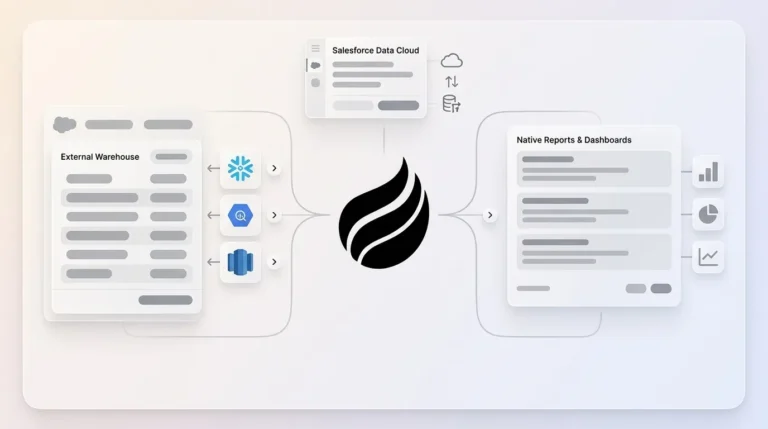
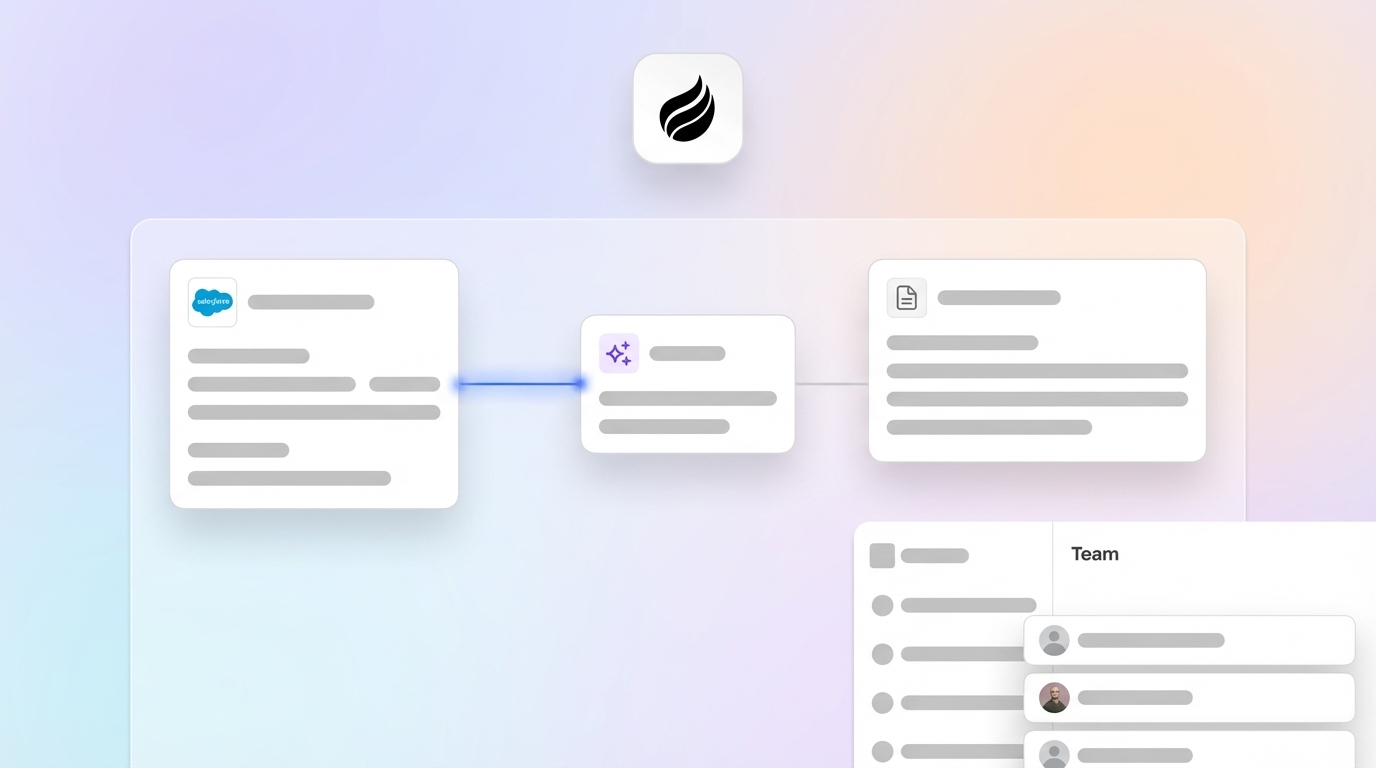
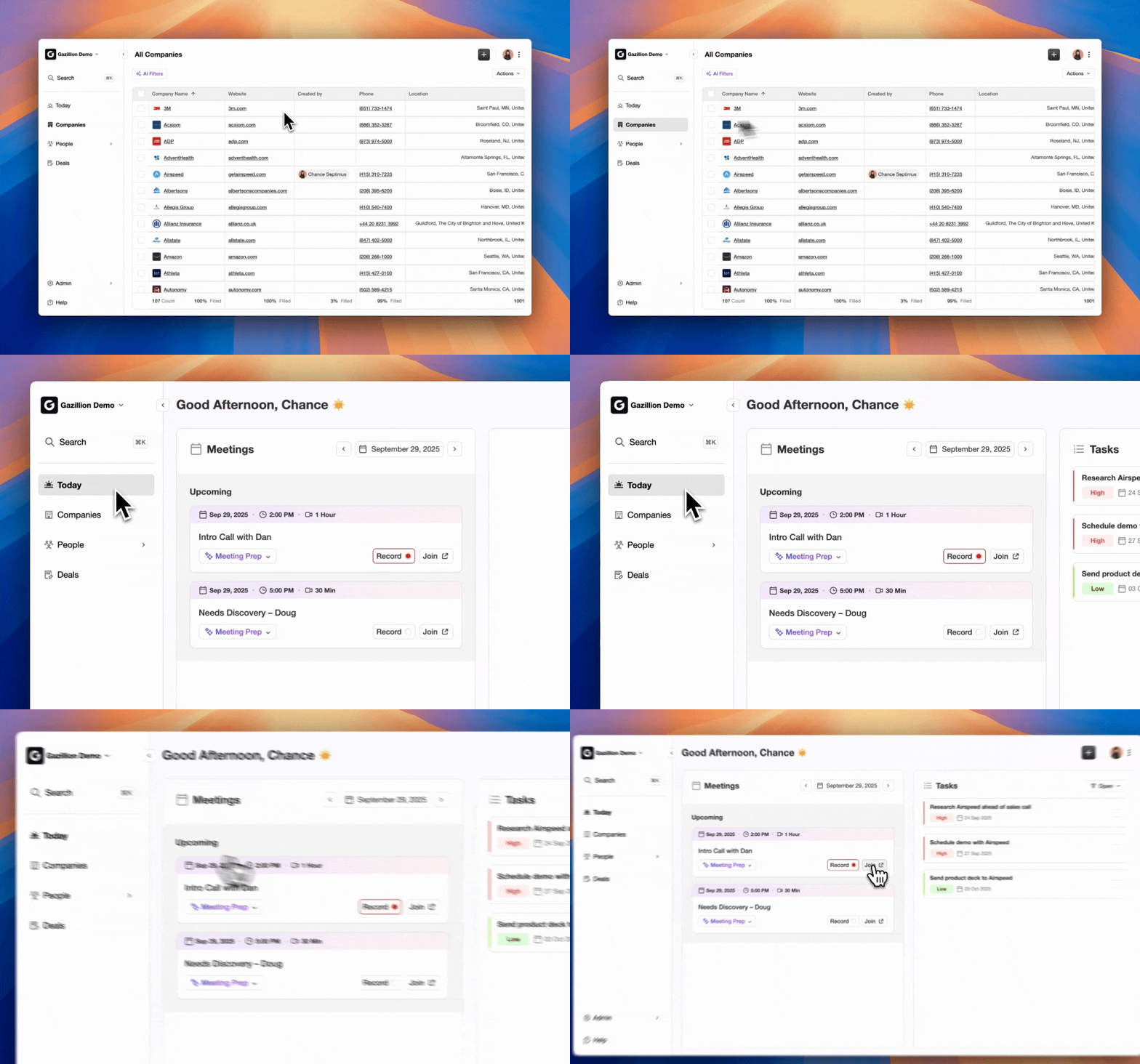
The Coffee Companion App addresses this problem at the source. Deployed as an agent layer on top of your existing Salesforce instance, Coffee automatically captures activity from emails, calendars, and call transcripts. It enriches records with verified data and writes clean, structured information back to Salesforce before Document Generation or Agentforce runs. The native tools then operate on records that are accurate, complete, and current.
Limits of Native Salesforce Document AI for Complex Deals
Agentforce does not natively generate complex, multi-section documents that dynamically adapt in real time to pricing models, timelines, and other variables. It functions best as an orchestration layer rather than a complete replacement for specialized document automation when document complexity is high. Unregulated AI-generated content for Salesforce document generation introduces risks such as incorrect pricing and missing clauses in legally binding documents, so teams still need structured rules, validation checks, and approval paths.
These functional limits become more severe when the data layer is weak. Organizations believe that approximately 30% of the data stored in their CRM is inaccurate. Low CRM hygiene can significantly reduce AI recommendation accuracy, and 46% of sales professionals say data-quality issues actively hurt their sales. Coffee’s autonomous capture fixes the root cause by ensuring every interaction is logged, every record is enriched, and every field Salesforce AI reads is populated with ground-truth data, without turning reps into data-entry clerks.

AI Document Automation Workflow for Salesforce Sales Teams
This six-step workflow shows where data gaps appear in AI-powered document automation in Salesforce and how the Coffee Companion App closes each gap.
- Capture interaction data in real time. Native capability: Salesforce activity logging through manual entry. Data gap: sales reps spend an average of 5.5 hours per week on manual CRM data entry, and any interaction that is not logged remains invisible to AI. Coffee resolution: the Coffee Agent joins calls, scans emails, and reads calendar events to log every interaction automatically, with no rep action required.
- Enrich and validate CRM records. Native capability: Salesforce Data Cloud and third-party enrichment integrations. Data gap: the 22.5–30% annual decay rate mentioned earlier means enrichment done at import goes stale within months. Coffee resolution: the Coffee Agent continuously augments records with job titles, funding data, and LinkedIn profiles via licensed data partners, which keeps fields current without manual refresh.
- Structure opportunity data for document templates. Native capability: Salesforce Document Generation reads from Salesforce objects through JSON-based data sources. Data gap: outdated open opportunities that remain in the pipeline long after deals go stale lead AI to recommend follow-ups on dead deals and overstate pipeline value. Coffee resolution: the Coffee Agent tracks pipeline changes week over week and flags stalled or closed opportunities so templates pull from live, accurate opportunity records.
- Generate the document using Agentforce or Document Generation. Native capability: Agentforce surfaces insights and flags risks, and Document Generation assembles the template. Data gap: native AI features are limited when handling dynamic content, advanced formatting, and complex conditional logic, and any gap in the underlying record flows directly into the output. Coffee resolution: because Coffee has already populated every required field with verified data, the generation step runs on a complete record, which reduces the probability of wrong pricing or missing stakeholder details.
- Route for approval and signature. Native capability: Salesforce approval processes and DocuSign integration. Data gap: the average contract takes 3.4 weeks to execute, with 71% of organizations still relying on manual processes, and approval chains stall when documents contain errors that require rework. Coffee resolution: accurate documents generated from clean data require fewer revision cycles and move through approval and signature faster.
- Log outcomes and update the record. Native capability: Salesforce record updates triggered by workflow rules. Data gap: missing activity in CRM means engagement signals are incomplete, so risk detection tools and AI models cannot see what was not logged. Coffee resolution: the Coffee Agent automatically logs post-signature activity, updates deal stage based on buyer behavior rather than elapsed time, and writes outcomes back to Salesforce so the next document cycle starts with accurate historical context.
Manual Data Entry vs Agent-Captured Data: What Changes
Manual data entry produces CRM records where teams believe almost one third of the data is inaccurate, and reps spend 5.5 hours per week on data entry alone. Automated capture with Coffee improves both dimensions, because every interaction is logged without extra effort and records stay current as deals evolve. Document error rates fall as automated document processing can reduce error rates from 4% to under 1%. Forecast accuracy also improves, and companies with CRM data completeness above 85% report forecast accuracy 22% higher than those below 60% completeness.

Move your Salesforce instance from manual data entry to autonomous capture and support cleaner data for every AI-generated document.
Salesforce AI Readiness Checklist for Mid-Market Teams
Use this checklist to evaluate whether your Salesforce environment is ready for AI document automation and whether you need a Companion App layer.
- Data completeness: Are key forecast fields populated above 60% across active opportunities, and is the duplicate account rate below 5%?
- Activity capture: Are at least 70% of active opportunities showing a logged activity within the last 30 days, captured automatically rather than manually?
- Stage logic: Are sales stages defined by buyer behavior instead of elapsed time, and does your AI read consistent, meaningful dropdown values?
- Ownership clarity: Does every active account have exactly one named owner, and are primary contacts with roles attached to active opportunities?
- Integration depth: Does the Companion App write enriched data back to Salesforce natively, or does it depend on CSV exports and manual imports?
- Security posture: Is the solution SOC 2 Type 2 and GDPR compliant, and is your data excluded from training public models?
- Companion App fit: Does the solution act as an agent layer on top of Salesforce, not a replacement, so your existing workflows, quotas, and forecasting configurations remain intact?
- Time-to-value: Can the agent begin capturing and enriching data within days of authentication, without a multi-month implementation project?
See how Coffee scores against every item on this checklist and connect your Salesforce instance in minutes.
Frequently Asked Questions
What is AI-powered document automation in Salesforce, and how does it work?
AI-powered document automation in Salesforce uses native tools such as Salesforce Document Generation, Einstein, and Agentforce to assemble proposals, quotes, and contracts from data stored in Salesforce records. Templates pull field values from objects like Opportunity, Account, and Contact, and AI layers like Agentforce can flag risks, suggest content, and route documents for approval. The system works reliably only when the underlying CRM records are complete, current, and accurate. When records are stale or incomplete, the AI generates documents that look polished but contain wrong pricing, outdated contacts, or missing terms.
Why does CRM data quality matter so much for Salesforce document automation?
Salesforce AI tools such as Agentforce and Einstein do not repair the data they read. They process whatever exists in the CRM and produce outputs that match the quality of that input. A CRM where deal stages advance based on time rather than buyer behavior, and where calls and emails go unlogged, will produce AI-generated documents with the same errors at scale and with high confidence. Poor data quality costs organizations an average of $12.9 million per year in downstream errors and lost productivity. Improving CRM hygiene above 70% is one of the highest-leverage actions a RevOps team can take before deploying any AI document workflow.
What does the Coffee Companion App do that Salesforce cannot do natively?
Salesforce’s native architecture relies on sales reps to enter data manually. When reps do not log calls, update deal stages, or enrich contact records, the CRM degrades. Coffee deploys an autonomous agent that connects to Google Workspace or Microsoft 365 and immediately begins capturing every email, calendar event, and call transcript, matching each interaction to the correct Salesforce record automatically. It enriches contacts with job titles, funding data, and LinkedIn profiles via licensed data partners, and it tracks pipeline changes week over week without spreadsheets. Salesforce native document generation and AI tools then operate on records that are complete and current, without additional manual effort from reps.

How long does it take to see results after deploying the Coffee Companion App on Salesforce?
Coffee connects to Salesforce through a simple authentication flow and begins capturing and enriching data immediately. Organizations using AI CRM automation can see notable improvements in CRM data accuracy and reductions in data entry time. For document automation, the improvement in output accuracy closely follows the improvement in record completeness. Teams that reach adequate CRM hygiene see better AI recommendation accuracy, and reps rely on the tool daily. Coffee’s seat-based pricing includes the agent’s labor without complex metering, so there are no usage-based surprises as data volume grows.
Is the Coffee Companion App secure enough for mid-market sales data?
Coffee is SOC 2 Type 2 and GDPR compliant, and customer data is not used to train public AI models. For mid-market teams in the 10–200-employee range that already use Salesforce, Coffee meets the security baseline required for handling opportunity data, contract terms, and contact information without adding compliance risk. Teams in heavily regulated industries such as healthcare or finance with multi-year security review requirements fall outside Coffee’s current ideal customer profile, but most U.S. mid-market B2B sales organizations will find Coffee’s security posture sufficient for their procurement requirements.