Written by: Doug Camplejohn, CEO & Co-Founder, Coffee | Last updated: July 30, 2026
Key Takeaways
- AI-native CRMs and companion agent layers both address the same core issue: legacy CRMs depend on manual data entry that creates dirty data and unreliable forecasts.
- Companion agents on Salesforce or HubSpot deliver faster time-to-value for teams with existing CRM investments, reaching production in 4–6 weeks instead of multi-month migrations.
- AI automation cuts CRM admin time from 10–12 hours per rep per week to roughly 2 hours, so reps can focus on selling instead of data entry.
- Forecast accuracy improves by 10–25 percentage points when autonomous agents capture every interaction and surface week-over-week pipeline changes automatically.
- Mid-market teams ready to deploy an agent in weeks rather than months can get started with Coffee today.
How We Compare AI-Native CRMs and Salesforce + Agent Layers
Six criteria determine which architecture fits a 15–80 person SaaS team:
- Data capture quality and automation depth
- Setup and onboarding timeline
- Total cost of ownership (TCO), including hidden costs
- Rep usability and frontline adoption
- Manager visibility, pipeline intelligence, and forecast accuracy
- Integration complexity and ongoing administrative burden
The table below maps those criteria across three common configurations: Salesforce alone, Salesforce with an agent layer such as Agentforce or Coffee’s Companion, and a standalone AI-native CRM such as Coffee Standalone.
Side-by-Side Architecture Comparison
| Criterion | Salesforce (no agent) | Salesforce + Agent Layer | AI-Native CRM (Coffee Standalone) |
|---|---|---|---|
| Data capture model | Manual entry, 71% of reps report spending too much time on data entry | Agent auto-logs calls, emails, calendar, human entry drops sharply | Agent is the system of record, structured and unstructured data ingested automatically |
| Setup timeline | Several weeks for standard Sales Cloud, longer with custom configurations | Varies by scope for Agentforce, focused companion agents can be faster | Days to weeks for small teams, no data migration required for greenfield |
| First-year TCO (20-person team) | Substantial annual costs for Salesforce with Agentforce for 20 users | Companion agent subscription plus existing Salesforce licenses, lower than full Agentforce bundle | Seat-based pricing, agent labor included, no separate enrichment or sequencing tools needed |
| Rep usability and adoption | Heavy manual updates, frequent spreadsheet workarounds | Reduced data-entry grind, reps still juggle Salesforce and agent UI | Single workspace for activity capture, outreach, and follow-up |
| Manager visibility and forecast accuracy | Dependent on rep data entry discipline, low adoption degrades output | AI integration improves forecast accuracy by 10 to 25 percentage points in documented deployments | Agent-captured history enables pipeline compare and week-over-week change tracking without manual exports |
| Admin and integration burden | Salesforce edition limits allow 500–800 custom fields per object (hard cap of 800), but typical well-structured CRMs actively use only 40–120 fields across contacts, accounts, and opportunities, admins manage field mappings, validation rules, and prompt tuning | Reduced rep burden, admin still manages Salesforce org and agent configuration | Agent handles data unification, minimal admin overhead for teams under 80 people |
The setup timeline row in the comparison above hides large differences in deployment speed. Teams with tight go-live dates need a clear view of how long each option actually takes.
Setup and Onboarding Timelines for Agents and Full Migrations
A scoped companion agent deployment, one job, one outcome metric, fewer than ten connected tools, can reach production in four to six weeks with one experienced engineer and sandbox CRM access. Multi-job agents typically require three to four months for the first pass, and poor scoping or data quality issues can push timelines to four to six months.
Full CRM migrations carry a different cost profile. Industry reports indicate that full migrations from Salesforce to an AI-native platform can take several months and consume significant internal labor and consulting fees. For teams with more than two years of legacy data, budget 4–8 weeks and $5,000–$15,000 for data quality remediation before deploying any AI agent.
The practical implication is clear. Companion agents on an existing Salesforce org provide the faster path to value for teams that cannot absorb a six-month migration. Greenfield teams or those actively replacing Salesforce can move to a standalone AI-native CRM without migration overhead.
Get started with Coffee, deploy the agent in weeks, not months.
Data Capture, Maintenance, and Quality Outcomes
Manual data entry drains time and weakens data quality. Sales reps often spend several hours each week on CRM updates, and industry research shows substantial annual time lost per rep on manual entry.
Autonomous agents close that gap in a measurable way. AI accuracy on automated CRM data entry has reached 99%+ in 2026, which exceeds the reliability of rushed manual entry. This accuracy advantage translates into operational gains, because documented deployments show significant improvements in CRM data completeness and deal cycle times.
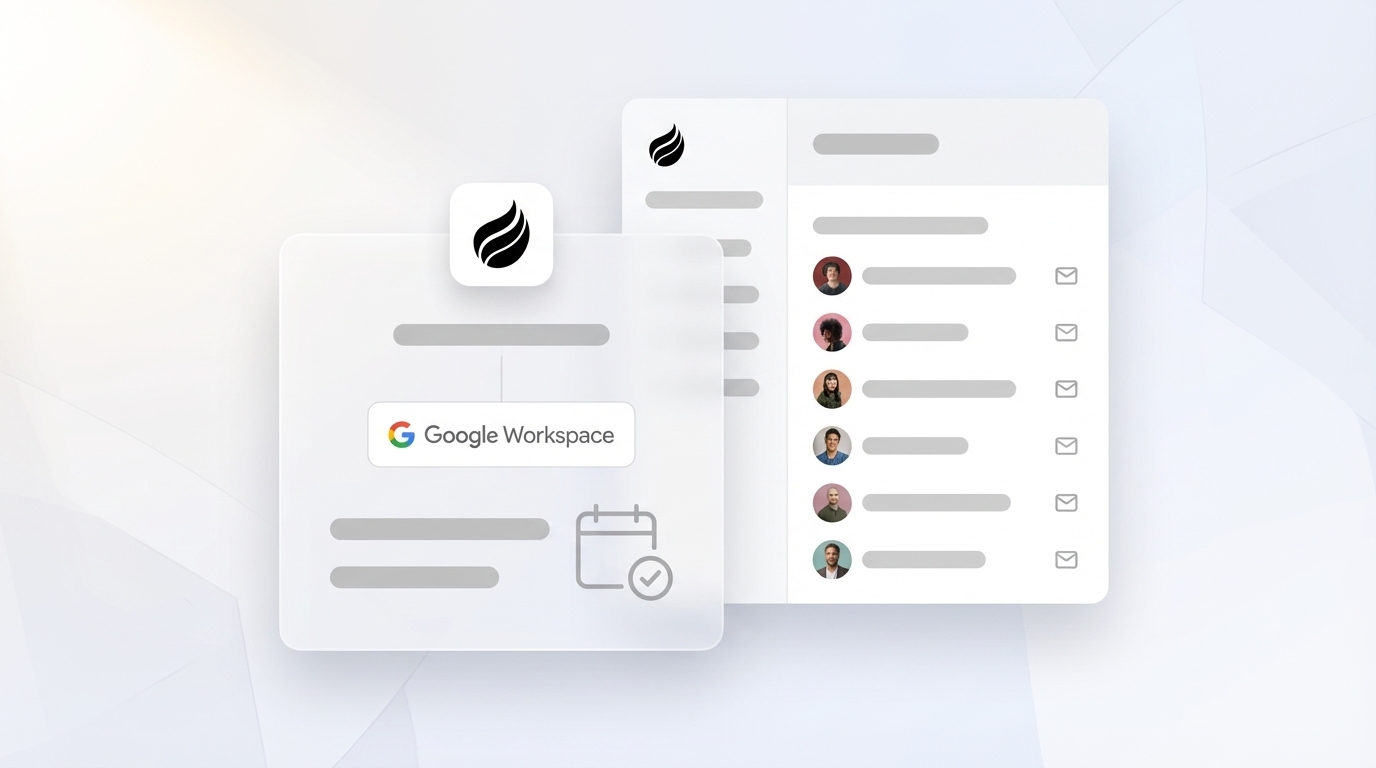
A well-scoped revenue agent saves 8–12 hours per SDR per week, with breakeven on annual platform spend between month three and month five. Coffee’s agent follows the same pattern. Teams connect Google Workspace or Microsoft 365, and the agent immediately begins auto-creating contacts, logging activity, and enriching records without a human touching a field.

Usability for Reps and Frontline Adoption
Reps adopt tools that reduce admin work and keep them in a single workflow. The data-entry grind remains the primary reason reps abandon CRMs and retreat to spreadsheets or Notion. Sales teams typically lose 28–29 hours per week to non-selling activities, with CRM updates and manual data entry accounting for 6–11 hours. This matches the 10–12 hour weekly reduction cited earlier, which frees reps to focus on revenue-generating activities instead of administrative overhead.
Integration overload compounds the problem. Reps toggle between a CRM, an enrichment tool, a sequencer, a call recorder, and a forecasting dashboard, and these tools rarely sync cleanly. Coffee’s agent consolidates those jobs. It records and transcribes calls, drafts follow-ups, enriches contacts, and runs outreach sequences from a single interface. A rep-facing AI CRM automation tool can be live for one rep in an afternoon and a full team of 15–80 people inside two weeks.

Manager Visibility, Pipeline Intelligence, and Forecast Accuracy
Salesforce reports that salespeople spend about 70% of their time on non-selling tasks including administrative work and data entry, so pipeline data quality depends heavily on rep compliance. Agentforce improves this baseline, but Salesforce Commercial Cloud still requires admin oversight for field mappings, validation rules, and Agentforce prompt tuning.
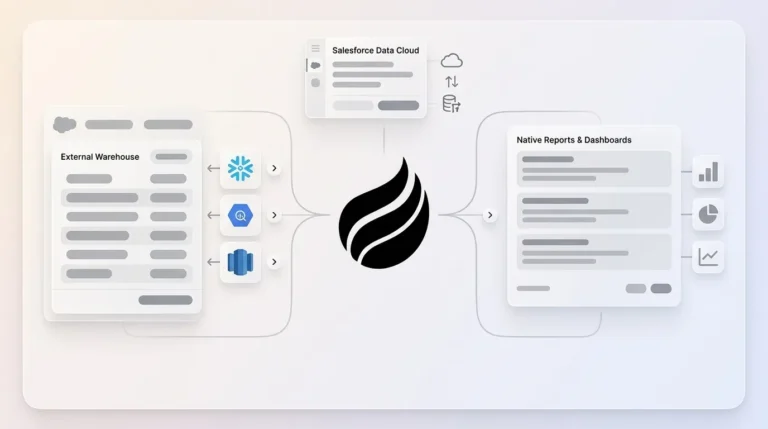
Coffee’s Pipeline Compare feature gives managers a clearer view with less manual effort. The agent captures every interaction into a built-in data warehouse, so week-over-week pipeline changes such as progressed deals, stalled opportunities, and new additions surface automatically. Pipeline reviews shift from interrogation sessions to strategic discussions. Documented deployments show forecast accuracy improving by 12 percentage points after AI integration.

Integration Complexity and Ongoing Administrative Burden
Hidden costs often derail CRM budgets. Implementation, training, integrations, and AI maintenance can add significantly to the base CRM subscription price in the first year. 92% of agentic AI deployments exceed budget in 2026.
Salesforce Enterprise for 100 users carries an annual subscription of approximately $198,000, with first-year total costs often reaching $200,000–$500,000. Coffee uses seat-based pricing where the agent’s unlimited labor is included, with no separate metering for LLM usage, enrichment calls, or sequencing runs.
See Coffee’s pricing and get started today.
Best-Fit Use Cases by Company Size and Current Stack
The right path depends on team size and existing infrastructure.
1–20 employees, no CRM or spreadsheet-based: A standalone AI-native CRM is the fastest path. There is no migration, no admin overhead, and the agent handles everything from day one. Coffee Standalone is purpose-built for this profile.
15–80 employees, committed to Salesforce or HubSpot: A companion agent layer offers lower risk and faster ROI. Coffee’s Companion connects via simple authentication, syncs and enriches data, and writes insights back to Salesforce or HubSpot without disrupting existing workflows. No evidence confirms a 40-person B2B firm adding an AI layer to unchanged HubSpot and recovering 30+ minutes per rep per day with 34% outbound response rate gains and 22% pipeline value growth.
80+ employees, evaluating rip-and-replace: Full migration is viable but requires a structured change management program. BCG’s 10/20/70 rule allocates 70% of AI implementation effort to people and processes, 20% to technology and data, and only 10% to algorithms. Teams that underestimate change management consistently overspend and underdeliver.
Operational and Long-Term Considerations for AI Agents
Data hygiene ownership represents the most overlooked long-term cost. AI automation amplifies whatever data already exists in the CRM, so deploying on dirty data produces bad outputs at scale. A one-time hygiene pass that purges contacts with no activity in 180+ days, standardizes stages, and enforces next-step rules is a prerequisite for any agent deployment.
Industry analysts expect many B2B sales organizations to adopt AI-driven engagement platforms by the late 2020s, and Gartner predicts 40% of enterprise apps will embed AI agents by year-end 2026. Teams that delay agent adoption are not avoiding risk, they are accumulating it.
Risks and Limitations of Each Path
Every path carries genuine risks that belong in any honest evaluation:
- Hidden maintenance: True 5-year TCO for AI agent deployments typically reaches 605–1,075% of the initial budget. Model updates, prompt tuning, and integration drift create ongoing costs, not one-time expenses.
- Incomplete automation: Six CRM tasks meet the reliability threshold for full automation in 2026, while judgment-heavy decisions such as pricing negotiation and deal strategy still require human input.
- Integration gaps: Coffee currently integrates with third-party tools via Zapier, with deeper native integrations on the roadmap. Teams with complex, custom Salesforce workflows should validate specific integration requirements before committing.
- Overbuying: For a 100-person company, adding a custom AI agent with CRM integration typically costs $25K–$120K upfront plus $300–$5K monthly. Teams of 15–30 people rarely need enterprise-grade deployments.
- Underestimating effort: Scaling from a validated pilot to a full multi-agent ecosystem typically takes 6–12 months when data readiness, staffing, and change management are factored in, per phase-by-phase roadmaps for mid-sized companies.
Decision Framework: Match Your Constraints to the Right Path
| Constraint | Stay on Salesforce, add Agentforce | Stay on Salesforce, add Coffee Companion | Switch to Coffee Standalone |
|---|---|---|---|
| Existing Salesforce investment is large and non-negotiable | Best fit | Strong fit | Not applicable |
| Need agent live in under 8 weeks | Marginal (4–12 weeks, admin-heavy) | Strong fit (4–6 weeks) | Strong fit (days to weeks) |
| TCO must stay under $30K/year for 20 users | Not feasible | Feasible depending on Salesforce license tier | Strong fit |
| No dedicated Salesforce admin on staff | High risk | Moderate risk | Strong fit |
| Greenfield or post-spreadsheet team | Overkill | Not applicable | Best fit |
Frequently Asked Questions
How long does it take to deploy Coffee as a companion on Salesforce?
Coffee’s Companion connects to an existing Salesforce or HubSpot instance through a simple authentication flow. For most teams of 15–80 people, the agent is syncing, enriching, and writing data back to Salesforce within days. A structured rollout to a full team typically completes within two to four weeks, which is materially faster than a native Agentforce deployment that requires dedicated admin configuration.
Do we need internal AI or engineering expertise to run Coffee?
No. Coffee is designed for heads of sales and RevOps leaders, not engineers. The agent handles data unification, enrichment, meeting transcription, follow-up drafting, and pipeline tracking without prompt engineering, Apex development, or LLM configuration. Seat-based pricing also removes usage metering from the day-to-day workload.
What happens to our historical Salesforce data if we switch to Coffee Standalone?
Coffee’s Companion model supports teams that want to preserve their Salesforce investment. The agent layers on top of the existing system of record and enriches it rather than replacing it. Teams that choose to migrate to Coffee Standalone export existing records and import them into Coffee, a scope that is manageable for teams under 80 people but still benefits from a data hygiene pass first to avoid importing dirty records into a clean system.
How does Coffee handle data security and compliance?
Coffee is SOC 2 Type 2 and GDPR compliant. Data ingested by the agent, including emails, calendar events, and call transcripts, is not used to train public models. Teams in regulated industries such as healthcare or finance that require multi-year security reviews should treat Coffee as an early-stage option rather than a current fit.
Will Coffee’s pipeline intelligence replace our existing forecasting tools?
For most mid-market teams, Coffee replaces separate forecasting tools. Coffee’s Pipeline Compare feature tracks week-over-week changes automatically, including progressed deals, stalled opportunities, and new additions, without CSV exports or manual dashboard updates. Teams running sophisticated, custom forecasting models built on top of Salesforce data should evaluate whether Coffee’s built-in pipeline intelligence meets their specific reporting requirements before decommissioning existing tools.
What integrations does Coffee support today?
Coffee connects natively to Google Workspace and Microsoft 365 for email, calendar, and activity capture. It integrates with Zoom, Google Meet, and Microsoft Teams for call recording and transcription. Connections to other tools in the stack are currently available via Zapier, with deeper native integrations on the product roadmap.
Is Coffee a good fit if our team is growing rapidly?
Coffee is built for teams from one to roughly eighty people. The seat-based model scales linearly, so adding a seat puts the agent to work for that rep immediately. For organizations approaching or exceeding one hundred people with complex, custom Salesforce workflows, quota hierarchies, and multi-cloud configurations, Coffee’s Companion usually serves as a more appropriate entry point than a full platform switch.
Conclusion: Choose the Path That Fits Your 2026 Reality
The core decision now centers on where the autonomous agent should live, not whether to adopt one. Teams locked into Salesforce with significant historical data and existing admin resources can evaluate Coffee’s Companion as the fastest path to clean data and accurate forecasts without a rip-and-replace migration. Teams starting fresh or actively replacing a CRM that reps have abandoned can evaluate Coffee Standalone as the system of record from day one.
In both cases, the architecture shift remains the same. The agent handles data entry, the rep handles selling, and the manager gains pipeline intelligence that reflects reality rather than rep compliance. That standard defines the 2026 benchmark every mid-market sales team can measure against.
Get started with Coffee and put the agent to work for your team.