Written by: Doug Camplejohn, CEO & Co-Founder, Coffee | Last updated: July 27, 2026
Key Takeaways for Mid-Market ABM Buyers
- Mid-market ABM decisions carry significant budget risk once implementation, media spend, and seat overages roll into the bill.
- Legacy platforms such as Demandbase and 6sense often require $60K–$150K+ in year-one spend, while Coffee offers transparent $10/user/month pricing with no media spend required.
- Hidden costs like renewal escalators, onboarding fees, and add-on modules can double total ownership costs for enterprise ABM platforms.
- Coffee’s Companion App reduces operational burden by automating data entry, enrichment, and pipeline intelligence directly within Salesforce or HubSpot.
- See Coffee’s published pricing for predictable, seat-based plans designed for mid-market teams without enterprise complexity.
Side-by-Side ABM Platform Pricing Comparison
The table below shows starting annual platform fees, pricing models, and key notes for the five platforms most commonly evaluated by mid-market teams. Every figure comes from third-party procurement data or published pricing.
| Platform | Starting Annual Platform Fee | Pricing Model | Key Notes |
|---|---|---|---|
| Coffee | $10 per month per user | Seat-based, transparent | Includes CRM agent, visitor ID, pipeline intelligence, and enrichment. No media spend required. Companion app for Salesforce/HubSpot or standalone CRM. |
| Demandbase | ~$18,000–$24,000/yr (Basic/Starter) | Custom quote, platform fee plus per-seat charges | Demandbase median annual contract value is $68,591 per Vendr data; add-on modules (visitor deanonymization, personalization, advertising) priced separately. |
| 6sense | ~$60,000/yr | Custom quote, tiered by account volume | Vendr data shows a 6sense median contract value of $62,440 with a range of $11,566–$175,022. Enterprise deals reach $300,000+. |
| RollWorks | approximately $12,000 per year | Tiered subscription, ad spend separate | Full ABM capabilities run $12,000–$50,000/yr; ad spend budgeted separately at ~$2,000–$5,000/month. |
| Factors.ai | approximately $12,000/yr ($999/mo) for the mid-market tier (Growth plan) | Tiered subscription | Positioned for orchestration and attribution; CRM integration depth varies by tier. |
See Coffee’s transparent pricing, with no custom quote required.
Platform-Specific Pricing Tiers and Hidden Costs
Demandbase uses three reported tiers: Basic/Starter at $18,000–$24,000/yr, Professional at $45,000–$65,000/yr, and Enterprise at $70,000–$300,000+/yr. Base contracts include 10 user licenses. Each additional seat costs $1,200–$3,000/yr, so a 25-person sales team on the Professional tier could incur an extra $18,000–$45,000 in seat fees alone. Add-on modules carry separate line items: visitor deanonymization at $60,000/yr, personalization at $30,000–$60,000/yr, and advertising modules starting at $60,000 plus media spend. Onboarding and professional services average ~$29,000.
6sense pricing uses custom quotes and scales with factors such as account volume. Discounts often appear at signing but are frequently removed at renewal, which raises costs by year three. Implementations can take several weeks and include professional services fees.
For teams seeking a more accessible entry point, RollWorks positions itself as the most approachable legacy option for mid-market teams. Annual platform costs run $12,000–$50,000, with ad spend budgeted separately at roughly $2,000–$5,000/month. RollWorks platforms, including simpler self-serve options, typically require 2–4 months or a few weeks to become operational. These timelines are shorter than typical implementations for Demandbase and 6sense.
Across all legacy platforms, renewal escalators and contract structure often inflate total ownership. SaaS renewal pricing often escalates 7–15% annually as initial discounts erode over successive renewals. That pattern can double three-year costs if renewal terms are not negotiated upfront.
Coffee publishes a single seat-based rate with no media spend requirement, no add-on modules for core intelligence features, and no implementation fee for the Companion App deployment on Salesforce or HubSpot.
Best-Fit ABM Options by Company Size and Tech Stack
Teams that meet those prerequisites but cannot justify a $50,000–$150,000 platform commitment often find Coffee’s seat-based agent model more practical. Coffee does not layer intent data and advertising orchestration on top of a passive CRM. Instead, it deploys an autonomous agent that captures every interaction, enriches contact and company records automatically, identifies named website visitors, and surfaces pipeline intelligence inside the existing Salesforce or HubSpot instance. This approach lowers total cost of ownership and avoids any media spend dependency.
6sense is best suited for companies at $100M+ ARR with mature RevOps and 5+ SDRs. Demandbase targets $50M–$250M ARR Salesforce-primary teams. RollWorks is recommended for HubSpot teams under $50M ARR that need ABM advertising without enterprise complexity. Coffee fits $10–50M ARR teams that need clean CRM data, account intelligence, and visitor identification without a multi-year enterprise contract or a separate media budget.
Explore how Coffee’s agent model fits your tech stack and budget.
Operational Load, Training, and Change Management
A realistic mid-market year-one total cost of ownership for a legacy ABM platform is $40,000–$120,000. Most ABM platform contracts require three-year minimum commitments, so a $150,000 year-one spend often represents a $450,000 decision.
Training and data hygiene add operational load that compounds the platform cost. Beyond the license fee, teams must budget for specialized sales coaching and training for ABM execution, which sits outside standard sales enablement tooling. These training efforts run alongside ongoing data integration and maintenance across ABM platforms, CRM, marketing automation, and analytics, which together consume a meaningful share of annual technology spend.
Coffee’s Companion App reduces this operational surface area. A simple authentication connects the Coffee Agent to an existing Salesforce or HubSpot instance. The agent then handles data unification, contact enrichment, activity logging, and meeting intelligence autonomously. This automation removes much of the manual data entry that drives low CRM adoption and the “garbage in, garbage out” cycle that weakens ABM signal quality.
Common ABM Risks for Mid-Market Teams
Three recurring risks shape mid-market ABM deployments regardless of platform choice.
Underestimating media budgets. Effective ABM programs for mid-market B2B companies typically require $40k–$120k per year total, of which media spend is 10–20%. Teams that budget only for the platform license often discover that display and retargeting channels, which drive much of the reported ROI, require a separate and substantial ad budget.
Overbuying enterprise features. The Ceiling Test recommends purchasing an ABM platform only when a company answers yes to at least three of five questions: 100+ closed-won accounts, 50,000+ monthly website visitors, TAM above 5,000 accounts, dedicated RevOps capacity, and average deal size above $50,000. Teams that purchase enterprise platforms before meeting these thresholds pay for capabilities they cannot operationalize.
Assuming any platform eliminates manual work. Legacy ABM platforms rely on the same passive database architecture as legacy CRMs. They surface intent signals, but human reps still handle downstream data entry, follow-up logging, and pipeline updates. Internal stakeholder time for account strategy and executive engagement represents $100,000–$500,000 in annual opportunity cost for mature ABM programs but often remains invisible in budgets.
ABM Pricing Decision Framework and Checklist
Use this checklist to match a pricing model to your current ARR, CRM, and internal resources:
- ARR under $50M, ACV under $30K: A full enterprise ABM suite is unlikely to generate positive ROI. Prioritize data enrichment, CRM data quality, and visitor identification before committing to a $60K+ platform.
- ARR $10M–$50M, ACV $30K+, Salesforce or HubSpot in place: Coffee’s Companion App delivers account intelligence, visitor ID, and pipeline automation at a predictable per-seat cost without a multi-year contract or media spend requirement.
- Target account list under 200 companies: A target account list plus enrichment and one intent source outperforms a $90K platform for companies with fewer than 500 target accounts.
- HubSpot-primary, under $50M ARR, ABM advertising needed: RollWorks offers fast time-to-value among legacy ABM advertising platforms at a relatively low entry price point.
- Salesforce-primary, $50M–$250M ARR, mature RevOps team: Demandbase offers a clean Salesforce sync; budget $65K–$150K/yr all-in for platform plus onboarding.
- $100M+ ARR, 5+ SDRs, dedicated ABM marketer: 6sense’s predictive scoring and intent depth can justify the $60K–$120K+ platform investment at this scale.
- No dedicated RevOps capacity: Any platform requiring 8–12 weeks of implementation and 0.5 FTE to operate will underperform. Start with an agent-led model that reduces administrative burden before scaling to a full ABM suite.
Frequently Asked Questions
How long does it take to implement Coffee compared to enterprise ABM platforms?
Coffee’s Companion App connects to an existing Salesforce or HubSpot instance through a simple authentication flow. The Coffee Agent begins capturing contacts, logging activities, and enriching records immediately after connection. Enterprise ABM platforms like Demandbase and 6sense typically require several weeks of onboarding, CRM integration engineering, and professional services before campaigns can run. For mid-market teams planning Q1 pipeline programs, Coffee’s faster time-to-value creates a clear operational advantage.
What does it cost to migrate to Coffee from an existing CRM or ABM platform?
For teams using Coffee as a Companion App on top of Salesforce or HubSpot, no migration is required because the Coffee Agent works alongside the existing system of record. For teams adopting Coffee’s Standalone CRM, the migration effort depends on the volume of historical records and the complexity of existing workflows. Because Coffee is built on a data warehouse architecture that ingests both structured and unstructured data, it can ingest records from CSV exports, Google Workspace, and Microsoft 365 without custom integration engineering. There are no professional services fees for standard deployments.
Does Coffee integrate with Salesforce and HubSpot, and how deep is that integration?
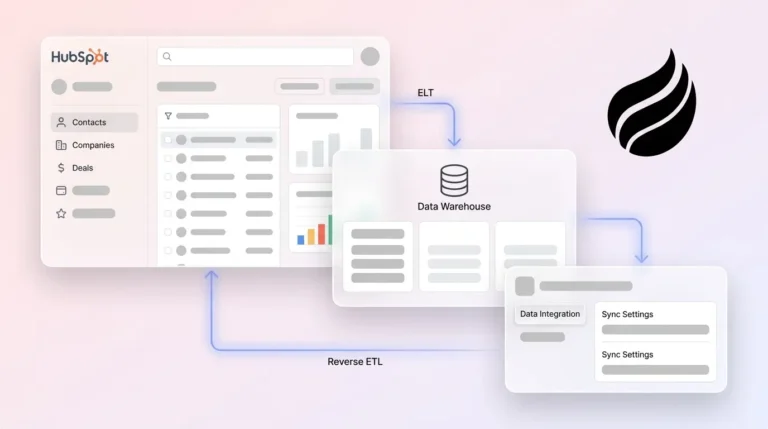
Coffee offers a Companion App model specifically for teams committed to Salesforce or HubSpot. The Coffee Agent authenticates directly with the CRM, then syncs enriched contact and company data, logs activities, writes meeting summaries and action items, and surfaces pipeline intelligence back into the primary system of record. This integration is bidirectional, so Coffee reads from and writes to Salesforce or HubSpot. The CRM remains the authoritative source of truth while the Coffee Agent handles data entry and enrichment. Deeper integrations beyond Salesforce and HubSpot are currently available via Zapier, with additional native integrations on the product roadmap.
Is Coffee SOC 2 compliant, and how is customer data handled?
Coffee is SOC 2 Type 2 and GDPR compliant. Customer data is not used to train public AI models. For mid-market B2B teams in lightly regulated industries, Coffee’s compliance posture covers standard enterprise security requirements. Teams in heavily regulated industries such as healthcare or financial services should conduct a full security review, since multi-year compliance processes may require additional documentation beyond Coffee’s current certifications.
How should mid-market teams evaluate total cost of ownership rather than just the quoted platform fee?
The quoted platform fee usually represents the smallest component of total ABM cost. A complete total cost of ownership calculation should include the platform license, implementation and onboarding fees, integration engineering hours, internal RevOps headcount to operate the system, media spend if the platform requires advertising activation, third-party intent data subscriptions, and renewal escalators after first-year discounts expire. For legacy ABM platforms, year-one total cost commonly runs 1.5–2 times the license fee, and multi-year commitments can double that figure. Coffee’s seat-based model includes CRM agent capabilities, visitor identification, enrichment, and pipeline intelligence in a single per-seat fee, with no media spend dependency, no add-on modules for core features, and no implementation fee for Companion App deployments. That structure makes total cost of ownership straightforward to calculate before signing.
Conclusion: Match ABM Pricing to Your Stage and Resources
ABM platform pricing in 2026 spans a wide range, from RollWorks’ roughly $14,000 entry point to 6sense and Demandbase enterprise contracts that exceed $300,000. For mid-market teams at $10–50M ARR, the real decision centers on which pricing model delivers predictable total cost of ownership without requiring a media budget, a dedicated RevOps hire, or an 8–12 week implementation before any pipeline value appears.
Legacy platforms were built for enterprise teams with dedicated ABM marketers, large target account lists, and substantial advertising budgets. Coffee was built for teams that need clean CRM data, named visitor identification, and pipeline intelligence today, without overbuying enterprise infrastructure that will sit underutilized.
The core evaluation criteria stay simple: total cost of ownership, pricing transparency, integration complexity, and administrative burden. On each dimension, a transparent seat-based agent model often outperforms a custom-quoted enterprise contract for the $10–50M ARR segment.
Review Coffee’s transparent seat-based pricing and start your trial today.